
Assange e Nabourema al Plan ₿ Forum di Lugano il prossimo 28 e 29 ottobre

L’evento Plan ₿ Forum, promosso da Tether Operations Limited e dalla Città di Lugano, vedrà alternarsi sul palco del Palazzo dei Congressi di Lugano il 28 e 29 ottobre i…
L’articolo Assange e Nabourema al Plan ₿ Forum di Lugano il prossimo 28 e 29 ottobre scritto da YOUR_DIGITAL_VOICE! proviene da Assodigitale.
Apple Magic Mouse 2 scontato del 20% in colorazione NERA: approfittane
Realme 9 5G (Bianco, 4GB/64GB), sconto ESAGERATO per questo ottimo budget phone
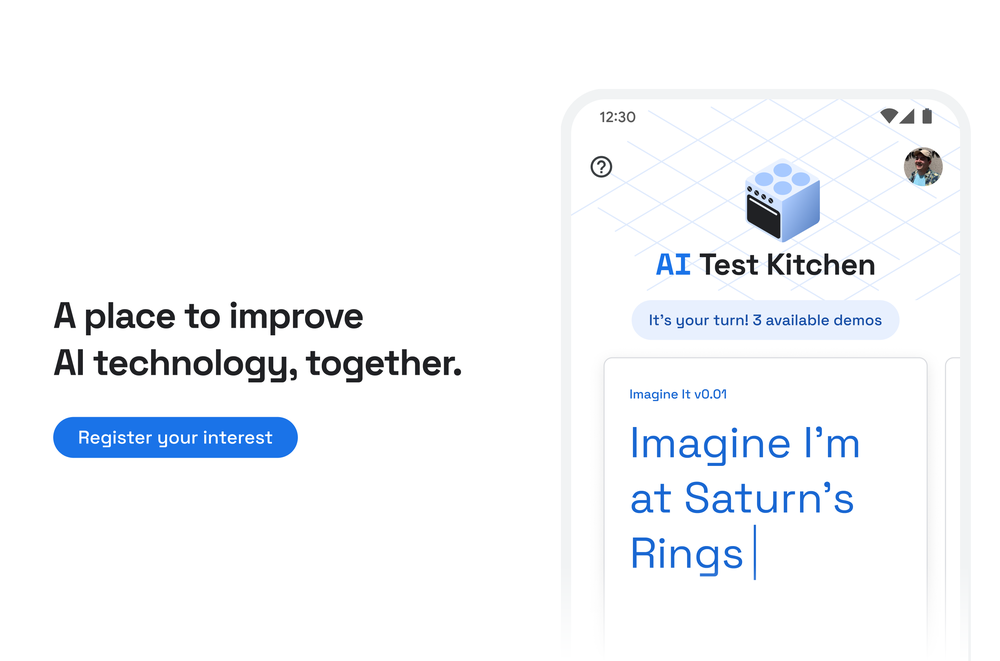
Join us in the AI Test Kitchen
As AI technologies continue to advance, they have the potential to unlock new experiences that support more natural human-computer interactions. We see a future where you can find the information you’re looking for in the same conversational way you speak to friends and family. While there’s still lots of work to be done before this type of human-computer interaction is possible, recent research breakthroughs in generative language models — inspired by the natural conversations of people — are accelerating our progress. One of our most promising models is called LaMDA (Language Model for Dialogue Applications), and as we move ahead with development, we feel a great responsibility to get this right.
That’s why we introduced an app called AI Test Kitchen at Google I/O earlier this year. It provides a new way for people to learn about, experience, and give feedback on emerging AI technology, like LaMDA. Starting today, you can register your interest for the AI Test Kitchen as it begins to gradually roll out to small groups of users in the US, launching on Android today and iOS in the coming weeks.
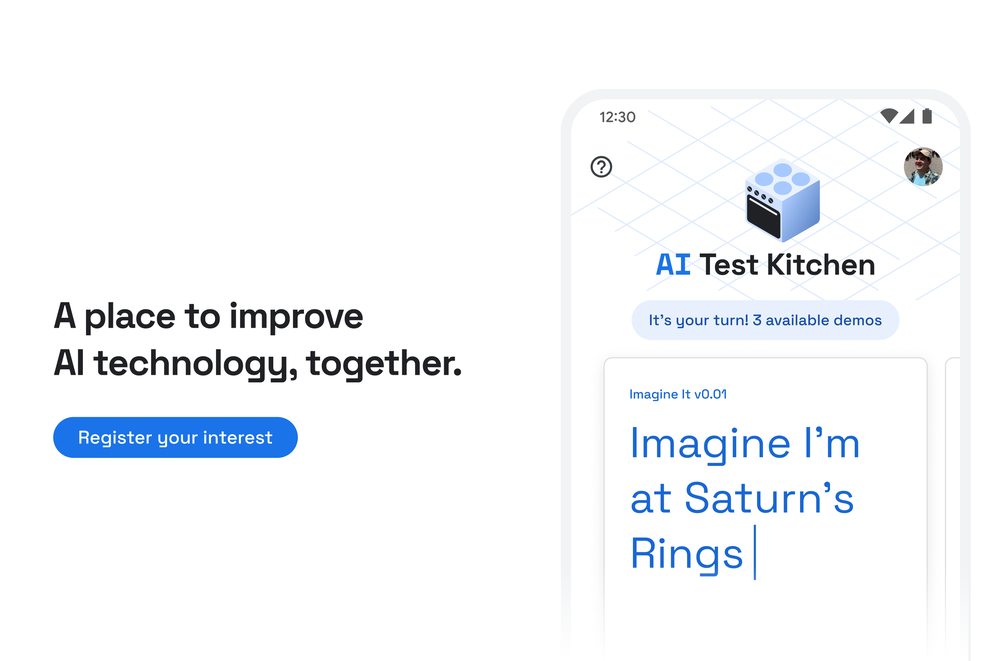
Our goal is to learn, improve and innovate responsibly on AI together.
Similar to a real test kitchen, AI Test Kitchen will serve a rotating set of experimental demos. These aren’t finished products, but they’re designed to give you a taste of what’s becoming possible with AI in a responsible way. Our first set of demos explore the capabilities of our latest version of LaMDA, which has undergone key safety improvements. The first demo, “Imagine It,” lets you name a place and offers paths to explore your imagination. With the “List It” demo, you can share a goal or topic, and LaMDA will break it down into a list of helpful subtasks. And in the “Talk About It (Dogs Edition)” demo, you can have a fun, open-ended conversation about dogs and only dogs, which explores LaMDA’s ability to stay on topic even if you try to veer off-topic.
Evaluating LaMDA’s potential and its risks
As you try each demo, you’ll see LaMDA’s ability to generate creative responses on the fly. This is one of the model’s strengths, but it can also pose challenges since some responses can be inaccurate or inappropriate. We’ve been testing LaMDA internally over the last year, which has produced significant quality improvements. More recently, we’ve run dedicated rounds of adversarial testing to find additional flaws in the model. We enlisted expert red teaming members — product experts who intentionally stress test a system with an adversarial mindset — who have uncovered additional harmful, yet subtle, outputs. For example, the model can misunderstand the intent behind identity terms and sometimes fails to produce a response when they’re used because it has difficulty differentiating between benign and adversarial prompts. It can also produce harmful or toxic responses based on biases in its training data, generating responses that stereotype and misrepresent people based on their gender or cultural background. These areas and more continue to be under active research.
In response to these challenges, we’ve added multiple layers of protection to the AI Test Kitchen. This work has minimized the risk, but not eliminated it. We’ve designed our systems to automatically detect and filter out words or phrases that violate our policies, which prohibit users from knowingly generating content that is sexually explicit; hateful or offensive; violent, dangerous, or illegal; or divulges personal information. In addition to these safety filters, we made improvements to LaMDA around quality, safety, and groundedness — each of which are carefully measured. We have also developed techniques to keep conversations on topic, acting as guardrails for a technology that can generate endless, free-flowing dialogue. As you’re using each demo, we hope you see LaMDA’s potential, but also keep these challenges in mind.
Responsible progress, together
In accordance with our AI Principles, we believe responsible progress doesn’t happen in isolation. We’re at a point where external feedback is the next, most helpful step to improve LaMDA. When you rate each LaMDA reply as nice, offensive, off topic, or untrue, we’ll use this data — which is not linked to your Google account — to improve and develop our future products. We intend for AI Test Kitchen to be safe, fun, and educational, and we look forward to innovating in a responsible and transparent way together.
Dr. Von Nguyen’s temperature check on public health
Dr. Von Nguyen’s career centers around helping people be healthier. As a primary care physician and epidemiologist, he’s worked in sub-Saharan Africa and India, developed policies for U.S. government agencies, and led health strategy for Blue Cross North Carolina. Dr. Nguyen joined Google in 2021 as the clinical lead for public and population health. We chatted with him to learn about his work in public health and his team’s next focus: climate change.
What drew you to working in public health?
When I was in medical school, I received a Fulbright Fellowship and worked on HIV/AIDS and malaria in Kisumu, Kenya. I was able to move beyond individual patient care to serving entire communities through educational campaigns about HIV/AIDS and distributing insecticide-treated bed nets. This experience opened my eyes to how people in other parts of the world live, and I knew I wanted my career to focus on making a difference in the health of populations globally.
Fast forward to today, what does your role at Google focus on?
As the clinical lead for population health, I work closely with our product teams to help improve the health of communities. One of those teams is focused on public and environmental health, so they look at how factors in a community like air quality, extreme weather events, or availability of green spaces and healthcare services impact health and wellbeing.
Our public and environmental health team played a huge role in Google’s COVID-19 response. What were some of the biggest lessons learned?
During COVID-19, it quickly became clear technology has an important role to play in the public health response. People turn to Google every day for information, so we need that information to be trustworthy and actionable. Throughout the pandemic, our teams helped support individuals, researchers, and policymakers with data, tools, and funds.
Through this work, people were easily able to find trustworthy information on Search, YouTube and Maps, like vaccine side effects or their nearest testing site. Public health and academics used aggregated Search trends on symptoms and vaccines to better understand the pandemic and concerns within communities. Organizations used our mapping capabilities to help public health officials identify “vaccine deserts” where people had little or no convenient access to vaccinations.
For me, the biggest lesson learned was: Think globally, act locally. While communities all over the world used Search to learn about scientific advances with mRNA vaccines, individuals also used Search to find where they could get a vaccine. With our Access to Vaccines dataset in partnership with Ariadne Labs at Harvard and Boston Children’s Hospital, we needed to think about more than where sites were located, and account for community habits and modes of transportation to assess how easy it would be to reach a site.
What other public health challenges are top of mind?
My team and I are thinking a lot about the health implications of climate change, and how we can contribute to research and interventions. We’re beginning to see patterns and associations between climate, weather and health. Air pollution, for example, can be extremely hazardous, and is linked to chronic diseases and even cancer. Floods can cause injuries, hypothermia, infection, and healthcare resource constraints, impacting communities almost instantly. Globally, Google Search interest in heat wave, heat stroke and heat exhaustion reached record highs in July this year.
I’m asking myself, how can we provide information to scientists and policymakers that helps them address the issue globally, while also helping individuals act locally? Things like helping people find nearby public spaces — like libraries or community centers — to take refuge from the heat; or helping cities create better access to parks and green spaces that provide shade, lower temperatures and contribute to cleaner air.
How does this relate to Google’s existing sustainability work?
Addressing climate change is a top priority for Google, and we’ve made deep investments in reducing our own emissions, plus arming our partners with sustainability data and tools. We’re using machine learning to help forecast floods and alert communities before a flood reaches their area, and offering organizations a tool called Google Cloud Carbon Footprint to measure and manage their gross carbon emissions.
What is Google doing to help at the intersection of climate change and health?
Google already provides data to over 42,000 cities to help them make climate action plans. Air Quality Insights and Tree Canopy lab can help cities better plan to provide shade and prepare for extreme heat events. I’m excited to build on this existing work and apply our tools to help reduce harmful health impacts.
Extreme heat is affecting many communities globally right now, so we’re working on several pilots to explore how we can help. One way that we think we can be helpful is by providing data and insights to local governments to better understand their communities’ needs during extreme heat events. Our work will focus on learning how we can best support cities as they develop response plans and new interventions.
Let’s face it — Google is one part of a much larger ecosystem to improve the public’s health. Looking ahead, my team and I are identifying ways to bring Google’s strengths to policymakers, scientists and consumers in their hunt for useful information to improve public health.
HUAWEI MateBook 16, il notebook per i professionisti in SUPER SCONTO su Amazon
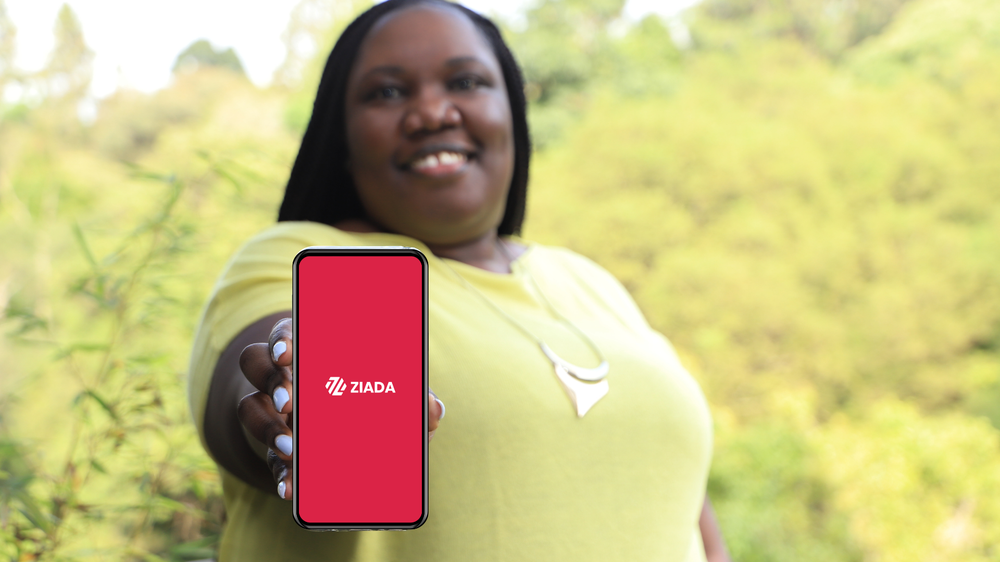
How Annabel turned her app idea into a growing business
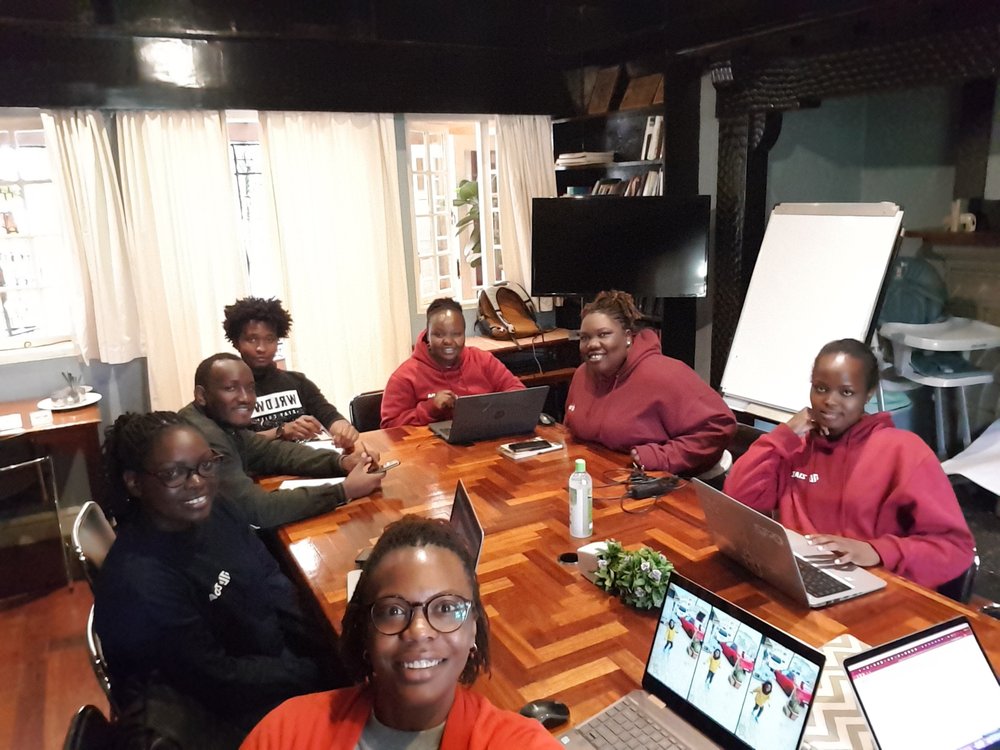
One day, Annabel Angwenyi was running errands in Nairobi, Kenya when her car refused to start. She called her usual mechanic, but he was busy helping another customer on the opposite side of town. She knew there must be another mechanic close by, but because many local businesses don’t have an online presence, she had trouble finding and contacting someone else. Annabel was frustrated — but she also saw an opportunity to solve a problem.
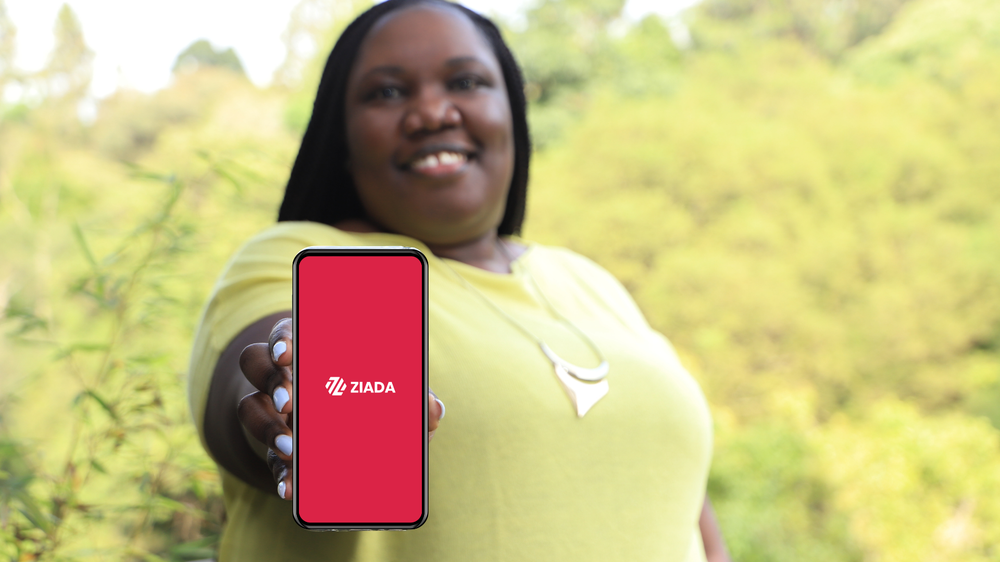
After a lot of research, hard work and perseverance, she and her co-founder Patrick launched Ziada, an app that connects people across Kenya to local service providers. Today, Ziada has a team of seven people and over 60,000 downloads on Google Play.
Annabel is one of the founders featured in #WeArePlay, which spotlights the people behind Google Play’s apps and games. We chatted with Annabel to learn more about how she got Ziada up and running with no tech experience, and the impact it’s had on the local community.
How did you turn your idea into an app?
Patrick and I didn’t have any tech experience — we’re both business people. So in 2017, we partnered with a software developer who believed in our dream and helped us create the app. After a lot of hard work, we published the first version of Ziada on Google Play that same year. But it didn’t really take off. We weren’t sure if the Kenyan market was ready for something like this, so we took a break.
Then when the pandemic started in 2020, we noticed people wanted to access more things on demand and online, like food delivery and taxi services. So we rebranded the app, including improving the user interface to better reflect how we could help, and launched again. Now, our app has over 60,000 downloads on Google Play and is helping service providers across Kenya find new customers.
What impact has your app had on the community?
Kenya is an entrepreneurial nation, with people just like us wanting to build something for themselves. Having owned small businesses in the past, we knew the app had potential to help others grow their businesses. And it makes us so happy to see this actually happening. I’m also really proud of how we’re helping women — who make up 38% of service providers on Ziada — create their own income. I believe when you empower women, you empower the whole community. It’s something that’s really close to our hearts at Ziada. Most of our team are women, and many of us mentor young girls in the community. In fact, two of our mentees are joining Ziada as software developers.
Any advice for someone starting their own app or game business?
Just jump in. I think that initial leap of faith is the hardest one to make — it definitely was for me. The app or game will never be 100% perfect, and if you wait for that moment, the train may have already left (both in terms of user needs and market share).
If you have a working prototype or early version of your app, get it on Google Play and build hype around it. I was surprised at how patient our users were with Ziada in its early days, even with all its shortcomings. But that’s because they wanted it to work. If you’re providing a good solution to a problem, the adopters will come.
What’s next for Ziada?
We’re always working on new services, like helping contractors rent equipment and tools to complete jobs or providing coaching through our upcoming business advisory service. We also want to keep partnering with growing, local businesses and expand our user base — not just in Kenya, but across the African continent. There’s so much potential here, and we’re only just getting started.
Read more about Annabel and other app and game founders featured in #WeArePlay.
<div>Digital out-of-home ads now in Display & Video 360</div>
Today’s customer journey is rarely a straight line. Consumers are constantly moving between touchpoints and channels, and brands need the right tools to keep up. Digital out-of-home is an increasingly popular option that brings the best of digital technology to a traditional advertising medium. It helps brands engage shoppers at moments when they make key decisions or take certain actions such as walking in a shopping mall or lining up at the grocery store checkout.
Today, we’re making digital out-of-home ads available to all Display & Video 360 users so that they can reach people out in their real-world journey with the efficiency of programmatic technology. This includes screens in public places such as stadiums, airports, bus stops, shopping centers, elevators, taxis and more.
The best of out-of-home and digital combined
With digital out-of-home ads in Display & Video 360, brands can combine the emotional power and captivating formats of traditional out-of-home advertising with the efficiency of other digital channels. With a single plan, they can reach people on screens of all shapes and sizes. And, it can be done rapidly and efficiently. Marketers can activate, pause, and optimize digital out-of-home campaigns in near real time. They can tackle everything from strategy and activation to reporting and optimization all in one place.
Centralizing buys and automating out-of-home campaigns is particularly effective for brands with international footprints. It gives them a chance to reach their global audience using a single tool. Today Display & Video 360 already partners with exchanges Hivestack, Magnite, PlaceExchange, Ströer SSP, VIOOH and Vistar Media. These exchanges give access to large media owners around the world like ClearChannel, Intersection, JCDecaux, Lamar and Ströer. All of this inventory can be secured via programmatic deals.
Another benefit to programmatic digital out-of-home is the flexibility it provides. While traditional buying tactics are usually geared toward one general region, digital out-of-home allows brands to run different versions of their messaging based on location of the screen or time of day.
Effective, contextual ads
Digital out-of-home ads placed through Display & Video 360 are not personalized, and we do not use individual identifiers or any user location data. Instead, advertisers can reach people based on contextual information of the screen location, like a traditional out-of-home ad, but with the flexibility and ease of programmatic. For example, a fast food spot can quickly advertise on a billboard in a bustling business district during the lunch hour for office workers to see. Later that day, the same billboard can promote an upcoming performance at a nearby concert venue.
When measuring ad impact, publishers provide Display & Video 360 with an impression multiplier, which estimates the number of people who may have seen an ad. This estimate, which isn’t based on an individual’s data, helps advertisers properly measure the impact of their digital out-of-home campaigns. Display & Video 360 vets all publishers to ensure they follow measurement methodologies defined by industry-recognized vendors like Geopath. Publishers that self-measure are not supported.
ASOS finds its fit with digital out-of-home in Display & Video 360
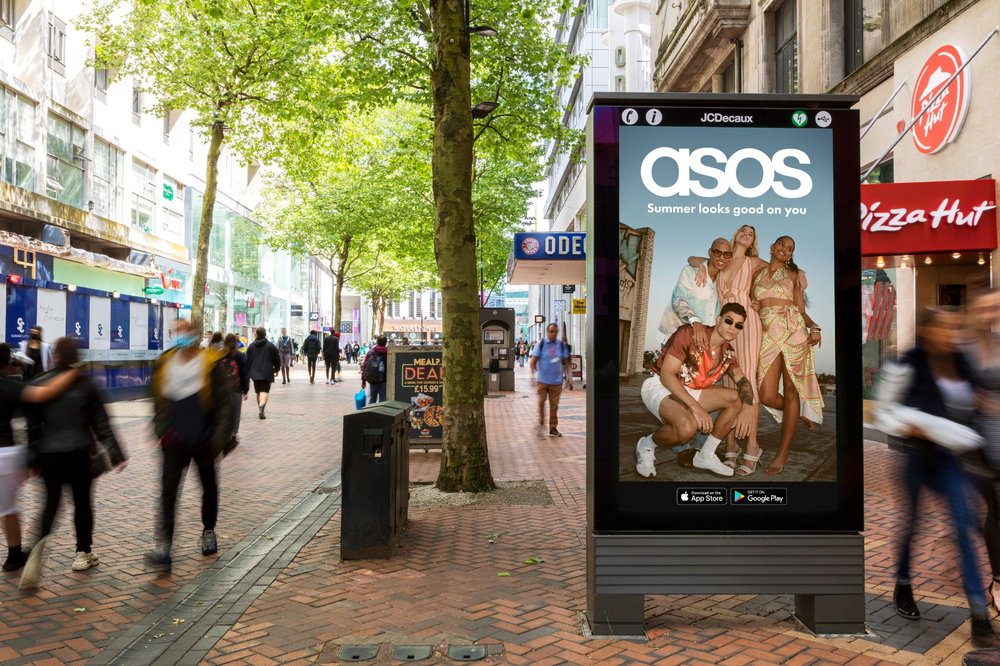
ASOS, one of the world’s leading online fashion retailers, wanted to find new and engaging ways to create fame on the high street whilst staying true to its digital roots. ASOS’ marketing team decided to use digital billboards in heavy footfall areas to generate awareness for their brand and drive passersby to visit their online store.
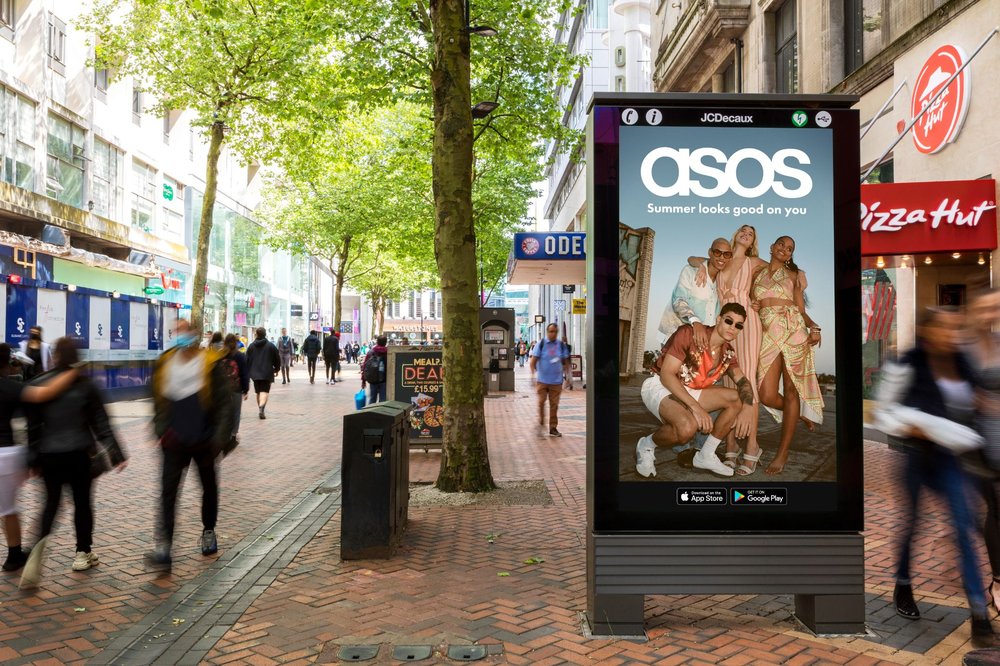

ASOS used Display & Video 360 to quickly select digital billboards with the map UI and arrange relevant Programmatic Guaranteed deals with leading publishers like Intersection in the U.S. and JCDecaux in the U.K. This streamlined approach allowed the brand to lean on a central platform to buy, implement and measure their campaign. As a result, the team fast tracked the process of booking hundreds of digital billboards, generating 22 million viewed impressions across the two countries.
Making our out-of-home inventory available through DSPs such as Display & Video 360 enables marketers to plan and optimize all digital channels in one place. It gives brands like ASOS more control which can improve brand and performance metrics.
The retailer then conducted a geo experiment with JCDecaux’s measurement partners to evaluate the impact of digital out-of-home ads on brand metrics. They observed a 14% increase in brand awareness and a 22% increase in brand consideration in exposed vs control areas.
Find out more about how to get your message out with digital out-of-home in Display & Video 360.
MSI Raider GE77HX 12UHS alla prova: Alder Lake-HX a 16 core e RTX 3080 Ti per prestazioni al top
Con appena 19€ prendi questo completo set di attrezzi (22 pezzi) per il tuo giardino
3 things to look forward to at the Google Play Indie Games Festival
Indie game developers make fun and creative games on Google Play that millions of people enjoy.
On September 3rd 2022, we’ll be hosting the annual Indie Games Festival from Google Play to celebrate unique games launched this year and showcase the inspiring emerging talent behind these titles. The event will take place online as a virtual event to bring gamers, developers and industry experts together.
The annual Indie Games Festival gives small game developers from South Korea, Japan and select countries in Europe, a platform to connect with indie fans and share their new releases.
Here are three things to look forward to at this year’s event.
Celebrate indie games wherever you are on September 3
No matter where you are in the world, you can attend the Indie Games Festival finals in South Korea, Japan or Europe. All you need to do is sign up for one of the events, and you will be set to explore and meet people from all over the world who also enjoy playing indie games.
Discover top-tier indie games from around the world
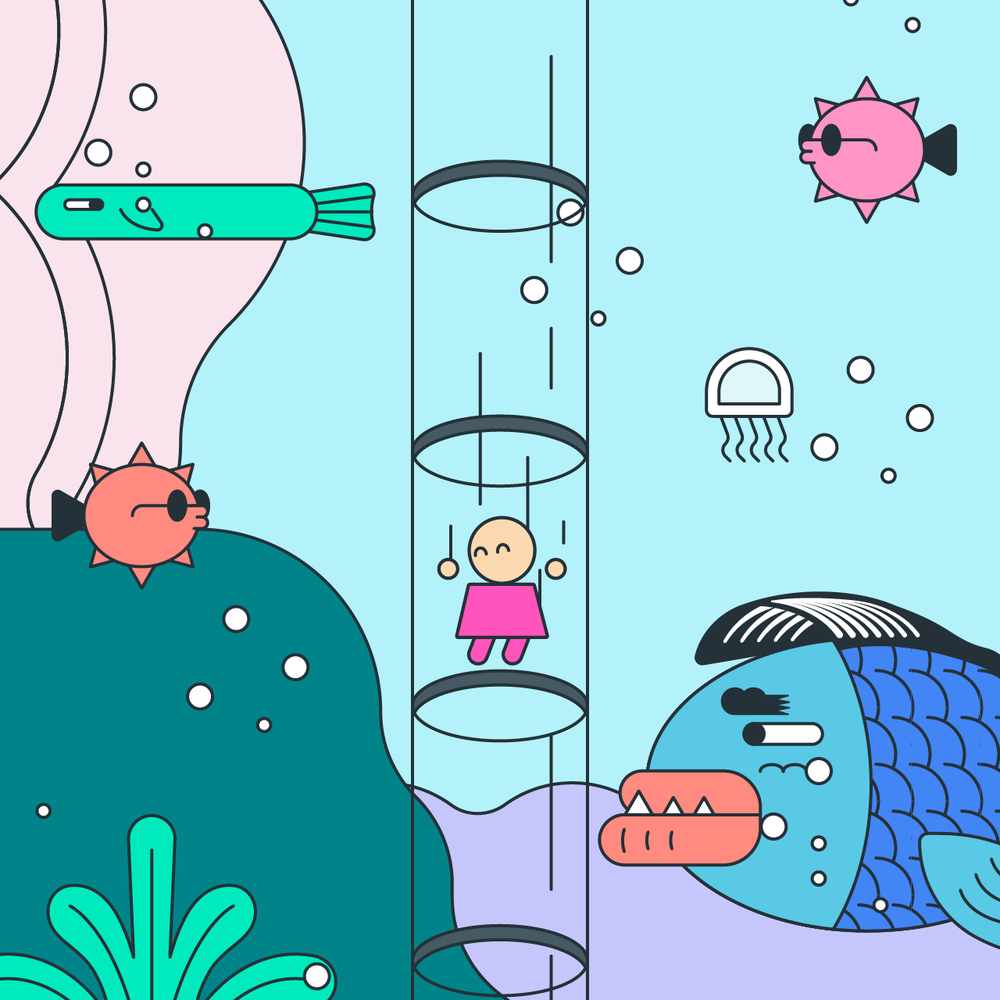
Earlier this year, small indie teams and solo-devs submitted their games for a chance to be showcased at the Festival. Dive into our tropical-themed Festival and start exploring the games showcase, a dedicated zone where you can discover the best new games at each booth.

This is your chance to check out the 20 finalist games from each of the three regions and meet the people who made them. You’ll also be the first to hear who the winners are and other big announcements on the main stage.
Be on the lookout for special quests, minigames and fun challenges that you can play solo or with friends.
Help our hosts cheer on the winners
At each event, hosts will guide you through the awards ceremony and keep you entertained. Cheer on the finalists at the main stage with games commentator Inho Jung, who will be the host in South Korea; comedian and Youtuber Kajisak-san, who will present the finals in Japan for the second year running; and games presenter Julia Hardy, who will host the European event and give a few special announcements.
At the European Festival, you’ll also discover which indies will join the 2022 class of the Indie Games Accelerator — a program that helps small game studios take their game to the next level through training and mentorship.
Sign up now to attend the finals in Europe, Japan or South Korea.
Visit here to learn more about Google Play’s programs for indie games and follow @GooglePlaybiz.
How a love of computer science led Sumin to Google
Welcome to the latest edition of “My Path to Google,” where we talk to Googlers, interns, apprentices and alumni about how they got to Google, what their roles are like and even some tips on how to prepare for interviews.
Today’s post is all about Sumin Chung, an intern in our Student Training in Engineering Program (STEP), which helps first and second-year undergraduate students develop computer science (CS) skills. This summer, Sumin is working on the Android engineering team in Seoul, South Korea.
Can you tell us a bit about yourself?
I’m currently studying biotechnology in Seoul. I first became interested in computer science while studying data science, and I recently started focusing on my programming skills. Outside of school and work, I enjoy baking sweet desserts, going to exhibitions (especially ones about history and civilization) and traveling to museums around the world.
What do you work on at Google?
This summer, I’m working on the Android engineering team. My main project is to improve the user interface for a platform that lets people manage their Android device through a web browser.
Why did you apply to Google?
After informally studying computer science for a few months, I worried that I wouldn’t be able to learn more without officially majoring in it. So I started looking for internships that would help me build my CS skills in the professional world. Luckily, I heard that Google was hosting an intern recruiting event, and that’s where I learned about the STEP internship program. It was exactly what I was looking for, so I took a chance and applied.
How did your interview process go?
The entire process — from the first conversation with my recruiter to meetings with my potential managers — made me feel special because of how personalized it was. I felt encouraged to express my opinions, and my interviewers welcomed my curiosities. It was a good environment for me because I was full of questions, not only about Google but about the interviewers themselves. My mom, who was in the next room while I did my virtual interview from home, even said it seemed like I was the interviewer, not the interviewee!
How did you prepare for your interviews?
I mainly focused on studying algorithms. And because English isn’t my first language, I practiced expressing my thoughts in English. Once the interview schedule was confirmed, I tried hard to relax and be confident. I knew everyone applying to Google was good at algorithms, so my biggest hurdle was believing in myself.
Any advice for aspiring Google interns?
No matter what other people think (or even what you think of yourself), challenge those assumptions. It’s important not to be afraid of failure, and if you’re eager to learn and grow, you need the courage to take an opportunity when it comes along. In my case, I’m quite self-critical and tend to limit myself, especially when it comes to my abilities. To overcome this bad habit, I took on the challenge of the STEP internship program. Throughout the application and interview process, I kept repeating to myself that I have nothing to lose, and that I can even learn from the process itself.
Realme 9 Pro 5G: il il medio gamma più amato dai giovani ad un prezzo assurdo

I CONSIGLI DEL DOTTOR PUZZILLI PER RIPARTIRE A SETTEMBRE CON UN SORRISO SMAGLIANTE

Il nostro sorriso La pelle ambrata che l’estate ci lascia in suo ricordo dopo il rientro dalle vacanze è l’ideale per esaltare ancor di più il nostro sorriso. Ma come…
L’articolo I CONSIGLI DEL DOTTOR PUZZILLI PER RIPARTIRE A SETTEMBRE CON UN SORRISO SMAGLIANTE scritto da Paolo Brambilla proviene da Assodigitale.
Digitale terrestre, segnale debole? Ecco come fare per eliminare il problema
Troppo spesso i canali del digitale terrestre non si vedono bene in tutte le stanze nonostante decoder e TV aggiornate. Ecco come risolvere.
Leggi Digitale terrestre, segnale debole? Ecco come fare per eliminare il problema