Vivi l’emozione di guidare un bolide a Maranello con la combo volante+pedali
Sveglia digitale, impossibile non leggerla sul comodino: COUPON
POCO M4 Pro 5G, lo smartphone più amato dai giovani ora costa una MISERIA
Our 5 Doodle for Google finalists illustrate self-care
Since we opened up submissions for the 14th annual Doodle for Google student contest, tens of thousands of K-12 students across 54 U.S. states and territories illustrated their answers to the prompt: “I care for myself by…” Our judges were moved by the creative ways in which these young artists shared how they were prioritizing their well-being.
After carefully reviewing each submission, we announced our 54 state and territory winners and opened up public voting on our website. Now, the votes are in, the judges have deliberated and we’re ready to announce our five national finalists for the 2022 Doodle for Google contest!
The finalists were assessed on artistic merit, creativity and how well they addressed the prompt in their artwork and written statements. Each one of them brought intentionality, artistry and heart to their Doodles. Meet our finalists (in age group order):
Grades K-3 National Finalist: Edison Lee, Maryland
Title: Dreaming of my bright future
Artist Statement: I care for myself by dreaming of my bright future. In my dreams, I can be anything I want!
Grades 4-5 National Finalist: Anamirel Campos, Delaware
Title: Family will always care for you
Artist Statement: I care for myself by spending time with my family. They taught me many things, but I can’t write them all, so I drew them all on a blanket. I love my family!
Grades 6-7 National Finalist: Faridah Ismaila, Pennsylvania
Title: My self love
Artist Statement: I care for myself by making food! I love to make delicious African dishes with my mom. That’s why my Doodle shows me smelling all of the delicious African dishes I LOVE!
Grades 8-9 National Finalist: Grace Dai, Missouri
Title: The life-cycle of health
Artist Statement:
I care for myself by being outdoors, especially with family or my sketchbook. My optimism and mental health soars most when I’m outside, because self-care is like nature; they’re both beautiful, intricate systems. Like how a bee pollinates a flower, or how the bird hunts the worm, self-care should be as systematic and natural as life itself.
Grades 10-12 National Finalist: Sophie Araque-Liu, Florida
Title: Not alone
Artist Statement: I care for myself by accepting others’ care for me. Often I struggle to shoulder a burden on my own, and forget that I have so many people, like my mom, who care about me and want to help me. Opening up and letting others support me not only relieves my stress — it also lets me tackle things I could never do on my own.
Over the next few weeks, our panel of judges will establish which of our five national finalists will be chosen as the national contest winner. In addition to having their artwork featured on the Google homepage for 24 hours, the winner will receive a $30,000 scholarship and a $50,000 technology package for their school.
Congratulations to our national finalists, and look out for an update on who our 2022 contest winner will be in the next few weeks!
Jetpack Compose 1.2: nuova release per l’UI toolkit Android
Google rilascia una nuova versione di Jetpack Compose (la 1.2) l’UI toolkit per la creazione di applicazioni Android
Leggi Jetpack Compose 1.2: nuova release per l’UI toolkit Android
Mini PC CHUWI: piccolo, potente e a un prezzo imbattibile
Mini PC CHUWI, un dispositivo come questo, con così tanta RAM, è praticamente impossibile da poter prendere investendo così poco.
Leggi Mini PC CHUWI: piccolo, potente e a un prezzo imbattibile
Recensione ASUS Zenfone 9: super compatto, ma non teme confronti
Feeling premium, stile elegante, ASUS svela il nuovo e potente Zenfone 9
New ways to diversify your games revenue
With more than 3 billion people playing games across platforms, the games industry continues to evolve rapidly. Still, one thing remains unchanged: developers need to grow revenue and profitability from their mobile games for long term success. This week, at the Think with Google Gaming Day in China, we shared new ways to help developers like you earn more revenue and attract high-value players.
Strengthen your monetization strategies
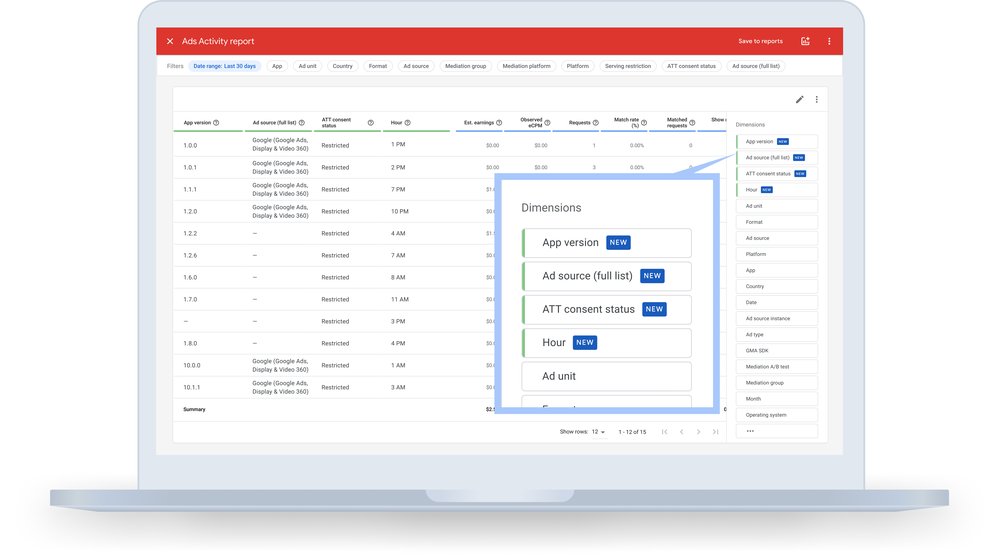
The right metrics can make a huge difference to your game’s success by enhancing transparency and clarity in your ads performance. AdMob’s updated Ads Activity report contains new measurement dimensions to help you do just that. Easily analyze earnings including those from third-party ad sources with dimensions like “hour of delivery,” “app version” or “ad source.” Publishers can also better monitor and understand the impact of privacy changes on revenue with report dimensions indicating publisher and user response to the iOS privacy framework.
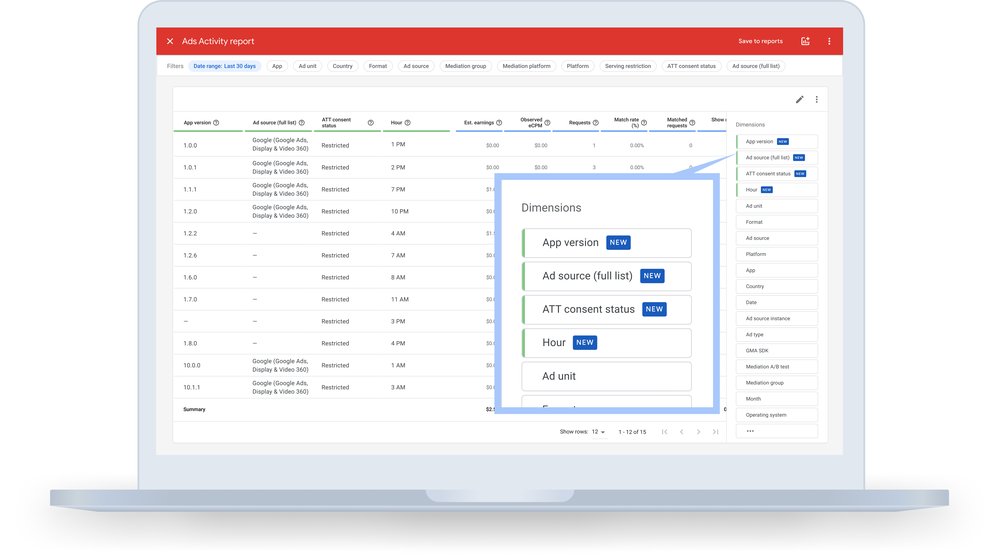
The Ads Activity report contains new dimensions to help you understand your ads performance
Along with the Ads Activity report, we announced more features to help you diversify and grow your revenue for the long-term:
- Google Mobile Ads Software Developer Kit (GMA SDK): Implement the latest GMA SDK version to stay updated on new feature releases such as the same app key that delivers more relevant and personalized ads for your apps on iOS.
- H5 Games Ads (beta): Grow your earnings by easily showing interstitial and rewarded ads in your HTML5 (H5) games today.
- New bidding partner: Access demand from Pangle, now available on AdMob in addition to more than 200 demand partners competing in real-time for your inventory.
Drive deeper engagement and revenue performance
To drive sustainable growth for your game, you’ll need more than just a strong monetization strategy. It is also important to have the right tools to effectively attract quality players. Now, with the ability to add an audience signal to your Android App campaigns, we’re making this even easier. You’ll be able to use your existing knowledge on the types of players you believe your campaigns would be most successful with to help guide our models to find similar new players who are more likely to convert. This will be available in beta in the coming months.
Add an audience signal to help you find new players who are more likely to convert
As the industry moves away from individual identifiers like device IDs, measuring your campaign performance accurately — along with acting on your conversion data — is critical. That’s why earlier this year, we introduced on-device conversion measurement. With on-device conversion measurement, user interactions with app ads can be matched to app conversions in a way that prevents user-identifying information from leaving a user’s device. This helps you to prioritize privacy standards without compromising performance. Explore our developer guide to learn how you can implement this solution for your iOS App campaigns.
We are also releasing other new features to help you grow engagement and performance:
- New audience lists: Re-engage high-value players with automatically generated lists of past purchasers based on your apps’ play data. This feature is now generally available through App campaigns for engagement.
- Creative testing for video: Easily run experiments to understand the impact your video creative has on your App campaign performance. This will be available in beta in the coming months.
- Target return on ad spend (tROAS) for ad revenue: Acquire players who are more likely to engage with ads shown in-app. In the coming months, all developers can send ad revenue from monetization platforms to Google Analytics to improve tROAS bidding in Google Ads.
Scale your reach to third-party app inventory
Lastly, advertisers now have the opportunity to extend their App campaign reach to more users. Advertisers using Google Ads and Display & Video 360 will have the opportunity to participate in real-time bidding integrations with third-party monetization platforms AppLovin (MAX), DT FairBid and Helium by Chartboost.
Also, developers who use third-party platforms will now have easy access to competitive real-time bids from advertisers using Google Ads and Display & Video 360. The program is currently in closed beta and these buying tools will be available as a bidder for approved publishers on these third-party real-time bidding monetization platforms at this time.
Watch the full Ads keynote to hear more about how these solutions can help you drive revenue and profitability for your games business.
Innovation success in Middle East, Africa and Turkey
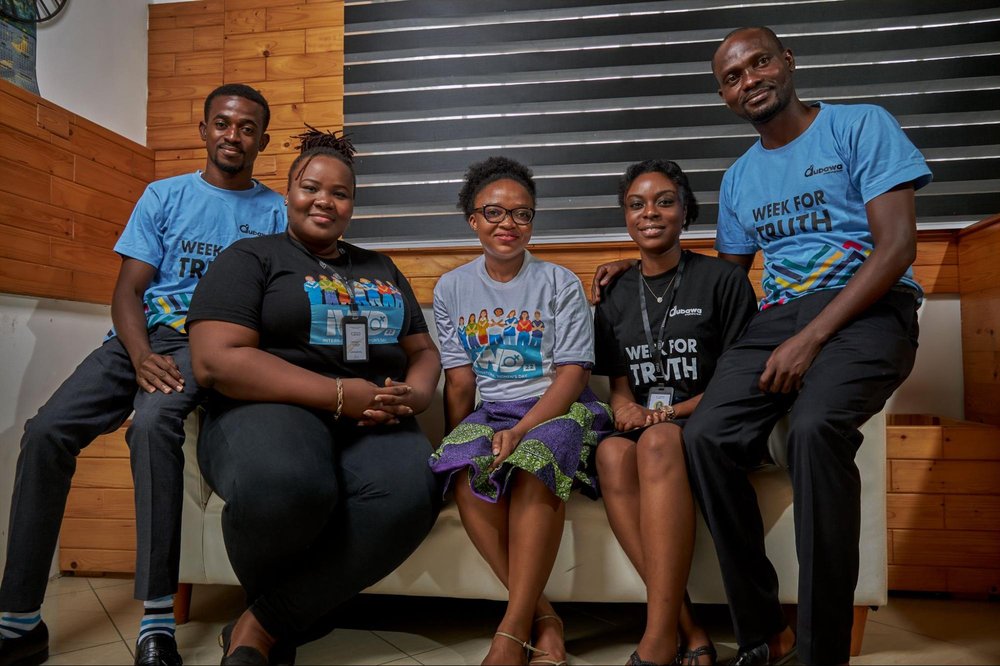
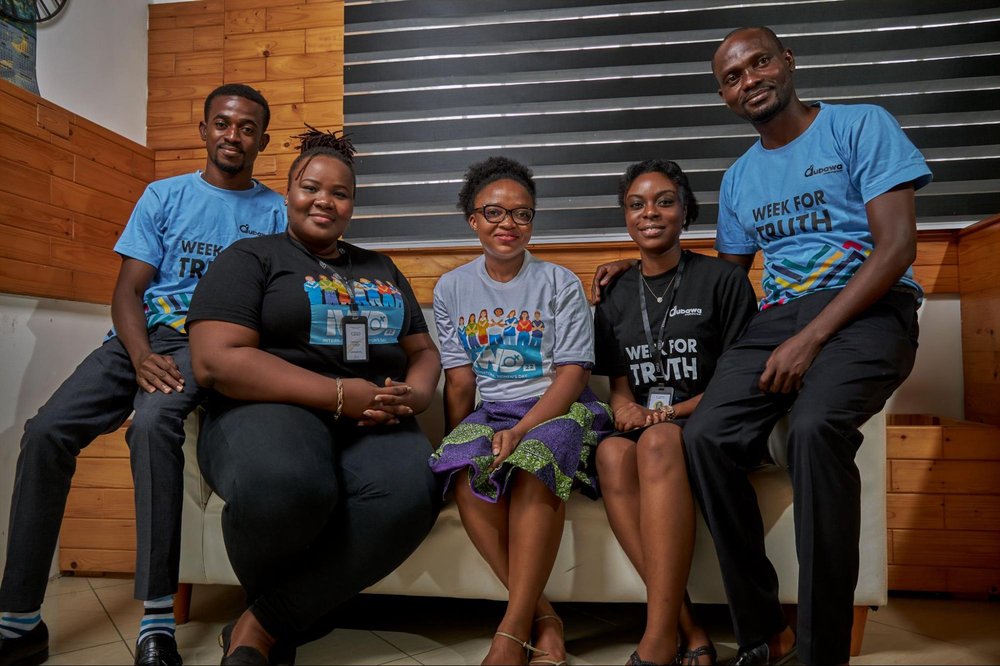
Success! The team at the Dubawa Centre for Journalism Innovation and Development, who will automate radio fact-checking.
The GNI Innovation Challenges, part of Google’s $300 million commitment to help journalism thrive in the digital age, have seen news innovators across the world step forward with many exciting initiatives demonstrating new thinking.
The 3rd Middle East, Turkey and Africa Innovation Challenge launched in February 2022, and received 425 applications from 42 countries – a 27% increase in overall applications. After a rigorous review, a round of interviews and a final jury selection process, 34 projects were selected from 17 countries to receive $3.2 million in funding.
This Innovation Challenge saw a significant increase in applications from news organizations undertaking fact checking activities: an increase of 118% when compared to previous Innovation Challenges in the region. Proposed projects which use artificial intelligence (AI) and machine learning (ML) also showed significant growth (92%), reflecting a trend across the news ecosystem to embrace cutting edge new technologies and data.
The call for applications listed five criteria: impact on the news ecosystem; innovation; diversity, equity and inclusion; inspiration; and feasibility – and the chosen projects clearly demonstrated all five. Here’s a selection of the successful recipients (you can find the full list on our website):
- Dubawa, Centre for Journalism Innovation and Development from Nigeria, an online-only publisher, will introduce automated radio fact-checking.
- Majarra from the UAE will apply AI and ML to use readers’ data to better help them navigate their website and be more inclusive to female subscribers.
- The Bridge Across the Abraham Accords project: In an industry-first initiative, Tel Aviv-based Israel Hayom and Abu Dhabi-based Al-Ittihad will collaborate to give readers of both news organizations the ability to share news and comment in the same multilingual environment.
- Minority Africa from Uganda is designing and implementing a web distribution application that will make it easier for newsrooms publishing under a Creative Commons license to have more control of their work.
- Quote This Woman+ from South Africa will build a tool to provide women+ (identified as women, people living with disabilities, LGBTQI+, rural and religious minorities).
sources to newsrooms and journalists to diversify sources in news coverage. - Dipnot from Turkey, a TV company, will create COM+: a multi-screen OTT platform for curated news in Turkey.
The successful recipients will be embarking on their projects later this summer and will share their learnings with the wider news ecosystem.
<div>What it’s like to have a hybrid internship at Google</div>
After three virtual college semesters, I felt like a fish out of water applying for summer internships. My networking and interviewing skills were rusty, and as a first-generation college student without access to career prep resources, I felt totally unprepared for the job application process. I didn’t know what role I wanted, where to apply or how to write my resume. So I joined a professional development program for underrepresented talent, where I spent hours in workshops, interview prep sessions and meetings with my career coach.
Inspired by a lecture on battling imposter syndrome and the power of believing in yourself, I built up the confidence to apply to Google. I trusted the process and kept my best foot forward, and before I knew it, I was in my first round of interviews for Google’s communications team. Not long afterward, I was walking through the doors of Google’s New York City campus on my first day as an intern.
This year’s interns are the first to participate in Google’s hybrid work week and the first to go into Google’s offices since early 2020. The hybrid schedule has helped me embrace the best of both worlds — from connecting with my teammates over lunch at the office to focusing on projects in the comfort of my home. Through this hybrid experience, and especially as a member of the communications team, I’ve learned how important it is to ask questions, stay connected and engage thoughtfully.
A big part of my role at Google is seeking out and sharing stories about our culture, products and people — including my fellow interns. So in celebration of International Intern Day today, I asked a few of them to share more about their hybrid internship experiences and their proudest accomplishments so far. Here’s what I learned.