Look closer and take better notes with your Chromebook
With the latest update to your Chromebook, we’re introducing a note-taking app, features that improve screen magnification and more. Whether you’re using your laptop for work or fun, these handy features will help you get things done your way.
Take better notes with Cursive
Say goodbye to taking notes with pen and paper. Last year, we launched Cursive on select devices and now we’re excited to roll it out to all Chromebooks that work with a stylus.
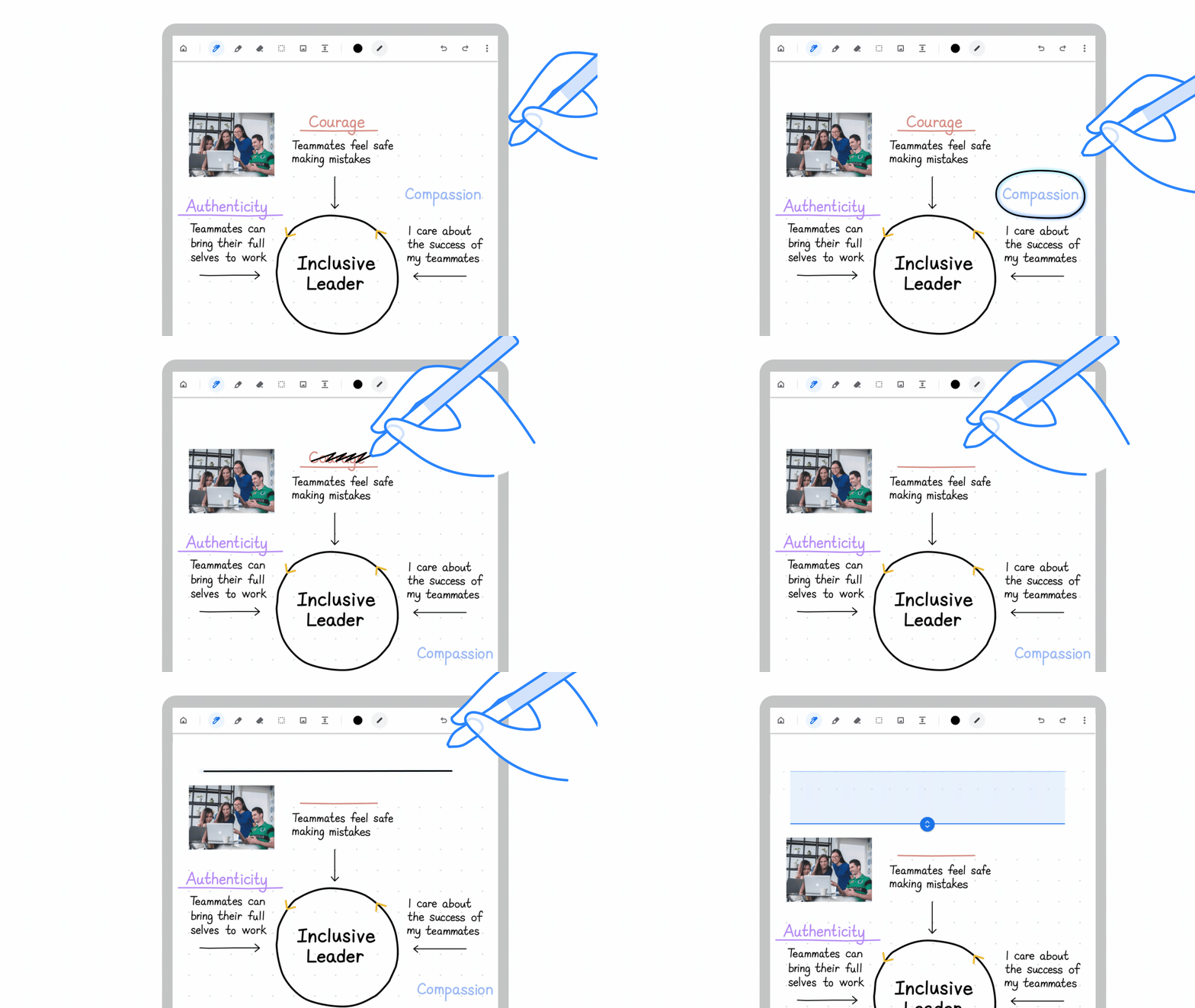
The Cursive app makes it easy to capture, edit and organize handwritten notes on your Chromebook. Beyond just handwriting, you can also sketch out drawings, or paste images within your notes. And you can keep related content together by sorting notes into custom notebooks for different projects. When it’s time to share your idea with others, you can quickly copy and paste it into another app or send a PDF.
If you write a sentence that fits better on a different part of the page, that’s not a problem – easily move it by circling the content on the page and dragging it to wherever you like. Didn’t quite perfect your drawing the first time? Erase it by scribbling over it with your stylus. And if you need to add more notes to the top of the page, just draw a horizontal line and drag your content down to free up more space. Try doing that with a pen and piece of paper!
In the coming months we’ll also introduce features for more personalization, like more easily changing the thickness, style and color of the stylus stroke.
Cursive will be preinstalled on all eligible Chromebooks – just tap the Everything Button and search for the app – or you can download it by going to cursive.apps.chrome and tap “install” in the toolbar. Check out this list of most stylus-enabled Chromebooks and see if you can try out Cursive.
The Cursive app makes taking and editing notes easy.
Improvements to magnification and panning
We zoomed in on your feedback and are rolling out magnification customization on Chromebooks. Currently, the docked magnifier feature creates a split screen: the bottom half is your standard screen, and the top half is the zoomed in version of your screen. This is especially helpful if you have a vision impairment and want to zoom in on just part of your screen.
With our new update, you can control the size of the magnified portion of the screen. You can make it larger if you want to see more zoomed in content, or smaller if you want to see more of the standard screen. You can adapt it to fit your preferences, or adjust based on the content you’re looking at.
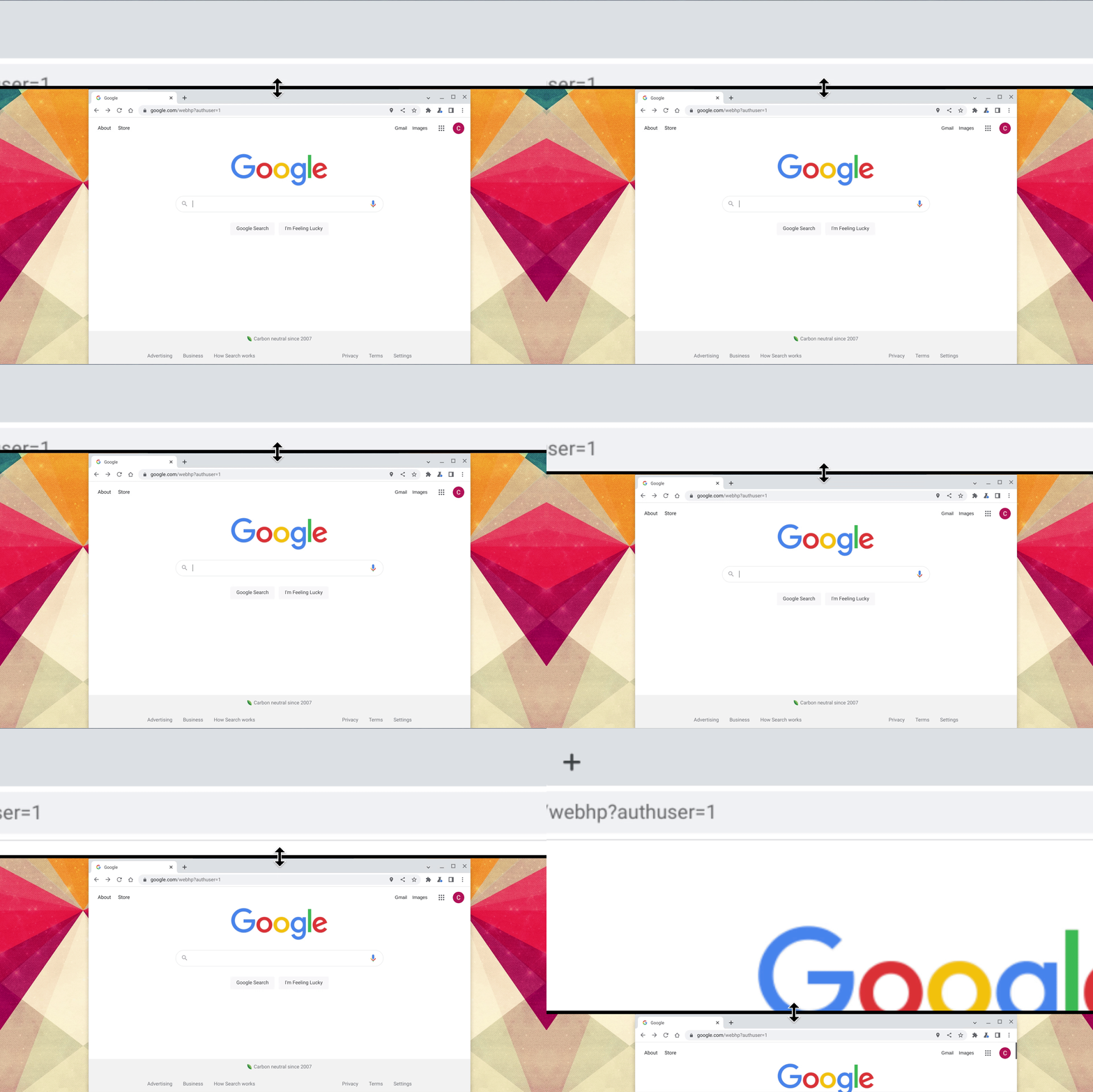
Now you can resize the docked the magnifier so you can see just the part you want.
Recently, we also made updates to the panning experience. With continuous panning, when you move your cursor the rest of the screen will follow it. And if it’s more convenient, you can also use your keyboard to control panning by pressing ctrl + alt + arrow keys.
Alerts for USB-C cables with limited functionality
We’ve all been there before. You try to use a spare USB-C cable to connect a docking station or monitor to your laptop and it just doesn’t seem to work. But that doesn’t necessarily mean you have a faulty cable. Many USB-C cables look identical, but function differently.
Now you can get your extra monitor up and running with less headache. Eligible Chromebooks will notify you if the USB-C cable you’re using won’t support displays, or isn’t performing ideally for your laptop. You’ll also get a notification if the cable you’re using doesn’t support the high performance USB4/Thunderbolt 3 standards that your Chromebook does.
To kick things off, this feature is available on Chromebooks with 11th or 12th generation Intel Core CPUs with USB4 or Thunderbolt capability, with more devices to come. You can learn more about the best cables to use with your device in the support center.
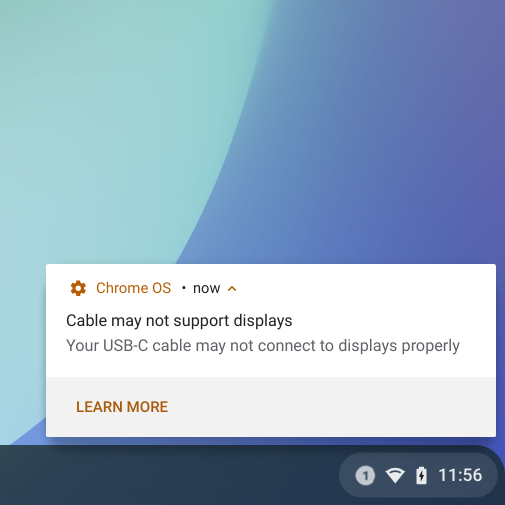
You’ll now get a notification if the USB-C cable you’re using doesn’t support your displays.
We hope you like using these new features as much as we do. We’ll be back soon with more updates.

Innovation Instinct. La docu-serie che unisce tv e digitale
Innovation Instinct (foto di copertina levi-stute-T-JyPYThwtw-unsplash) La docu-serie che unisce tv e digitale, in onda su Mediaset Infinity L’IDEA: offrire un nuovo strumento di comunicazione ad aziende e personaggi del…
L’articolo Innovation Instinct. La docu-serie che unisce tv e digitale scritto da Paolo Brambilla proviene da Assodigitale.
Smart Plug TP-LINK compatibile con Alexa e Google a meno di 10 euro su Amazon
Supporting our Asian community organizations
Growing up, I spent my grade school years in a community where my family and I — along with a Korean family and Filipino family — were the only Asians. While I had a great childhood, the realities of racism were always there — and to press on, I believed I had to work hard, keep my head down and stay in the background.
Now as VP of Audit in Google’s Finance team and one of the executive sponsors for the Asian Googler Network employee resource group, I’ve learned how important it is to have safe, supportive spaces that can remind the Asian and Pacific Islander (API) community of the power of our voice. I get to use my own voice to connect API-owned or focused organizations with the incredible resources Google has to offer.
Last year, Google announced our efforts to help #StopAsianHate by supporting organizations leading the charge in creating safe and inclusive spaces for the API community. And today, we’re continuing our commitments to support API-focused organizations with an additional $3.25 million in cash and in-kind contributions to help fight for safety, dignity and equity for the API community.
As a part of this recommitment, Google will donate Search advertising to Right To Be, Asian Pacific American Institute for Congressional Studies and Council of Korean Americans. These in-kind contributions will help these and other API organizations raise funds, share resources with community members and cultivate new allies and supporters. Google.org will also continue its funding of Asian Americans Advancing Justice (AAJC) to help them as they advance civil and human rights for Asian Americans.
But giving is only a small part of the equation for real impact. I sat down with Emily May, Co-Founder and Executive Director of Right To Be, to learn more about all the work they’re leading to advance a more fair and equitable society and how partnership with companies like Google help them make lasting change in the world.
A spotlight on Right To Be: taking action, together
Right to Beis focused on building a world free of harassment, for all communities. During the COVID-19 pandemic, you expanded your training program to include addressing anti-Asian hate and xenophobia. Tell us about how this got started.
In March 2020 when the pandemic started, we quickly saw a significant rise in hate against the API community. We reached out to AAJC, and together asked, “what can we do to help?” We created and launched a 1-hour Bystander Intervention training in April 2020. Although we weren’t sure what the response would be, the demand kept growing and our sessions were always full. In our two-year partnership with AAJC, we’ve trained 200,000 people!
That’s incredible! What did you find most surprising or challenging in developing this training?
Understanding history was one of the most important things we did, and this is where AAJC was incredibly helpful. There’s a common belief that Asian Americans are the model minority, do not face discrimination, and are running Silicon Valley. But Asian Americans have been consistently sidelined, especially through policy. Anti-Asian hate did not suddenly appear because of the pandemic; this is just the latest chapter in a long history.
And how do you build awareness of this training and your organization?
Word-of-mouth promotion is definitely a key channel for us. But having advertising funds like Google Ad Grants is just as important, because when you are dependent on word-of-mouth, you are also dependent on people who are connected through similar ideologies and communities. When you are trying to change the world, however, you need people from different spaces and communities to get involved and spread the word through their networks.
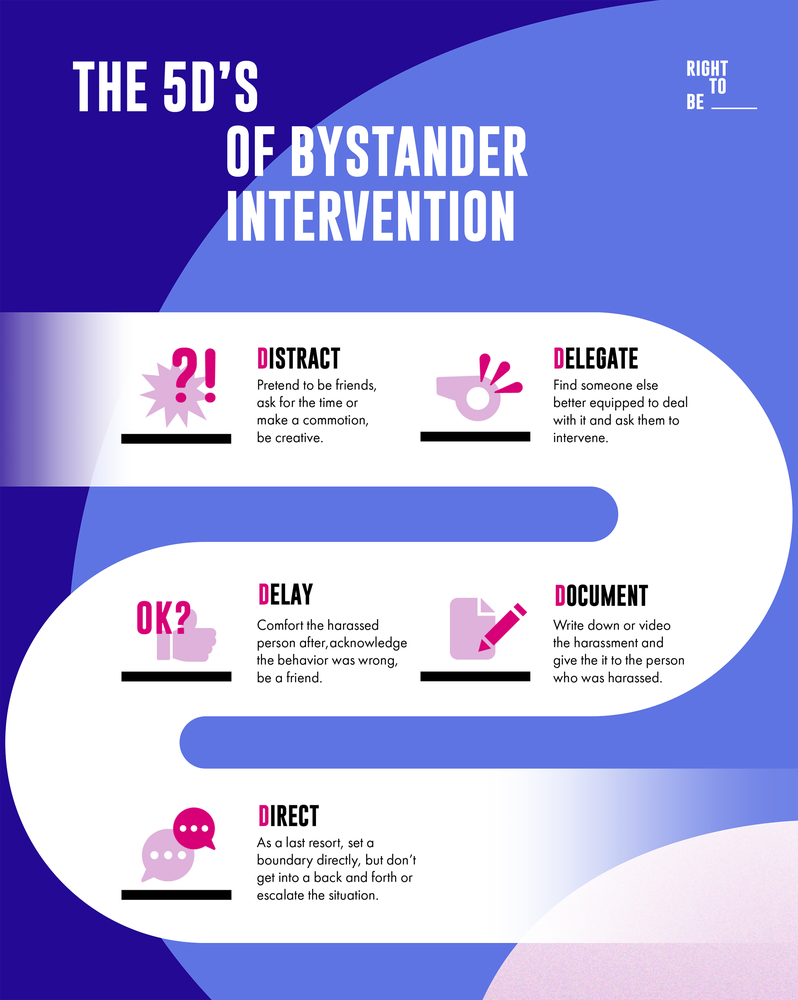
I have two young daughters and so much of our conversation today are topics I didn’t expect I’d be having with them at a young age. A lot of what we discuss is reflective of the Bystander Intervention’s trainings core principles, the 5Ds: Distract, Delegate, Document, Delay, and Direct. For those who haven’t taken the training yet, can you tell us about the 5Ds?
My vision is that the 5Ds become the “stop, drop, and roll” for this generation. My hope is that the 200,000 people who have taken our training addressing anti-Asian hate will now feel empowered to say, “That’s not okay; I’m going to distract; or I’m going to delegate.” using these core principles. If folks want to learn more, we share more about this in our free training and our new book that complements the training.
Right To Be’s 5D’s, the core principles to its bystander training program
Finally, what is one piece of advice that you’d like to give someone who wants to be an ally and help marginalized groups?
Listen. Don’t commit to an outcome or your vision on how you think things should be. Let those who are most impacted take the lead, make the space for them to do that, and learn from them.

Driving growth in the Middle East
The Nest is an online store that offers curated handcrafts from Egypt, from home accessories to fashion and furniture. When the pandemic started, founders Dina and Omar had to close their physical showroom, which used to drive 90% of their sales. They listed their business details on Google Maps and Search, promoted their products online and revamped their website which, in less than a year, became their main source of revenue.
According to a new report published by Public First research agency and commissioned by Google, our products and tools in the UAE, Egypt and Saudi Arabia helped businesses to adapt during the pandemic and helped people sharpen their skills and find jobs.
The report shows 45% of people in Egypt last year used Google Maps to find a local business and 52% of businesses in Saudi Arabia reported an increased proportion of their customers coming from online search or search advertising.
Since opening our first office in the Middle East and North Africa 13 years ago, Google has been actively supporting local businesses and developers, YouTube content creators, and publishers. Public First estimates that last year Google products like Search, YouTube, Android and Google Ads drove 12.2 billion SAR [3.2 billion USD] to the Saudi economy, 11.3 billion AED [3 billion USD] to the UAE economy and 11.2 billion EGP [600 million USD] to Egypt’s economy.
Growing developers and creators
Manal, DIY content creator on YouTube in Saudi Arabia. Photo credit: Manal’s YouTube page
Manal, from Jeddah in Saudi Arabia, has a passion for DIY in fashion and home improvement. She started her YouTube channel to share her knowledge in upcycling dresses and scarves to make trousers, and repainting her room for Ramadan. Manal’s work has inspired others, and her community often share their own versions of her designs and ask for DIY tips. When she built her channel during the pandemic, her subscribers grew by over 300%. Manal is one of many talented creators in Saudi Arabia growing their business on YouTube. In fact, the percentage of YouTube channels in Saudi Arabia making six figures or more in revenue is up more than 20% year over year. That’s a sign of steady growth in Saudi Arabia’s YouTube creator community.
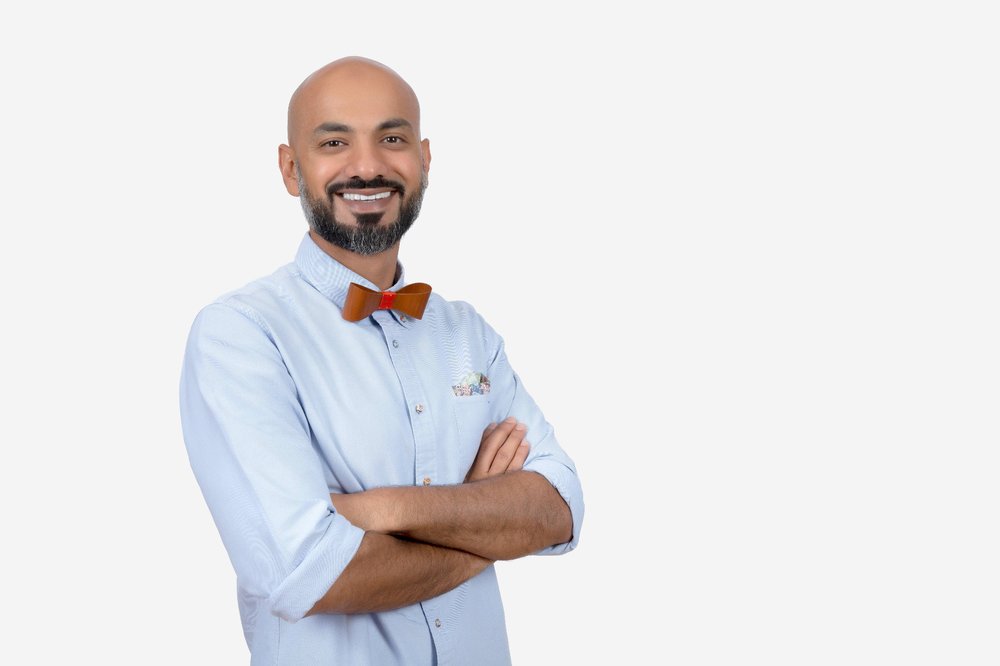
Badr Ward, founder of Lamsa World, an Arabic educational platform in the UAE. Photo credit: Hub71
Lamsa World is an educational platform in Arabic for children. It has interactive courses in math, science, language, arts and more. Badr Ward, the Dubai-based founder, wanted to help his children watch more educational content in Arabic, which was sparse and not always engaging. Badr and his team took part in the Google Accelerator Program in Dubai last year and, with the help of mentors, tested different sign-up options and experimented with different content formats. This led to a significant increase in the website’s sign-up rates and a 300% increase in Arabic content downloads.
Unlocking skills and jobs
Since its launch in 2018, Maharat min Google, Google’s digital skills program in Arabic, has trained 1.5 million people in the Middle East and North Africa. And in October 2020, Google announced a $13 million USD fund for digital tools, training programs, mentorship and financial grants to support businesses and job seekers in the Middle East and North Africa during the pandemic. Following Google’s mentorship program with Mercy Corps, 50% of trainees said that they found a job, accelerated their career or grew their business by hiring new staff or increasing revenue.
Google Search also played a big role in helping people in the region access information and skills last year. For example, 85% of people in the UAE said they used Search to learn a new skill.
People looked for jobs too. Every month, around 11 million women in Egypt go to Search to look for a job. In Saudi Arabia, 1.8 million people use Search to prepare for a job interview. According to the World Economic Forum, many women are contributing to the innovation coming out of the Middle East and North Africa, yet this region continues to have one of the lowest levels of female economic involvement globally.
Public First estimates there are already 85,000 Android-based developer jobs in Egypt and 50,000 in the UAE. In Saudi Arabia, the total number of developers making USD 10,000 per month on Google Play grew by 16% last year.
We are proud that people in the Middle East and North Africa are able to unlock opportunities for themselves with the help of Google products and tools. The region is young, smart and digital, and Google is committed to doing more to help entrepreneurs, local business owners, developers and content creators get the skills they need to build and grow their digital businesses.
If you want to understand more about Google’s impact in the Middle East and North Africa, and the methodology behind the report, visit the links below:
- UAE: googlemena.publicfirst.co/uae
- Saudi Arabia: googlemena.publicfirst.co/saudiarabia
- Egypt: googlemena.publicfirst.co/egypt
Il Motorola moto g22, lo smartphone best buy del momento è a soli 159€

SSD interno Crucial da 1TB, SUPER SPAZIOSO a prezzo FOLLE: solo 86€!
Apple Watch SE, su eBay lo trovi ORA scontato di 70€. Pochi pezzi

Kingston FURY Impact da 8GB a meno di 30 euro su Amazon

Stop a ogni problema di spazio con l’hard disk esterno da 1TB
Crea un sito web professionale con WordPress
Linux XDP: Microsoft vuole portarlo su Windows
ChromeLoader: come proteggersi dal malware che attacca i browser

Questo è il momento giusto per comprarti l’Apple Watch Series 6