Xiaomi MIX Fold 2: il display potrà ruotare di 360°?
News Showcase is launching in Slovakia
Journalists have long been committed to providing reliable information to people when they need it, with the last few weeks proving this more than ever. With products like Search and News, Google is committed to helping people find reliable and relevant information.
Today we’re going further in our support for journalism in Slovakia by rolling out Google News Showcase, our product and licensing program for news publishers.
Google has signed partnerships with six Slovak publications including national news outlets, a television broadcaster and a press agency, which provide essential news coverage to people all over the country. The titles included in the News Showcase launch in Slovakia are Nový čas, Denník N, SME, TA3, Topky and Webnoviny. We’ll continue to work with other news partners in the country to add additional resources in the future. News Showcase is part of our global investment in news and reinforces our commitment to journalism in Slovakia and around the world.
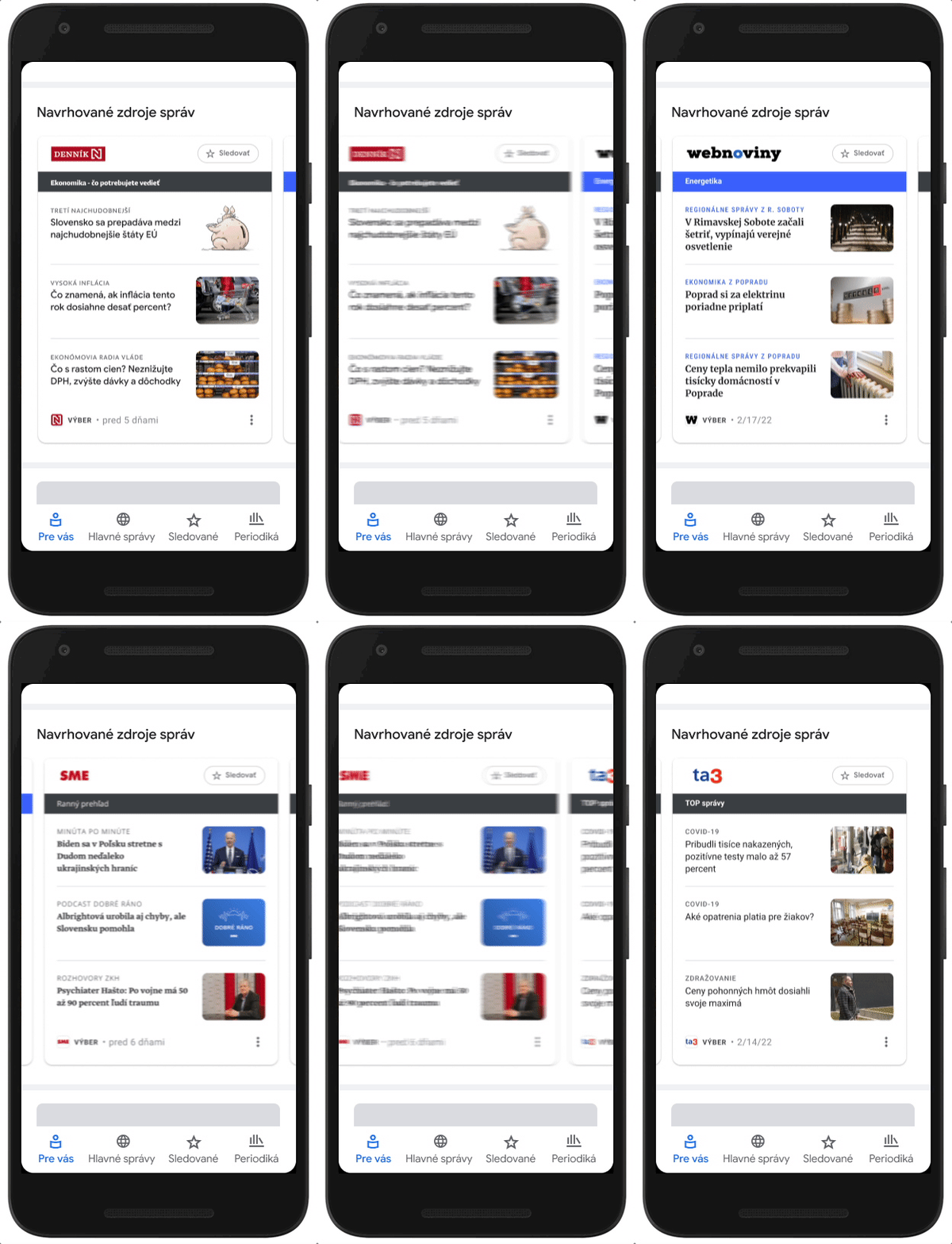
An example of how News Showcase can look for some of our partners in Slovakia
News Showcase panels can appear on Google products, currently on News and Discover, and direct readers to the full articles on publishers’ websites, helping them deepen their relationships with readers. Panels will also include extended access to paywalled content from select participating publishers to give readers even more from their favorite sources, with the intention of leading to more subscribers for the news organization. In addition to the revenue that comes directly from these more-engaged readers, participating publishers will receive monthly licensing payments from Google.
“At SME, we realize that only high-quality and independent journalism will gain long-term support from subscribers,” says Peter Macinga, Chief Digital Officer of Petit Press, the publisher of SME and of other national and regional news titles in Slovakia. “We appreciate our partnership with Google on News Showcase, which will make our premium content available to an even larger audience.”
“Dennik N only exists thanks to the support of our subscribers, and we are therefore always looking for ways to provide them with faster and more convenient access to information,” says Lukas Fila, CEO of N Press, the first Slovak national publisher that made a move to derive the majority of their revenue from subscriptions. “Google News Showcase is a new way for our interviews, investigative journalism and analyses to reach readers. With the free access to some of our normally paywalled content, brand new audiences will be able to try out access to our paid articles.”
Since we launched News Showcase in October 2020, we’ve signed deals with more than 1,400 news publications around the world and have launched in 15 countries including India, Japan, Germany, Portugal, Brazil, Austria, the U.K., Australia, Czechia, Italy, Colombia, Argentina, Canada, Ireland and now Slovakia, bringing more in-depth, essential news coverage to Google News and Discover users.
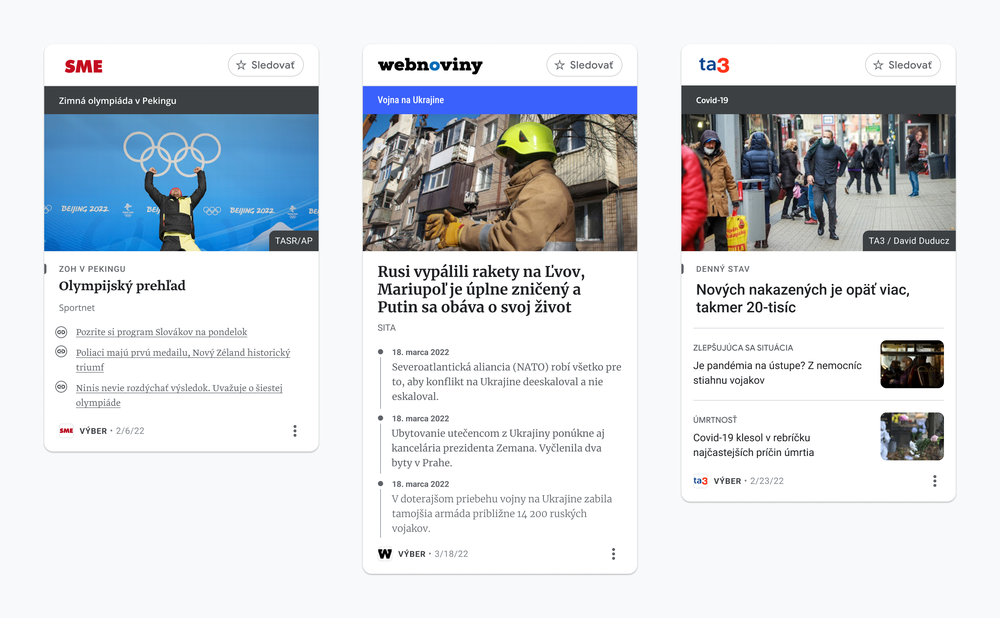
An example of how News Showcase panels will look with some of our partners in Slovakia
“As one of the longest established media companies in Slovakia, we are glad to be among the first to participate in this Google project,” says Samuel Schlarmann, Digital Media director of news agency SITA, a national news outlet. “We are glad that we can develop our journalistic, analytical and digital skills in this direction. We see our partnership in Google News Showcase as an opportunity to bring our work closer to new readers, and we firmly believe that we will enrich the Google platform with quality content.”
Google News Showcase is our latest effort to support publishers and the news industry in Slovakia. We supported 12 local Slovak newsrooms through the Google News Initiative’s Journalism Emergency Relief Fund to help them continue their vital work during the COVID-19 pandemic, and provided 1.5 million euros to support six Digital News Innovation Fund experimental news projects, from titles such as SME, Denník N, Postoj and Vot. Around the world, the Google News Initiative has supported more than 7,000 news partners in over 120 countries and territories. Since 2015, the Google News Lab has trained more than 300 Slovak journalists, newsroom staff and journalism students on a range of digital tools to help them research, verify and visualize their stories.
Google also sends eight billion visits each month to European news websites from products like Search and News, which publishers can monetize with online advertising and subscriptions on their websites and apps. Our ad technologies enable news organizations to sell their ad space to millions of advertisers globally.
We’re dedicated to continuing our contribution to and collaboration with the news ecosystem, supporting the open web and continuing to provide access to information in Slovakia and elsewhere.

Prime Video, 5 film da non perdere ad aprile 2022

Honor Magic4 Lite arriva in punta di piedi con lo Snapdragon 695
A new fellowship for experiments in journalism and AI
Last year, 24 international newsrooms participated in the JournalismAI Collab Challenge, a Google News Initiative partnership with Polis, the journalism think-tank at the London School of Economics and Political Science. Their goal was to help journalists around the world build solutions, powered by artificial intelligence, to enhance their reporting capabilities.
Together, they prototyped helpful tools such as AFP and The Guardian’s machine learning solution to accurately extract quotes from news articles, the Political Misogynistic Discourse Monitor, which detects hate speech against women in several languages, and a guide to using AI and satellite imagery for storytelling.
To grow this collaboration, we are launching a newJournalism AI Fellowship Programme for 20 journalists and technologists in Europe, Asia-Pacific and the Americas to explore and experiment with new ideas.
This program is aimed at professionals with some experience in AI and will run for six months, from June to December 2022. It is fully virtual and has been designed for Fellows to be able to dedicate six to eight hours a week to their project, whilst keeping up with their day-to-day responsibilities at work.
Rather than individual Fellows, we’re inviting two people from the same organizations – one with an editorial role and one with a technical role – to apply for the program. Each pair will collaborate with another pair from a different publisher to form a team of four.
Each team will be provided with mentoring and coaching opportunities and get access to JournalismAI’s global network of 4,000 experts, researchers and innovators. A budget of $6,000 per team will also help cover project-related expenses.
At the end of the program, participants will present their work and lessons they learned at the third edition of the JournalismAI Festival, the yearly gathering of the JournalismAI community.
Applications for the JournalismAI Fellowship Programme are reviewed on a rolling basis and close on Thursday April 28 at 11:59 PM GMT. To learn more about the process, please visit the program’s website and sign up for the JournalismAI newsletter.

DragonChase 2022: slitta a “non prima del 21 aprile” la partenza della Crew-4; i poster ufficiali della missione; conferenza stampa; info sulla possibile EVA
Gli slittamenti delle altre attività al Kennedy Space Center (la prova generale o wet dress rehearsal del vettore lunare SLS/Artemis e il lancio commerciale Axiom-1) hanno portato a un nuovo rinvio della data di lancio della missione Crew-4 della quale fa parte Samantha Cristoforetti. Lo ha annunciato poco fa Kathy Lueders, Associate Administrator del Space Operations Mission Directorate (in pratica la persona che dirige il programma spaziale con equipaggi della NASA).
“NASA and @SpaceX continue to carefully look at the operational schedules ahead of the agency’s Crew-4 mission to the @Space_Station. We currently are targeting launch no earlier than April 21 and also looking at the backup date of April 23. (1/2)” ha scritto, aggiungendo “The additional spacing provides mission teams time to complete final prelaunch processing for Crew-4 following the launch of the Axiom Mission 1 to the space station. We’re taking each mission step-by-step to ensure we are moving forward safely. (2/2)”.
In sintesi, al momento in cui scrivo il lancio è previsto per “non prima del 21 aprile” e viene presa in considerazione la “data di riserva del 23 aprile”. Questo è un problema per noi DragonChaser, visto che rientriamo dalla Florida il 23 nel tardo pomeriggio. Ma l’importante è lanciare bene.
Intanto sono stati pubblicati i poster ufficiali collegati alla missione:
So say we all! #Exp67 #BSG pic.twitter.com/wjtozW1j0t
— Samantha Cristoforetti (@AstroSamantha) April 6, 2022
Questo poster della Expedition 67, chiaro omaggio alla serie di fantascienza Battlestar Galactica, è opera di Sean Collins e la sua concezione è merito di @RikyUnreal, ha aggiunto Samantha su Twitter. Oltre a Kjell Lindgren, Bob Hines, Jessica Watkins e Samantha Cristoforetti, il poster mostra anche gli altri membri della Expedition 67. Da sinistra: Bob Hines, Denis Matveev, Samantha Cristoforetti, Oleg Artemyev, Kjell Lindgren, Jessica Watkins e Sergey Korsakov.
Kjell Lindgren, comandante della missione Crew-4, ha pubblicato quest’altro poster, creato da Cindy Bush del Johnson Space Center:
Our Crew-4 poster! Designed in the style of the WPA’s National Park posters of the 1930s and 40s. Thanks to JSC’s Cindy Bush for bringing this concept to life! pic.twitter.com/szBmCG3RNX
— Kjell Lindgren (@astro_kjell) April 6, 2022
Questi poster proseguono una tradizione di molti equipaggi spaziali, compreso quello del volo precedente di Samantha Cristoforetti, che aveva come tema la Guida Galattica per Autostoppisti di Douglas Adams. Trovate sul sito della NASA la serie completa.
Ecco i nuovi poster in versione più facile da vedere e scaricare (sono anche disponibili sul sito NASA in alta risoluzione):


Intanto l’ESA ha invitato i media a partecipare a una conferenza stampa virtuale con @Astrosamantha l’11 aprile dalle 15 alle 16.30 CEST (link). Ovviamente mi sono iscritto :-) Se avete qualche domanda da porre, segnalatemela nei commenti. Oltre a Samantha saranno presenti Josef Aschbacher, direttore generale dell’ESA; David Parker, direttore ESA per l’esplorazione umana e robotica; Vittorio Colao, ministro italiano per l’innovazione tecnologica e la transizione digitale; e Giorgio Saccoccia, presidente dell’Agenzia Spaziale Italiana ASI. La conferenza stampa sarà trasmessa pubblicamente su Esawebtv.esa.int.
#Media are invited to virtual Q&A with ESA astronaut @AstroSamantha on 11 April, 15:00-16:30 CEST ahead of her upcoming mission to the @Space_Station with Crew-4.
Details and registration: https://t.co/NAFF0RVA4E pic.twitter.com/UBkbTn5FTK
— ESA (@esa) April 6, 2022
Segnalo inoltre che la NASA ha attivato un evento gratuito su Eventbrite per consentire a tutti di ricevere “informazioni sui cambiamenti del piano di lancio, sulle attività legate al lancio e sulle risorse selezionate attienti al lancio” ed essere “ospiti virtuali” del lancio. L’evento inizia il 20 aprile alle 6.37 AM EDT.
Intanto Michal Vaclavik, “space scientist and educator” e rappresentante della Repubblica Ceca all’ESA, ha pubblicato un tweet che dice (se ho capito bene, sono in attesa di verifica) che “l’astronauta dell’ESA Samantha Cristoforetti, insieme al suo collega russo Oleg Artemyev, è stata assegnata all’EVA VKD-54 nella prima metà di maggio. I loro compiti principali saranno il collaudo del braccio robotico manipolatore ERA e il lancio di cinque Cubesat 3U JUZGU-55”.
Astronautka ESA Samantha Cristoforetti byla společně s ruským kolegou Olegem Artěmjevem přiřazena k výstupu do volného kosmického prostoru VKD-54 chystaného na první polovinu května. Hlavními úkoly bude testování robotického manipulátoru ERA a vypuštění pěti 3U CubeSatů JUZGU-55. pic.twitter.com/NcmTgXluq5
— Michal Vaclavik (@Kosmo_Michal) April 6, 2022
Netflix: arrivano i film brevi per chi ha poco tempo

Will Smith: stop ai prossimi film, via da Netflix
Tavoletta LCD per disegnare e cancellare: perfetta per TUTTI (13€)

Cucina come uno CHEF con questa friggitrice ad aria XL STRAFIGA
Spazzolino elettrico e VIA: sbianca i denti e non solo, gran SCONTO Amazon
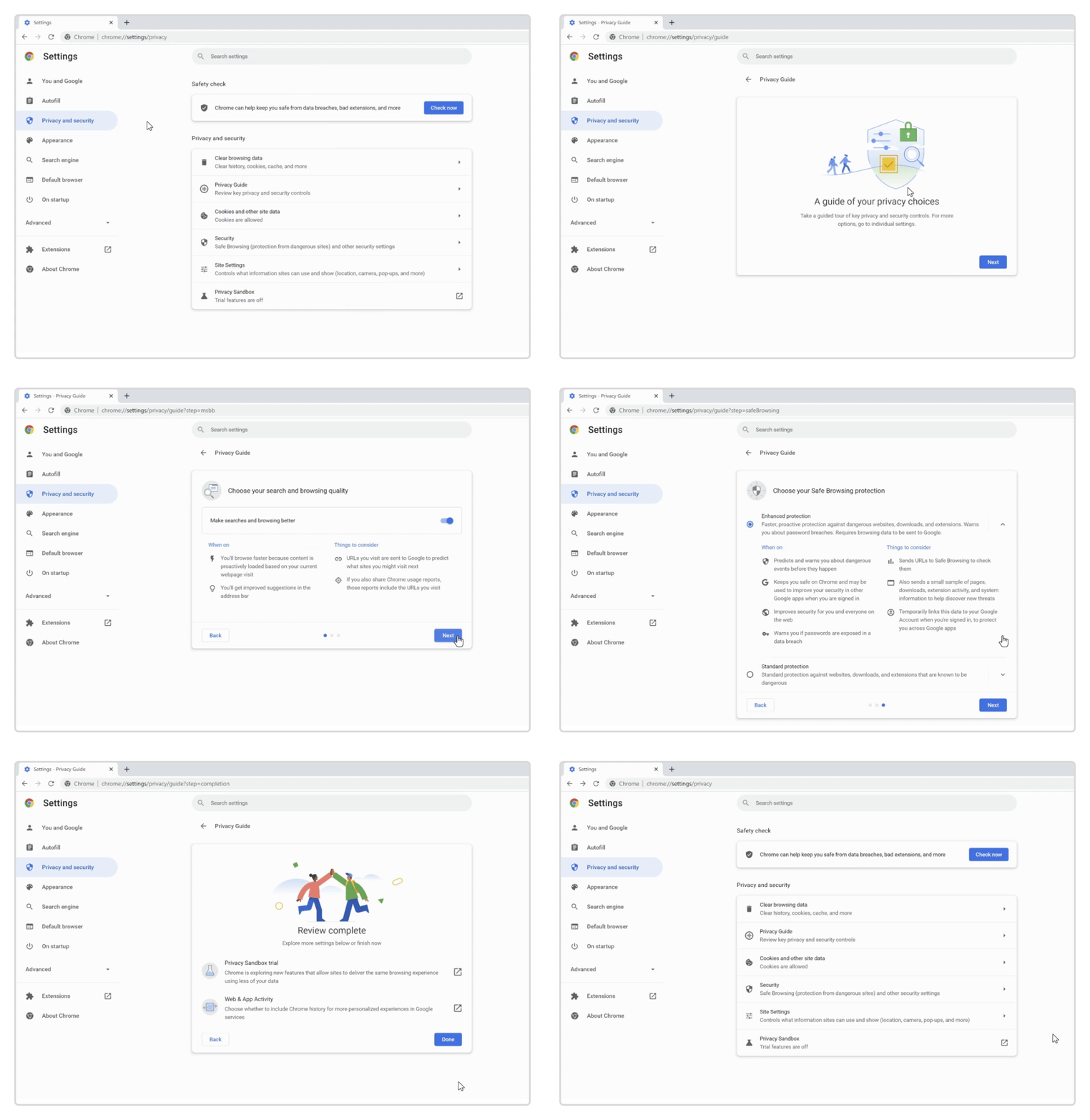
Take a step-by-step tour of your Chrome privacy settings
Your browser plays a big role in your online experience — including protecting your privacy. And in Chrome, we don’t take this responsibility for granted. That’s why we’ve made your privacy and security controls easier to understand, and today, we’re introducing our latest tool to help you continue to protect your privacy while you browse.
Developed at the Google Safety Engineering Center (GSEC), Privacy Guide is a step-by-step guided tour of some existing privacy and security controls in Chrome — so you can make and manage the right selections for you in one spot.
When you navigate through Privacy Guide, you’ll learn about the ‘Why’ behind each setting, and how it impacts your browsing experience, so you can easily understand what happens. To start, Privacy Guide will include controls for cookies, history sync, Safe Browsing, and Make Searches and Browsing Better. As we receive feedback from the community, we may add more settings to the guide over time.
Soon, you’ll see a new card for Privacy Guide in the “Privacy and security” tab in your Chrome settings, which you can find by clicking the three dots on the top-right corner of your browser. And don’t worry if you don’t have time to take the whole tour at once. Your changes are saved along the way, so you can pick it back up whenever works best for you.
Privacy Guide will start rolling out to Chrome desktop users who are on version 100 or above in the coming weeks. We hope it helps you learn more about Chrome’s privacy settings and, most importantly, gives you the peace of mind to browse safely.
100 versions of Chrome later: What we learned along the way
When we introduced Google Chrome back in 2008, our goal was to build a browser that was fast, secure, and easy to use. For over a decade, we’ve worked with the larger ecosystem to drive innovation on the web forward and build a user and developer experience that helps people and developers get things done. We continue this work today.
It’s humbling to know that billions of people around the world turn to Chrome, and we’re constantly challenging ourselves to make it faster, safer, more helpful and more accessible for everyone. Personally, I’ve been inspired by how we’ve driven HTTPS adoption, made payments and password management better and helped developers create incredible Chrome extensions. In short, it has been amazing to see the thousands of tiny updates from the team that came together to make Chrome better and better.
We recently rolled out the 100th major update for your Chrome browser — and to mark this milestone, I asked some members of the team to share a few of their favorite features and improvements.
Building the fastest browser
Max Christoff, Senior Engineering Director
There’s no such thing as a browser that’s too fast. Speed has shaped our work since Chrome’s launch in 2008. After more than a decade, we’ve continued to find new performance wins by obsessively sweating the engineering details. In the past year and a half alone, we’ve made Chrome an additional 43% faster. But having the fastest browser on the planet doesn’t help if your device runs out of battery or memory, so we’ll continue working to make Chrome more efficient — on all platforms, from low-end phones to high-performance workstations.
Prioritizing your privacy and security
Sabine Borsay and Patrick Nepper, Senior Product Managers, Chrome Trust & Safety
From the beginning, we designed Chrome with your safety and privacy in mind. Chrome comes with a powerful password manager to make signing in safe and seamless across your devices. It will also warn you if your passwords have been compromised and help you fix weak ones with a single tap. Along with providing strong default protections, we try to make privacy controls easy to find, understand and use. After a complete redesign of Chrome’s security and privacy settings two years ago, we have a new guided tour of key privacy controls, so you can make choices that work best for you.
Building a simple, safe and beautiful Chrome
Alex Ainslie, UX Director
Looking back on the past decade, I’m proud of the human-centered work the Chrome team has done to build a browser that’s powerfully simple — that’s shown in features like tab groups and password autofill. Along the way, we’ve published work on usable security, designed a tiny dino game and updated Chrome’s visual design. Chrome’s designers, researchers and writers focus on crafting a browser specifically for each device by taking into account operating system conventions, input methods and hardware capabilities. We want to get the #littlebigdetails right and welcome your bug reports and feedback about how we can make Chrome work better for you.
Designing a more inclusive experience
RK Popkin, Group Product Manager
Looking back, I’m proudest of the work we’ve done to bring the web to more people. Chrome is now the most popular browser for screenreader users, and we use the latest AI advancements to describe pictures across the web for blind and low vision users. We’ve added Live Captions to video/audio content for users who are Deaf or hard of hearing, and our DevTools accessibility tree helps others build better for people with disabilities. Chrome also uses neural machine translation to translate the web in 108 languages — this past month, we translated over 25 billion webpages! We’ve also collaborated with Black and Latino artists to bring their visions to Chrome’s new tab page, giving people a new way to make Chrome reflect themselves. We’re excited to release more collaborations in the future.
Supporting a free and open-source web browser project
Paul Kinlan, Senior Staff Developer Advocate & Lead of Chrome Developer Relations
As a web developer before joining Google, I was fascinated with Chrome because it was the first open source browser project (the project itself is called Chromium) and built on web standards, meaning anyone could contribute and improve it. Today, Chromium powers many of the most popular browsers, including Microsoft Edge and Amazon Silk, while also enabling the web to be built into Android apps, TVs and VR headsets. Thanks to our commitment to shorten the release cycle and ship a new version of Chrome more often, we’re now able to make improvements and fix issues quicker, and projects like Interop 2022 will help enable web developers to build experiences that work everywhere.
Deploying Chrome at work or school
Philippe Rivard, Senior Product Manager, Chrome browser enterprise
People everywhere transitioned to remote work and school during the pandemic, and many of them relied on Chrome to help. What people might not know about is the work that IT teams around the world did to make this seamless and secure, thanks to tools like Chrome Browser Cloud Management. This allowed IT teams to manage Chrome across operating systems, directly from the cloud. I’m proud of the work my team has done to help organizations of all sizes make the most of the web. Now, many organizations are moving to hybrid working models for the foreseeable future, and Chrome will continue to support IT teams as they handle this added complexity.
Helping you search and get things done online
Yana Yushkina, Product Manager, Search in Chrome
We’ve all left too many tabs open in fear of losing valuable info — that’s why I’m most excited about Chrome Journeys. This helps you revisit time-intensive research by pulling your previously visited sites based on topic. Or to skip tabs altogether, Chrome Actions helps you jump right to opening a new Doc, translating a page or sharing a site.
Keeping up with content you care about
Janice Wong, Product Manager, Content Discovery
At its core the web is all about content — both the people consuming it, and people creating it. Last year, we made it easier for you to follow and get updates from your favorite web publishers right from Chrome. You can also discover content from new websites that’s relevant and interesting to you in Chrome on Android and iOS. I’m excited to help even more people keep up with their interests and discover new ones from the new tab page.
Thank you for trusting Chrome and for helping us continually improve it via your feedback — here’s to the next 100 milestones!

Mai troppo tardi per un termometro ESSENZIALE a soli 5€