Taglio accise carburante: il Governo lo proroga fino al 30 giugno

WordPress: creare un sito vetrina

WordPress: comprendere la Dashboard
Ubuntu 22.04 LTS rilasciata: ecco tutte le nuove funzionalità

SSD Kingston da 240 GB con tecnologia 3D Nand ad un prezzo SUPER su Amazon

7-Zip: grave vulnerabilità su Windows

Notepad Next: il fork di Notepad++ con il supporto a Linux
Nuove possibilità di scelta dei cookie in Europa
Se avete visitato un sito web in Europa, è probabile che vi siate imbattuti in un banner in cui vi si chiede il consenso per l’utilizzo dei cookie. Grazie ai cookie i siti possono mantenere le informazioni riguardanti la vostra navigazione, così da permettere di avere diverse funzionalità, tra cui visualizzare il testo nella propria lingua preferita, assicurarsi che a visitare il sito sia un utente reale e non un fastidioso bot, o valutare se una campagna pubblicitaria stia funzionando o meno.
Nell’ultimo anno, le autorità di regolamentazione che applicano le leggi europee e che richiedono questi banner, comprese le autorità per la protezione dei dati in Francia, Germania, Irlanda, Italia, Spagna e Regno Unito, hanno aggiornato le loro linee guida di conformità. Pertanto, ci impegniamo ad adottare questi nuovi standard, che sono frutto anche della collaborazione con le autorità locali di alcuni di questi paesi.
Sulla base di questi confronti e delle specifiche indicazioni della Commission Nationale de l’Informatique et des Libertés (CNIL) francese, abbiamo riprogettato completamente il nostro approccio alla gestione dei cookie, modificando anche l’infrastruttura che utilizziamo per gestirli.
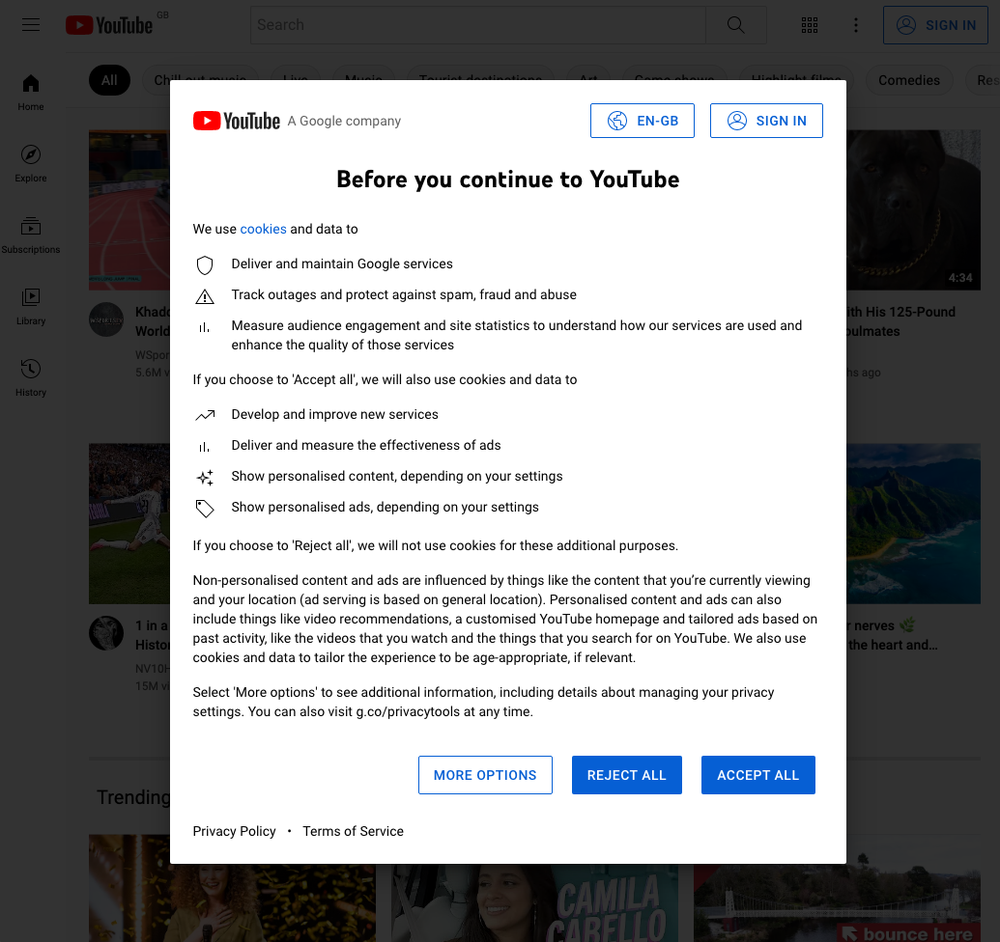
Presto, visitando la pagina di Ricerca Google e YouTube in Europa senza aver effettuato il login o in incognito, gli utenti potranno visualizzare una nuova opzione consenso ai cookie. Questo aggiornamento, che ha cominciato a essere rilanciato all’inizio di questo mese su YouTube, renderà disponibili i pulsanti “Rifiuta tutto” e “Accetta tutto” nella homepage, localizzati nella lingua prescelta. (È anche possibile personalizzare la scelta con “Altre opzioni”).
Abbiamo iniziato in Francia e estenderemo questa opzione nel resto dello Spazio Economico Europeo, nel Regno Unito e in Svizzera. A breve, gli utenti in Europa avranno la possibilità di scegliere i cookie, accettandoli o rifiutandoli con un solo clic.
Più di un altro pulsante
Questo aggiornamento ha reso necessaria una completa riprogettazione del modo in cui i cookie funzionano sui siti di Google, alla luce delle profonde modifiche necessarie all’interno dell’infrastruttura basilare di Google stessa. Inoltre, sapevamo che questi cambiamenti avrebbero avuto un impatto non solo sulla Ricerca e su YouTube, ma anche sui siti e sui creator che ne fanno uso per far crescere le loro attività e avere un ritorno economico.
Riteniamo che questo aggiornamento risponda a linee guida normative rinnovate e sia in linea con il nostro più ampio obiettivo di aiutare a costruire un futuro più sostenibile per il web. Per lo stesso motivo, nell’ambito di Privacy Sandbox ci siamo impegnati a creare nuove tecnologie per la tutela della privacy. Crediamo fortemente che sia possibile proteggere la privacy delle persone online garantendo allo stesso tempo alle aziende e agli sviluppatori strumenti per creare attività digitali di successo.
New cookie choices in Europe
If you’ve visited a website in Europe, chances are you’ve seen a cookie consent banner. Cookies help sites remember information about your visit, so they can do things like display text in your preferred language, make sure you’re a real user and not a pesky bot, or estimate whether or not an ad campaign is working.
In the past year, regulators who interpret European laws requiring these banners, including data protection authorities in France, Germany, Ireland, Italy, Spain and the U.K., have updated their guidance for compliance. We’re committed to meeting the standards of that updated guidance and have been working with a number of these authorities.
Based on these conversations and specific direction from France’s Commission Nationale de l’Informatique et des Libertés (CNIL), we have now completed a full redesign of our approach, including changes to the infrastructure we use to handle cookies.
Our new cookie banners began rolling out earlier this month on YouTube in France and will soon be coming to all Google users in Europe
Soon, anyone visiting Search and YouTube in Europe while signed out or in Incognito Mode will see a new cookie consent choice. This update, which began rolling out earlier this month on YouTube, will provide you with equal “Reject all” and “Accept all” buttons on the first screen in your preferred language. (You can also still choose to customize your choice in more detail with “More options.”)
We’ve kicked off the launch in France and will be extending this experience across the rest of the European Economic Area, the U.K. and Switzerland. Before long, users in the region will have a new cookie choice — one that can be accepted or rejected with a single click.
Not just a new button
This update meant we needed to re-engineer the way cookies work on Google sites, and to make deep, coordinated changes to critical Google infrastructure. Moreover, we knew that these changes would impact not only Search and YouTube, but also the sites and content creators who use them to help grow their businesses and make a living.
We believe this update responds to updated regulatory guidance and is aligned with our broader goal of helping build a more sustainable future for the web. We’ve committed to building new privacy-preserving technologies in the Privacy Sandbox for the same reason. We believe it is possible both to protect people’s privacy online and to give companies and developers tools to build thriving digital businesses.

Netflix potrebbe far pagare di più gli account condivisi

Lenovo Notebook, su Ebay MAI a un PREZZO così BASSO

PREZZI PAZZI Amazon: l’SSD NVMe Blue WD da 500GB costa solo 49€

iPhone 14 sempre più “Made in China”: ecco perché

Proteggi la tua privacy con AtlasVPN: 81% di sconto sulla VPN