Smart working prorogato: cosa cambia dopo il 31 marzo?

Honor alla riscossa: dopo X8 e X9 arriva X7

Introduzione alla ricerca UX: corso in offerta a 10,90€
The Trans-Atlantic Data Privacy Framework: Building for the long term
We commend the European Commission and U.S. government on the work they’ve done to reach a new Trans-Atlantic Data Privacy Framework.
People want to be able to use digital services from anywhere in the world and know that their privacy is respected, and their information safe and protected. This agreement acknowledges that reality: it commits the parties to a high standard of data protection while establishing a reliable and durable foundation for the future of internet services on both sides of the Atlantic.
A meaningful agreement
The work to get to this stage was anything but trivial, and required addressing important considerations of both national security and individual privacy. Google has long advocated reasonable limits on government surveillance. The U.S. government has now committed to systems that will enable independent and meaningful redress for people in the EU, strengthen the guardrails and proportionality of U.S. intelligence collection, and ensure effective oversight of these new privacy and civil liberties standards in ways that address the concerns articulated by the Court of Justice of the European Union.
Citizens expect these safeguards from democratically elected governments, even as they understand the importance of protecting people from national security threats.
Building for the long term
People rely more than ever before on the global exchange of information in their daily lives. Everything from online shopping and travel to business operations and security depends on data flows across borders. The Framework guarantees that the tools and services people in the EU use every day will remain available, even while being held to the highest standards of privacy and data protection.
We look forward to certifying our processes under the Trans-Atlantic Data Privacy Framework at the first opportunity. For Google, these (and similar) standards serve as a floor, not a ceiling, for the protections we offer our users and customers. We already help our customers meet stringent data protection requirements by offering industry-leading technical controls, contractual commitments, and resources for risk assessment, and we have long offered leading data access and control tools to our users. Our investment in that work continues to grow.
Sustaining transatlantic cooperation
The Framework shows that it is possible to take difficult steps to reinforce transatlantic cooperation and address emerging security and information threats. This urgency should carry over to enacting a robust new U.S. federal privacy law to align with international standards and enhance trust and confidence in digital services.
For similar reasons, we called eight months ago for the creation of the Transatlantic Trade & Technology Council (TTC) to enable the kind of bilateral coordination necessary to get ahead of future challenges and ensure that the U.S. and EU avoid discordant or discriminatory approaches. We were encouraged by the creation of the TTC and its commitment to avoiding unnecessary barriers to technological trade. There is now a need for progress in other areas of transatlantic divergence, from online content to taxation to competition to supply chains.
The importance of safe, resilient distributed computing in the face of war and autocracy makes this work even more urgent. As the TTC prepares for its next meeting, it is more important than ever that it carry forward the lessons of the Trans-Atlantic Data Privacy Framework to promote a durable digital partnership.

Mini PC con processore Intel e 4 GB di RAM ad un prezzo FOLLE su Amazon

One Piece Odyssey: annunciato il nuovo RPG a turni

The Sims 4: bundle con Star Wars in super sconto su Amazon

Naruto: l’anime è in arrivo su Prime Video da maggio

Fortnite: generati 70 milioni di dollari da donare all’Ucraina

Ridai vita a un vecchio dispositivo con questo convertitore da RCA a HDMI
Helping children be safe and confident explorers of the online world
Children are growing up with access to the internet, and all its educational and social benefits, from an early age. Today, learning how to stay safer online is a vital part of a child’s education — and it is something that the whole community around the child needs to support, from their school and their family to the technology companies who have a responsibility to design safer products for children.
As a teacher, I’ve spent 20 years having broad conversations about safety with children and supporting them to better understand how to be safer and more confident explorers of the online world, and how to get support from trusted adults.
One of the ways I do this is via Be Internet Legends, an online safety education programme, developed by Parent Zone and Google.
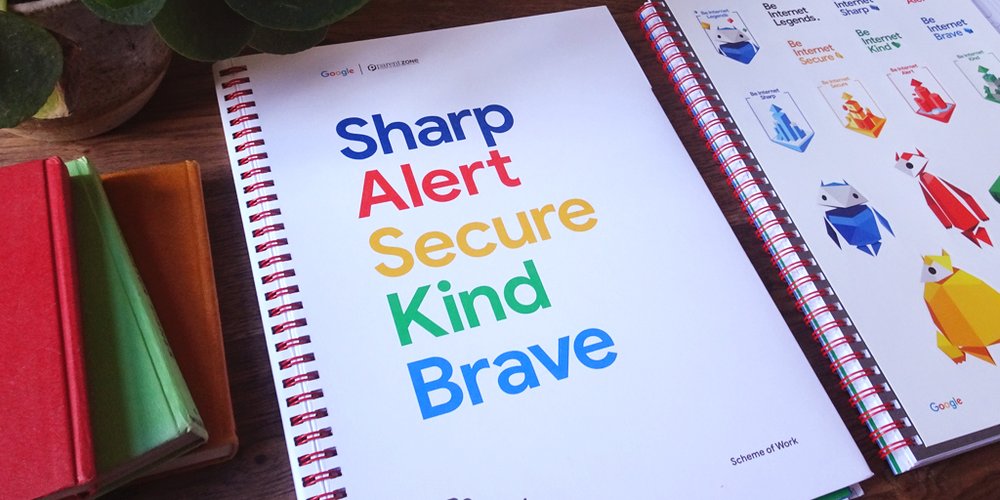
Be Internet Legends teaches children in the UK how to be Sharp, Alert, Secure, Kind and Brave online at a level that children understand. Anyone who takes part in the activities — children, educators, parents — gets it. Playing Kind Kingdom in Interland helps families see the impact being kind online has. Role playing what to say to a trusted adult when they have seen something upsetting online empowers children when learning from the Be Internet Brave pillar. And inviting parents and other family members to join a National Drop-in Assembly from their home or workplace helps to facilitate conversations outside of school about how to stay safer online — reinforcing the learning that takes place in school.
There’s proof that it works. An independent review
A new curriculum for 2022
The Be Internet Legends curriculum was first released in 2018 for all UK primary schools. With the ever changing digital landscape, an update was due – and I was excited to work on this in my new role as education writer at Parent Zone.
Coming straight from the ‘front line’ as a teacher, my knowledge of what really works in the classroom – and what makes a teacher’s life easier – enabled the team, in partnership with Google, to develop an updated curriculum that would be well-received, relevant and actionable.
One wonderful aspect of the curriculum and how to use it is that it is completely flexible; teachers are empowered to adapt and use the curriculum to suit their learners. But, in developing the update, I wanted to create ways for schools to use the curriculum with greater span and longevity.
In direct response to teachers’ feedback, I created a progression of skills plan for each year group – and we increased the number of lesson plans to ensure the programme’s messages can be embedded across different age ranges.
The progression of skills demonstrates to schools how they can use the programme with each year group over 4-5 lessons per year; each one building on the previous year’s learning. Following this approach means the Be Internet Legends curriculum can be fully integrated into the PSHE/RSE/computing curriculum every year.
So, you can see that we really want teachers to take ownership of the curriculum and deliver it in a way that suits them.
Media literacy and social-emotional learning
New additions to the programme include a Media Literacy and Social & Emotional learning focus. Media literacy is vital for children and young people; it is the ability to identify different types of media and to understand the messages they are sending.
The curriculum also has a strong Relationships and Sex education (RSE) focus: thinking about, discussing and sharing feelings. Be Internet Legends is about more than just teaching practical online skills – there is a big focus on roleplay and discussions about different relationship situations.
Helping teachers teach
One of the best things about Be Internet Legends is how it gives teachers autonomy over the learning – allowing them flexibility to use it as, when, and how they wish. Teachers love being in control of what they are teaching!
By co-delivering the teacher-training workshops, I’ve found out so much about how the programme is being used. One secondary special educational needs and disability (SEND) school teacher explained how the curriculum fits perfectly with the academic levels of their learners — and how the students are highly engaged. They said materials for younger learners rarely resonate for their students.
Parents from across the country and with children of all ages have also told me it’s something they can understand and, importantly, engage in.
Starting your Legends adventure
Helping schools — and families — stay ahead of the curve with online safety is crucial – so seeing the programme develop for 2022 is exciting. Whether it’s media literacy, RSE or another priority, it’s great to see teachers learning to adapt the programme to support their communities.
I’m really looking forward to continuing to help teachers, children and their parents become safer and more confident explorers of the online world.
And you can find out more about the Be Internet Legends programme or — if you feel like a challenge — take on the Interland game to test your legendary skills too!

Edge e Chrome: pericolo Type Confusion per entrambi i browser

A day in the life with Google Assistant
The last few years have been full of change, and 2022 is no exception. Personally, I’ve begun heading back to the office for work — which is a pretty big departure from the days when I used to sleep, work, exercise and relax all inside my San Francisco studio apartment.
I’m ready to put away the athleisure (at least during work hours), and I’m excited about seeing everyone in person…but at the same time, I’m a bit worried about keeping up with the healthy habits I developed while working from home.
Since I started working as a Product Marketing Manager on the Google Assistant team about a year ago, though, I’ve gotten hooked on a few features that help me manage my day and keep me accountable to my wellness goals. Here’s a day in my life with Google Assistant:
- 7:45 a.m. – My alarm goes off on my Nest Hub, and I wake up to country music (my favorite). Usually I’m a snoozer, but since I started setting my alarm to my favorite genre of music, I’ve been waking up to feel-good tunes for a little extra motivation.
- 7:50 a.m. – After brushing my teeth, I kick off my morning Routine. “Hey Google, Good morning” starts an automated rundown of everything I need to prepare for the day ahead: a weather update, an overview of my calendar and important news headlines. This pre-made Routine works great for me, but I can always go into the Google Assistant settings on my phone to edit or create a custom Routine when my needs change.
- 10:30 a.m. – I have a break between morning meetings and grab a banana. I’m trying to eat more fruits and veggies, so I’ve been tracking them — and I can just say “Hey Google, log a banana on MyFitnessPal” and Google Assistant will automatically help me log it in the app on my phone.
- 12:15 p.m. – Lunch time arrives and I grab a salad to eat with my teammate, Laura. We decide we want to start working out together in the office gym during lunch breaks, so I set a reminder for next week by saying “Hey Google, remind me to pack workout clothes every Tuesday at 8 a.m.”
- 3:00 p.m. – The afternoon whizzes by, and at 3 p.m. I’m ready for a snack. I grab a sparkling water and trail mix, log it in MyFitnessPal and finish the day working from a communal table overlooking the city.

- 5:15 p.m. – I power down for the day, commute home to the Marina and change into running clothes. I’ve signed up for the San Francisco marathon in July, and today I want to get in a few light training miles along Crissy Field since it’s (finally!) still light out and the weather is beautiful. I start my running playlist, and with a simple “Hey Google, start my run with Strava,” I’m on the move.
- 6:00 p.m. – I finish my run and complete my workout with a quick strength circuit in my apartment with some help from Google Assistant: I don’t have to fumble with my phone between sets and can instead use a hands-free timer by saying “Hey Google, set a 60-second timer for planking.”
- 8:00 p.m. – Work day evenings are usually pretty mellow for me, but today I made plans to get a scoop of ice cream with a friend I haven’t seen in a while. I walk to meet her a few blocks away, and we have a fun time catching up over a sweet treat.
- 10:30 p.m. – Bedtime! I wind down for the day, write in my journal and set my media alarm again, this time for an early pre-work run: “Hey Google, wake me up at 7 a.m. to pop music.”
There you have it: A snapshot of the real ways I use Google Assistant to stay organized with my health and wellness.
Whatever your goals might be, sticking to your fitness or wellness goals alone can be tough, and while Google can’t work out for you, it can be your accountability partner. With regular reminders to help you stick to your goals, motivating ways to start each day right and easy voice access into your wellness apps, Google can help you build healthy habits and stay accountable to your wellness goals this spring — just say, “Hey Google.”

HP ha acquisito Poly: affare da 3,3 miliardi di dollari