
12 features we launched — and loved — in 2021
Pop quiz: How long was 2021? So much happened this year that it seems impossible it was a mere 365 days. Here at Google, we launched the Pixel 6 and Pixel 6 Pro, a new Nest Hub, lots of new Google Photos features and…well, this list could quite literally go on and on and on. Instead, here are 12 product updates from 2021 that you may have missed.
- This summer, we refreshed a handful of emoji designs to make them cuter, more accurate and more flexible in meaning — plus it included fun new additions like Dark Mode.
- In October, we launched Wait Times, a new feature for Pixel 6 and Pixel 6 Pro phones that shows you how long the current wait time is when you’re calling a business or customer service number. It also shows you the projected wait times for the rest of the week, so you can decide when you want to make the call.
- Fitbit Premium added Daily Readiness, a new score that tells you how ready you are for your next workout — or if you should prioritize recovery.
- Activity Zones for all! This Nest Cam and Nest Doorbell feature, which lets you set up specific areas for your devices to pay attention to, was formerly only available with a Nest Aware subscription. In August, with the launch of Nest’s new cameras and doorbell, it became available on those devices at no additional cost.
- Google TV launched in 2020, and in 2021 launched Watch With Me, a series on Google TV that teams up with your favorite stars like Simu Liu and Taraji P. Henson to share their favorite shows and movies (and snacks) with us.
- For all their benefits, smart home stuff can also be confusing. To try and make it easier to understand, we launchedthe Google smart home directory, a website that shows you what kinds of products and systems work with Google Assistant. It also lets you filter by categories and prices, and features reviews.
- Sure, the new Fitbit Luxe is stylish, but it also helps you manage your physical and mental health, with features like Active Zone Minutes and a Stress Management Score.
- In March, we unveiled the second-generation Nest Hub, which comes with Sleep Sensing. This optional feature analyzes the movement and breathing of the person in the designated sleep zone to offer information on how well they’re sleeping, as well as customized tips on getting better sleep.
9. Guest Modefor devices including the Nest Audio and Nest Hub Max arrived this year, allowing you to give visitors the ability to ask Google Assistant questions, use timers or play music — without these interactions being saved to or affecting your account. All you have to say is “Hey Google, turn on Guest Mode.”
10. The Translate filter for Google Lens got an update that made it easier to highlight text and copy, listen to or search to find more in-depth information about specific phrases.
11. Accessibility updates were a major focus in 2021, including Select-to-speakupdates. Select-to-Speak is a Chromebook feature where users can select text to hear it spoken out loud in a variety of languages and accents, and now you can speed up, slow down or pause the voice, among other added controls. This is especially helpful for those who want to hear content read in a specific accent, or for someone with Dyslexia.
12. Google Photos launched an improvement to the popular auto enhance feature powered by Real Tone, which can improve color and lighting for any photo and works well across skin tones, regardless of what device you used or how long ago you took it.
Now…onto 2022! Hopefully it feels like it goes a little quicker than this year…
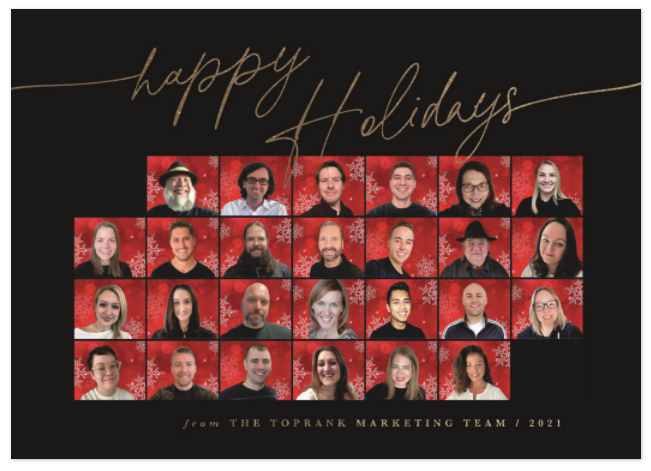
Happy Holidays & 2022 Wishes from the Team at TopRank Marketing
Positivity may not be what first comes to mind when B2B marketers the world over describe 2022, yet during this holiday season it’s the positive energy, outlook, and attitudes from our team, clients, associates, family and friends that spring forth.
Overcoming the world’s continuing shared challenges with positivity has brought us closer together in new ways, even as most of us collaborate in creative remote and hybrid ways, and as we enter the holiday season all of us at TopRank Marketing bring you special wishes for health and happiness.
We wish you and your family a joy-filled holiday season filled with warmth, laughter, and friends.
We also wish you a happy 2022 that eases some of the greatest challenges we’ve all faced the past two years, and sees newfound levels of positivity in your professional and personal life.
The trust our many new and long-time clients have continued to place in us during 2021 has allowed us to reach record levels of client retention, and for this we are very thankful.
Our team has pulled together and we’ve added major new B2B technology industry, global telecommunications and IT firms as clients. We’ve also continued to expand and grow partnerships with existing clients such as LinkedIn, SAP, monday.com and many more.
This unique year has reminded all of us just how important communities are — communities of clients, associates, influencers, executives, our fellow B2B marketers, as well as our local communities here in Minnesota — and we wish you all a joyous holiday season and a very happy new year ahead in 2022.
We’re also continuing to grow and hiring in many roles. Take a look at our careers page for a full list.
TopRank Marketing Wishes You the Happiest of Holidays
We’re incredibly grateful for each other, our wonderful clients, subject matter experts, and friends we’ve worked and grown with this unique year. From our marketing family to yours, Happy Holidays!
The post Happy Holidays & 2022 Wishes from the Team at TopRank Marketing appeared first on B2B Marketing Blog – TopRank®.

Austria’s New Copyright Law
Editors note: To read this post in German, visit this link.
The Austrian legislator has just adopted significant changes to copyright law, implementing the European Copyright Directive from 2019. These changes include the incorporation of Article 15, which introduces a new ancillary copyright for press publishers. Google intends to enter into negotiations with press publishers in Austria to license their content under these new rights.
Austria’s new copyright law provides two important guiding principles. On the one hand, people and platforms can continue to link to, and use, very short extracts of press publishers’ content. At the same time, the law creates new rights for news publishers when extended previews of their work are used online. While the law does not define the scope of protected content, we will make offers for Extended News Previews (such content that may be protected by the new law) with press publishers in Austria.
This follows discussions we have already started with hundreds of news publishers across countries including Germany, Hungary, France, Denmark and the Netherlands, where the law is now in effect, and follows our previously announced agreements in Germany.
As always, publishers have full control over whether or not their content shows up in Search, and how much of that content can be used in a preview. They can change these settings at any time and we will continue to display previews in accordance with those settings provided by publishers.
We hope to reach agreements that enable us to continue to support access to information and journalism in Austria, without harming important principles of the open web.
Alongside these discussions we will continue to invest in our support for journalism. As people in Austria increasingly go online to get their news, journalists and publishers are turning to technology to reach their readers. Google helps people find that information by linking to news and other websites, and provides tools, advertising technology and funding to enable publishers to make money online. Earlier this year we also launched our licensing programme for news, Google News Showcase, in Austria as part of our ongoing support for journalism in Austria.
We look forward to working with publishers and journalists on all these efforts in the coming years.

Österreichs neues Urheberrechtsgesetz
Der österreichische Gesetzgeber hat soeben Änderungen des Urheberrechtsgesetzes beschlossen, mit denen die europäische Urheberrechtsrichtlinie von 2019 umgesetzt wird. Zu diesen Änderungen gehört die Einbindung von Artikel 15 der Richtlinie, der ein Leistungsschutzrecht für Presseverlage einführt. Google beabsichtigt, mit Presseverleger:innen in Österreich in Verhandlungen zu treten, um ihre Inhalte im Rahmen dieses neuen Rechts zu lizenzieren.
Das novellierte österreichische Urheberrechtsgesetz enthält zwei wichtige Leitprinzipien. Einerseits dürfen Personen und Plattformen weiterhin auf sehr kurze Auszüge von Inhalten der Presseverlage verlinken und diese nutzen. Gleichzeitig schafft das Gesetz neue Rechte für Presseverlage, wenn größere Auszüge aus ihren Werken online verwendet werden. Obwohl das Gesetz den Umfang der geschützten Inhalte nicht definiert, werden wir österreichischen Presseverlagen Angebote für eine erweiterte Vorschau von Inhalten, also Extended News Previews (solche Inhalte, die möglicherweise durch das neue Gesetz geschützt werden) machen.
Unser Ansatz folgt dem Vorbild von Gesprächen, die wir bereits mit Hunderten von Nachrichtenverlagen in Ländern wie Deutschland, Ungarn, Frankreich, Dänemark und den Niederlanden geführt haben, in denen das Gesetz bereits in Kraft ist, und folgt auf unsere zuvor angekündigten Vereinbarungen in Deutschland.
Wie bisher haben Verlage auch weiterhin die volle Kontrolle darüber, ob ihre Inhalte in der Google-Suche angezeigt werden oder nicht und in welcher Form diese Inhalte in einer Vorschau verwendet werden können. Sie können diese Einstellungen jederzeit ändern und wir werden die Vorschauen weiterhin gemäß den von ihnen vorgenommenen Einstellungen anzeigen.
Wir hoffen eine Einigung zu erzielen, die es uns ermöglicht, den Zugang zu Information und Journalismus in Österreich weiterhin zu unterstützen, ohne dabei die Grundprinzipien des offenen Internets zu verletzen.
Parallel zu diesen Gesprächen werden wir weiterhin in Journalismus investieren. Da die Österreicher:innen Nachrichten zunehmend online abrufen, nutzen Journalist:innen und Verlage Technologien, um ihre Leser:innen zu erreichen. Google hilft den Menschen, diese Informationen zu finden, indem wir Links zu Nachrichten- und anderen Websites anbieten und Tools, Werbetechnologien und Finanzmittel bereitstellen, mit denen Verlage online Geld verdienen können. Anfang des Jahres haben wir zudem unser Lizenzprogramm für Nachrichten, Google News Showcase, in Österreich gestartet.
Wir freuen uns auf die Zusammenarbeit mit Verlagen und Journalist:innen bei all diesen Initiativen in den kommenden Jahren.

10 film di Natale da vedere o rivedere subito su Prime Video

Svizzera, diritto fiscale internazionale per paese: Tacchino
Ho scritto subito una mail chiedendo rettifica, ma prima ho immortalato questa perla, segnalata da Cherubina Ravasi e @latraduzionedim.
10:25. La perla è già stata corretta a tempo di record.

ISE 2022, Sony mostrerà un ricco portfolio di nuovi prodotti

Lenovo rinnova la partnership con G2 Esport

CES 2022: LG svelerà nuovo dispositivo all-in-one per l’air care

Huawei AppGallery chiude il 2021 con tante novità

Netflix, i migliori film originali del 2021

Get content inspiration from December’s top search trends
Google for Creators is partnering with Google Trends to share some of the top searches every December. With the holidays upon us, we hope this helps creators put together any last-minute gift guides, listicles or other seasonal content your audience might be searching for.
What foods are people searching for during the holidays?
Seasonal eats are (of course) on people’s minds. Top food searches in December include mulled wine, hot cocoa, hot toddy, fudge and cookies. Speaking of cookies, the top-searched types are sugar, gingerbread, peanut butter, chocolate chip and shortbread. Stomach grumbling? Us, too.
Sugar cookies are the top-searched cookie type in December.
What are the top-searched holiday movies in the U.S.?
When December comes around, people are ready to curl up on the couch with a holiday movie. “Die Hard” is the top-searched holiday movie in the U.S., and other favorites include “Gremlins,” “The Nightmare Before Christmas,” “Home Alone” and “Lethal Weapon.” Fun fact — the U.S. is the only country where searches for “Elf” rank higher than “Love Actually.”
What are people in the U.S. curious about during the holidays?
You’re sure to hear a lot of Mariah Carey this time of year — which explains why one of the top-searched questions about her in the U.S. is “How much does Mariah Carey make every Christmas?”
Another insight that might help with last-minute gift guides: “Gifts for boyfriend” is searched two times more than “gifts for girlfriend,” while “gifts for wife” gets more searches than “gifts for husband.” Two gift ideas you might also want to cover, based on top-topic searches, are socks and sweaters.
Food and drink-focused creators, take note: The top day for cocktail searches is December 31, so be sure to line up some content about your favorite drink recipes in time for New Year’s Eve. Some other, not-so-surprising insights: Every December, search interest in “resume” goes down, while “champagne” goes up; and the top day for “hangover” searches is January 1.

People search for gift ideas for their partners during the holiday season.
What is everyone else in the world searching for in December?
Every December, people all over the world search for cheese and wine, baking, mince pie, tamale, candle, snowman, scarf and beanie. Certain countries see interest spike in particular seasonal goodies. In Japan, where eating fried chicken on Christmas Day has become a tradition, KFC (Kentucky Fried Chicken) is the top food search. In Israel, latkes are always number one — but this year, searches for the fried potato fritters are at an all-time high. In France and Italy, the most-searched foods in December are Yule log and panettone, respectively.

Tamales, a popular Christmas food in Mexican and Central American cultures, are one of the most popular search terms in December worldwide.
What are some other top global seasonal trends?
Ever wonder what Boxing Day is all about? You’re not alone — it’s the top-searched question worldwide in December. People around the world also start searching for snowman-related topics, like how to draw and make a snowman. Another insight that might help family-focused content creators: This year, searches for “elf” and “the Elf on the Shelf” are at all-time highs.

This year, people are very interested in “the Elf on the Shelf.”
We hope you enjoyed these insights from the Google Trends team, and that they help you spread even more holiday cheer to your audiences.

10 film di Natale da vedere o rivedere subito su Netflix
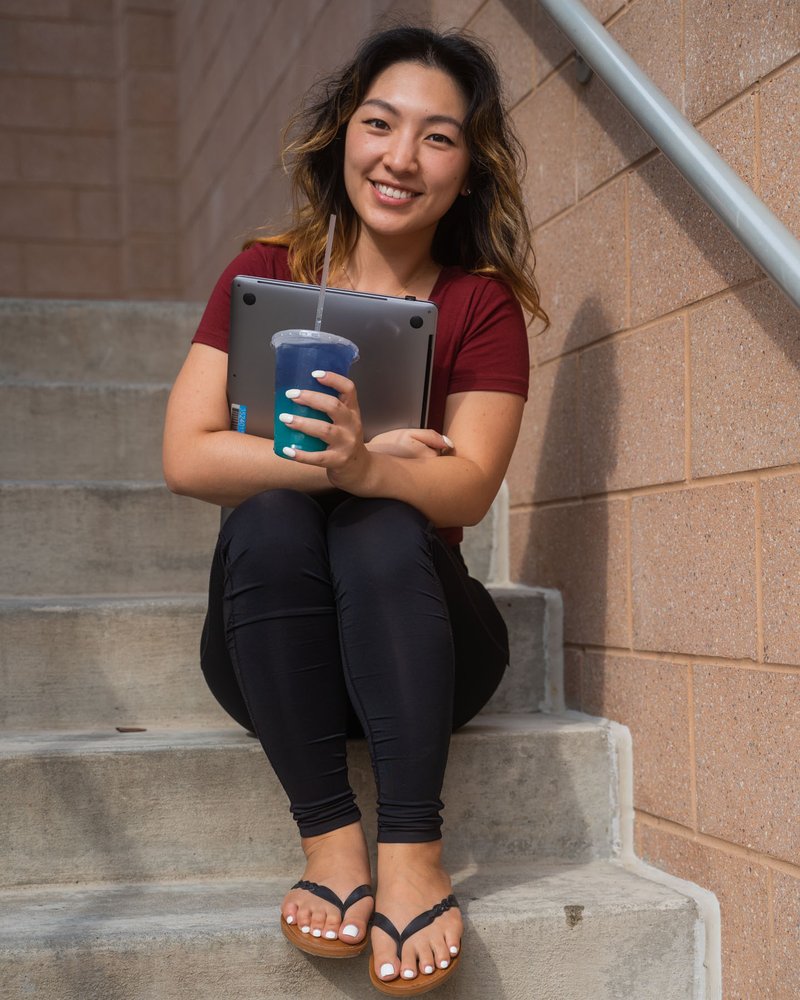
Meet Julia Zhao, a developer and video game creator
Our Women Techmakers in 60 Seconds video series features women engineers at Google teaching us a new skill in just one minute. In our latest episode, Julia Zhao, a software engineer on the Google Analytics team who builds video games in her spare time, showed us how to make a video game in 60 seconds using Unity.
We spoke with Julia to learn more about how she became a developer, what she’s working on now and what her favorite Google products are.
How did you become a developer?
I learned how to code by playing the online game Neopets as a kid, where I experimented with adding music and changing the colors of my profile. I didn’t get into coding again until college, when I took a computer science (CS) course. The class was much cooler than my engineering major at the time, so I switched my major to CS.
When I graduated, I took a job in Washington, D.C. as an Android developer for a defense contractor. I was hardworking but had low self-esteem. In my next job, right before I came to Google, I had a really good manager who believed in me, gave me challenging projects and encouraged me to grow as a developer.
What projects are you working on right now that you’re most excited about?
I recently joined the Google Analytics team, which is the first team I’ve been on with a business focus. Before, I was coding features for users, like buttons and settings. Now, I’m working on features to help businesses see and understand all of their data analytics. It’s made me really interested in marketing and business strategy, and how people use Analytics to grow their businesses.
What inspired you to create your 60-second video game tutorial, and what made you choose Unity as a platform?
I’ve always liked to play video games, so I decided to try building them. When I was first researching how to build a game, many links mentioned the benefits of Unity — like its active developer community and how easy it is to use. Their store also offers free and inexpensive assets, like characters and fonts, which is especially helpful for non-artists like me!
What are your favorite Google products, and why?
My favorite Google products are Android and Google Assistant (asking Google questions is very useful). I also really like the Pixel’s camera quality. And if I build my own website in the future, I would explore using Google Analytics to help me measure my content and grow my audience.
What inspired you to get involved in Women Techmakers?
I made a video for Women Techmakers about creating an Android app about two years ago, when I was thinking about creating YouTube videos during my downtime. I really enjoyed making that video and educating people, which led me to create more content for Women Techmakers. I’m looking forward to making even more videos with the team in 2022!
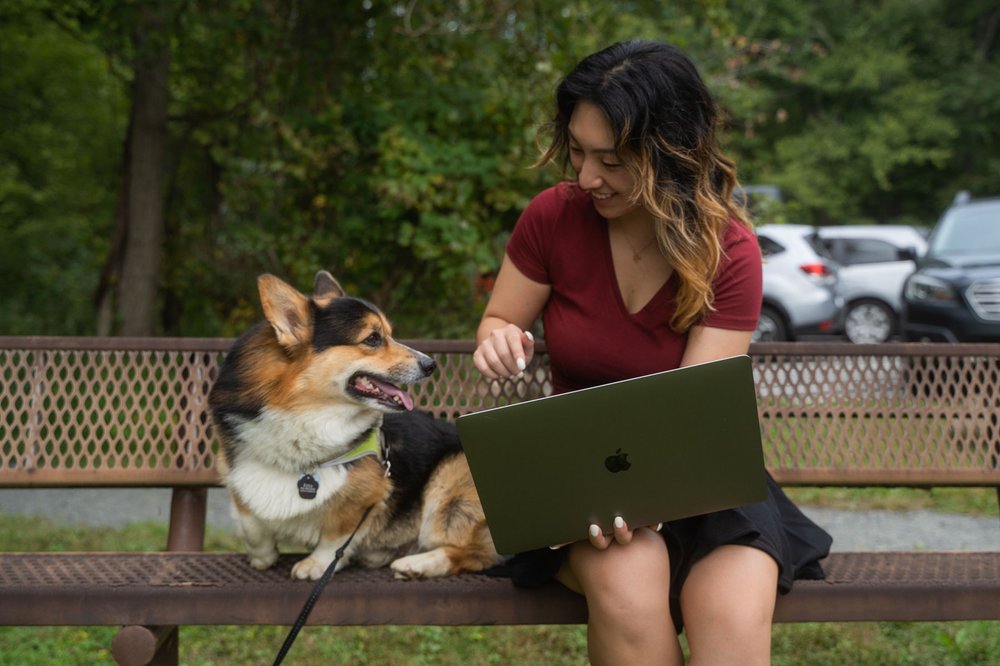
Learn how to make your own video game in 60 seconds using Unityin Julia’s Women Techmakers in 60 seconds episode.