
Domande di scienza: cosa può far aumentare la CO2 in una stanza chiusa?
C’è un mistero che non riesco a risolvere da un po’ di tempo, per cui chiedo aiuto al Cervello Collettivo.
Tempo fa ho acquistato un paio di sensori di CO2 (
Qualcuno ha qualche teoria o spiegazione? Qualche ulteriore test da fare? Ho già in mente di migliorare l’esperimento usando una webcam in modo da non aprire mai la porta e non entrare nella stanza.
—
22:50. La prima ipotesi è già arrivata via Twitter: “La CO2 che, inizialmente è uniformemente distribuita, si accumula negli strati più bassi della stanza.” (Paolo Sanna). Che ne pensate?
Intanto ho aggiunto un altro rilevamento (quello delle 22:44) e per mettere alla prova l’ipotesi del deposito ho piazzato un sensore (quello che rileva i valore più alto) a un metro e mezzo di altezza (il massimo consentito dal cavo) e un altro per terra. Vediamo che succede tra poco.
—
23.25. Il sensore per terra misura 651 ppm, quello a 1,5 m misura 656 ppm. ho collocato in alto quello che segnava sistematicamente un valore più alto. Per stasera sospendo l’esperimento. Ho cambiato l’aria nella stanza e ora il sensore per terra rileva 407 ppm e quello a 1,5 m rileva 438 ppm. Come prova successiva potrei piazzare un ventilatore per rimescolare l’aria e impedire la stratificazione dei gas.

Cristina Melchiorri: parità di retribuzione fra uomini e donne.
Cristina Melchiorri si chiede: MA QUANDO MAI SARÀ UNA REALTÀ? La parità di retribuzione per lo stesso ruolo nel lavoro ora è sancita formalmente dal Senato, ma …. Intervista a Cristina…
L’articolo Cristina Melchiorri: parità di retribuzione fra uomini e donne. scritto da Paolo Brambilla proviene da Assodigitale.
Riemergono i nastri di quando facevo il DJ alla radio negli anni Ottanta: World Music Radio Classic
Tanti, tanti anni fa ho fatto il DJ in inglese in una radio privata in onde medie e onde corte, World Music Radio. All’epoca mi facevo chiamare John Sinclair, come omaggio a Sir Clive Sinclair (erano gli anni dello Spectrum) e a John Koenig di Spazio 1999.
I complottisti mi rinfacciano sempre di essere stato un DJ, ma chissenefrega: è stata una delle più belle esperienze della mia gioventù. Tante amicizie nate in tutto il mondo, alcune delle quali mi hanno letteralmente cambiato la vita, tanta esperienza lavorativa che mi è tornata utile nei lavori fatti successivamente (e ancora oggi) e tantissima musica indimenticabile.
Ora sono riemerse da quel lontano passato le registrazioni di quei programmi, grazie al paziente lavoro di digitalizzazione di Andrea, che ha anche creato una stazione radio digitale in streaming regolarmente registrata.
Se volete ascoltare un po’ di musica degli anni Ottanta e dei decenni precedenti, e siete curiosi di sentire come ero diggèi da giovincello, è la vostra occasione. Lo streaming è sperimentale e non regge tanti ascoltatori simultanei, per cui questo articolo innescherà probabilmente uno stress test interessante.
Tenete presente, inoltre, che le digitalizzazioni provengono da audiocassette di 40 anni fa e che all’epoca facevamo partire i dischi di vinile usando le “pezze” sul piatto del giradischi, e tutto era analogico, per cui qualche problema di pitch può capitare.
Per chi non ricorda cosa fossero le “pezze”: all’epoca le radio più professionali usavano giradischi a partenza immediata, tipo il Technics SL-1200, che non avendo l’inerzia della cinghia di trasmissione permettevano di posizionare la puntina appena prima dell’inizio della musica nel solco del disco, a giradischi fermo, e premere un pulsante per far partire immediatamente il brano.
Ma questi giradischi costavano uno sproposito, per cui le radio meno ricche si accontentavano di giradischi normali con trasmissione a cinghia, che avevano un’inerzia notevole (ci voleva quasi un giro intero per arrivare alla velocità corretta), e ricorrevano a un tappetino circolare di stoffa, la “pezza”, da mettere sul piatto sotto il disco.
Il DJ (io, in questo caso) posizionava la puntina appena prima dell’inizio del brano, teneva ben ferma la pezza con una mano, faceva partire il giradischi con l’altra in modo che il piatto fosse già in rotazione mentre il disco stava immobile sopra la pezza (che slittava rispetto al piatto), e poi mollava la pezza sulla penultima sillaba di quello che stava dicendo. Questo consentiva di ridurre lo spazio di accelerazione a un quarto di giro, che a 33 giri e 1/3 al minuto era appunto l’equivalente della durata di un paio di sillabe.
Potete ascoltare lo streaming dei programmi di tutti gli animatori storici di World Music Radio presso wmrclassic.com/streaming oppure a questo link diretto e scoprire la storia di questa radio un po’ pirata e un po’ pioniera nella sezione History.

SpaceX, primo test per il braccio meccanico Mechazilla

Raspberry Pi Zero 2 W in arrivo a soli 15 dollari
Come si prega nello spazio?
La religione nello spazio è un aspetto molto particolare ma poco conosciuto delle attività spaziali con equipaggi. Di solito le credenze religiose, se ve ne sono, vengono praticate privatamente dai singoli astronauti o cosmonauti. A bordo della Stazione Spaziale Internazionale ci sono alcune icone religiose cristiane, appese nella sezione russa, e la cabina personale di ciascun occupante della Stazione può ospitare oggetti legati alla spiritualità, ma la Stazione formalmente non offre niente di più, e lo stesso vale per i veicoli spaziali in generale.
Storicamente ci sono pochi momenti religiosi legati allo spazio. L’equipaggio di Apollo 8, nel 1968, lesse in diretta TV alcuni passi della Genesi (testo sacro per tre religioni) durante il primo volo di esseri umani intorno alla Luna. Buzz Aldrin, durante la prima missione umana sulla Luna, Apollo 11, celebrò la comunione cristiana, ma lo fece privatamente (anche per evitare contestazioni, alla quale la NASA era estremamente sensibili per motivi legali). Oggi ognuno porta con sé la propria spiritualità in maniera molto discreta. Occasionalmente si scorge qualche collana con simboli religiosi al collo di qualche astronauta, ma a parte questo la religione ha poco spazio nello spazio.
Alcune religioni, però, hanno regole precise che vengono messe alla prova dall’ambiente spaziale, ben diverso da quello nel quale sono nate. Un esempio è dato dall’Islam, con la sua prescrizione di pregare rivolgendosi verso la Mecca. Una cosa perfettamente fattibile quando si è fermi sulla Terra: basta avere una bussola o un GPS e una mappa per calcolare qual è la direzione giusta, che non cambia. Ci sono metodi differenti (quello del cerchio massimo o quello della lossodromia o rhumb line in inglese), per cui un musulmano in Alaska o a New York può pregare rivolgendosi verso nord o verso est, ma finché si sta fermi sulla superficie terrestre il problema è relativamente semplice: si sceglie una direzione e si tiene quella.
A bordo di un veicolo spaziale o di una stazione spaziale che orbita intorno alla Terra a 28.000 km/h, invece, questa direzione cambia continuamente. Nel corso di una singola sessione di preghiera, può variare anche di 180 gradi. Nel 2007 l’astronauta malese Sheikh Muszaphar Shukor, musulmano, andò nello spazio a bordo di una Soyuz, raggiungendo la Stazione Spaziale Internazionale, e si pose quindi il problema di consentirgli di espletare correttamente le proprie devozioni durante i dieci giorni della sua missione.
Fu affrontata anche la questione di come compiere gesti spiritualmente importanti come inginocchiarsi o chinare il capo in un ambiente nel quale, non essendoci un alto o un basso, non ha molto senso parlare di abbassare lo sguardo o di porsi in una posizione di sottomissione. C’era anche la questione del digiuno dall’alba al tramonto durante il Ramadan, e la missione di Shukor avveniva proprio in quel periodo. Come si determinano albe e tramonti in un ambiente in cui il sole “sorge” e “tramonta” sedici volte nell’arco di ventiquattro ore?
Anche i lavaggi rituali pongono problemi non banali, in un ambiente nel quale l’acqua scarseggia ed è riciclata partendo da urina e sudore.
Shukor non fu il primo astronauta musulmano: prima di lui volarono Sultan bin Salman bin Abdulaziz al-Saud (1985) e Anousheh Ansari (2006), ma fu il primo per il quale furono redatte delle linee guida formali. L’agenzia spaziale malese Angkasa, per la quale volava Shukor, organizzò una conferenza apposita, radunando 150 scienziati e studiosi islamici che produssero un documento, “A Guideline of Performing Ibadah (worship) at the International Space Station (ISS)”, successivamente approvato dalle autorità religiose malesi.
Il documento mostra che alla fine prevalse il pragmatismo: ogni fedele faccia quello che può. Se può rivolgersi precisamente verso la Mecca, bene; altrimenti va bene se si orienta verso la proiezione della Mecca, o in alternativa almeno verso la Terra, e se neanche questo è possibile con certezza, conta comunque l’intenzione più che la pedanteria geografica.
Del resto, problemi analoghi possono capitare sui mezzi di trasporto terrestre, per esempio quando un treno cambia direzione in galleria o un aereo cambia rotta di notte. La preghiera potrebbe iniziare in una direzione e terminare in un’altra, ma è lo spirito che conta.
Se nello spazio non è possibile inginocchiarsi perché non c’è un alto o un basso, inoltre, fu deciso che è accettabile inclinare la testa oppure chiudere gli occhi, o anche solo immaginare di compiere questi gesti di devozione.
Per gli orari delle preghiere e dei digiuni, Shukor adottò il fuso orario del suo luogo di partenza dalla Terra, il Kazakistan. Per i lavaggi, invece, scelse la soluzione usata nelle zone desertiche della Terra: terra e sabbia per pulirsi le mani, battendole poi contro una parete o uno specchio.
In questo video si vede Sheikh Muszaphar Shukor che mostra come ha effettuato le preghiere giornaliere islamiche a bordo della Stazione.
Se vi interessa l’argomento, ho qualche fonte per voi (in inglese): Wired, Saudi Gazette, Christian Science Monitor.
Questo articolo vi arriva gratuitamente e senza pubblicità grazie alle donazioni dei lettori. Se vi è piaciuto, potete incoraggiarmi a scrivere ancora facendo una donazione anche voi, tramite Paypal (paypal.me/disinformatico) o altri metodi.
Huawei lancia la campagna Huawei Festival con tante offerte

Iniziata la closed beta di Diablo Immortal: ecco come partecipare

Pluto TV sbarca in Italia: 40 canali gratis in streaming

Podcast del Disinformatico RSI 2021/10/29: Green pass di Hitler, nuovi Windows e MacOS, finte app di Squid Game, truffa su Booking

È disponibile il podcast di oggi de Il Disinformatico della Rete Tre della Radiotelevisione Svizzera, condotto da me insieme ad Alessio Arigoni. Questi sono gli argomenti trattati, con i link ai rispettivi articoli di approfondimento:
- Escono Windows e MacOS nuovi: non c’è fretta di installarli
- Perché questi codici QR sembrano “green pass” validi di Adolf Hitler, Topolino e Spongebob?
- Squid Game, virus e truffe abusano della popolarità della serie
- Una strana truffa su Booking
Il podcast di oggi, insieme a quelli delle puntate precedenti, è a vostra disposizione presso www.rsi.ch/ildisinformatico (link diretto) ed è ascoltabile anche tramite feed RSS, iTunes, Google Podcasts e Spotify.
Buon ascolto!

Una strana truffa su Booking
Mi capita spesso di raccontare truffe online, ma è raro che la vittima sia una persona che conosco prima che mi contatti per la truffa: stavolta, però, il bersaglio del raggiro è il collega della Rete Tre della Radiotelevisione Svizzera con il quale ho fatto tanti podcast, Alessio Arigoni. Lui stesso l’ha raccontata nel
Ha risposto all’offerta, stando sempre sulla piattaforma Booking.com, e ha prenotato, senza anticipare denaro. Ha ricevuto correttamente la mail di conferma da Booking.com.
Poco dopo gli è arrivato tramite WhatsApp un messaggio che gli ha riepilogato in inglese i dettagli della sua prenotazione (indirizzo, date, numero degli alloggiati, prezzo) e gli ha chiesto conferma della correttezza di questi dati.
Alessio, visto che la persona conosceva i dati esatti della prenotazione, ha dato per scontato che si trattava del gestore dell’alloggio e ha risposto confermando la correttezza dei dati.
La persona ha proseguito dando istruzioni dettagliate per il ritiro delle chiavi, stavolta in italiano, e ribadendo che il pagamento dell’appartamento “viene effettuato solo online tramite booking.com a causa del covid-19” e spiegando il funzionamento del “modulo di caparra”:
Poi ha inviato ad Alessio un link per il modulo di caparra, ma ha misteriosamente iniziato a scrivere in spagnolo. Ovviamente a questo punto Alessio si era già insospettito e questo ulteriore cambio di lingua gli ha confermato che qualcosa non quadrava e che stava comunicando con un truffatore.
Il link del fantomatico “modulo di caparra” portava a un sito che non è affatto il vero Booking.com ma è visualizzato come booking-eu punto id-404958.online/merchant91129291, presso il quale però si trova l’esatta prenotazione fatta da Alessio su Booking.com, con la richiesta di immettere i dati della carta di credito:
Un sito clone pressoché perfetto. Ma come faceva il truffatore (che si firma “Pavel” nei messaggi) a conoscere i dettagli della prenotazione, fatta effettivamente su Booking.com?
C’erano vari indizi sospetti, come il numero di telefono portoghese (l’avevate notato? Alessio ha ricevuto i messaggi WhatsApp da un numero che inizia per +
Non ci sono stati addebiti sulla carta di credito di Alessio (che è stata comunque bloccata e sostituita su sua richiesta) e tutto è finito bene, ma c’è mancato poco.
A settembre 2021 il programma Patti Chiari della RSI si è occupato di Booking.com e dell’affidabilità delle offerte presenti sul sito, trovano numerosi alloggi falsi:
Truffe di questo genere, vissute a mente serena in un racconto come questo, sembrano fin troppo evidenti e quindi molti si chiedono come possano essere efficaci. Ma quando vengono vissute sulla propria pelle i loro campanelli d’allarme spesso non suonano, e soprattutto il truffatore è libero di tentare il raggiro con tante persone, finché non trova quella giusta che abbocca. Siate vigili.
Pixel art: How designers created the new Pixel 6 colors
During a recent visit to Google’s Color, Material and Finish (better known as CMF) studio, I watched while Jess Ng and Jenny Davis opened drawer after drawer and placed object after object on two white tables. A gold hoop earring, a pale pink shell — all pieces of inspiration that Google designers use to come up with new colors for devices, including the just-launched Pixel 6 and Pixel 6 Pro.
“We find inspiration everywhere,” Jenny says. “It’s not abnormal to have a designer come to the studio with a toothbrush or some random object they found on their walk or wherever.”
The CMF team designs how a Google device will physically look and feel. “Color, material and finish are a big part of what defines a product,” Jess, a CMF hardware designer, says. “It touches on the more emotional part of how we decide what to buy.” And Jenny, CMF Manager for devices and services, agrees. “We always joke around that in CMF, the F stands for ‘feelings,’ so we joke that we design feelings.”
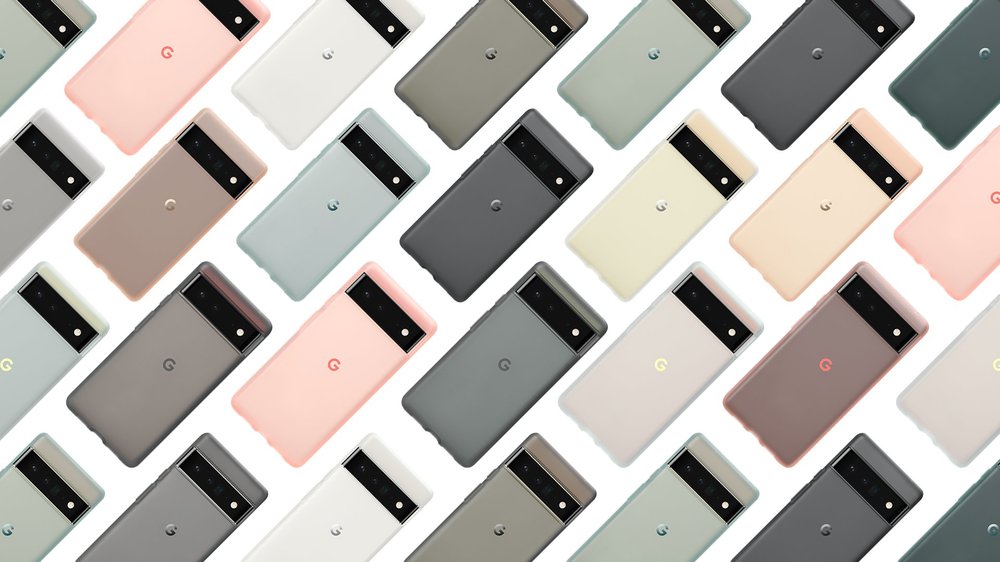
The new Pixel 6 comes in Sorta Seafoam and Kinda Coral, while the Pixel 6 Pro comes in Sorta Sunny and Cloudy White, and both are available in Stormy Black. Behind those five shades are years of work, plenty of trial and error…and lots and lots of fine-tuning. “It’s actually a very complex process,” Jenny says.
Mademore complex by COVID-19. Both Jenny and Jess describe the color selection process as highly collaborative and hands-on, which was difficult to accomplish while working from home. Designers aren’t just working with their own teams, but with those on the manufacturing and hardware side as well. “We don’t design color after the hardware design is done — we actually do it together,” Jenny says. The Pixel 6 and Pixel 6 Pro’s new premium look and feel influenced the direction of the new colors, and the CMF team needed to see colors and touch items in order to select and eliminate the shades.
They don’t only go hands-on with the devices, they do the same with sources of inspiration. “I remember one time I really wanted to share this color because I thought it would be really appropriate for one of our products, so I ended up sending my boss one of my sweaters through a courier delivery!” Jenny says. “We found creative workarounds.”
The team that designed the new Pixel 6 and Pixel 6 Pro case colors did as well. “The CMF team would make models and then take photos of the models and I would try to go in and look at them in person and physically match the case combinations against the different phone colors,” says Nasreen Shad, a Pixel Accessories product manager. “Then we’d render or photograph them and send them around to the team to review and see if what was and wasn’t working.” In addition to the challenge of working remotely, Nasreen’s team was also working on something entirely new: colorful, translucent cases.
Nasreen says they didn’t want to cover up the phones, but complement them instead, so they went with a translucent tinted plastic. Each device has a case that corresponds to its color family, but you can mix and match them for interesting new shades.
That process involved lots of experimenting. For example, what eventually became the Golden Glow case started out closer to a bronze color, which didn’t pair as well with the Stormy Black phone. “We had to tune it to a peachy shade, so that it looked good with its ‘intended pairing,’ Sorta Sunny, but with everything else, too. That meant ordering more resins and color chips in different tones, but it ended with some really beautiful effects.”
Beautiful effects, and tons of options. “I posted a picture of all of the possible combinations you can make with the phones and the cases and people kept asking me, ‘how many phones did Google just release!?’” Nasreen laughs. “And I had to be like, ‘No, no, no, these are just the cases!’”
Email is 50 years old, and still where it’s @
50 years ago this month, Ray Tomlinson sent the very first email. He was a programmer working on ARPANET, the system that laid the groundwork for what would become the internet as we know it today. He tested the messaging system by sending emails to himself, and later said that the first note was probably something like “QWERTYUIOP.”
More than 30 years after this breakthrough, a Google engineer named Paul Buchheit conducted his own email experiments. In a 2005 blog post, Paul described the problem he was trying to solve:
“My email was a mess. Important messages were hopelessly buried, and conversations were a jumble…I couldn’t always get to my email because it was stuck on one computer, and web interfaces were unbearably clunky. And I had spam. A lot of it.” These pain points are part of what motivated Paul to come up with a better system — Gmail.
Buchheit created Gmail as a browser-based email program that allowed users to easily search their own messages. “With Gmail, I got the opportunity to change email — to build something that would work for me, not against me.” He wasn’t sure what the reception would be like, but when he released a beta to fellow Googlers, they wanted more.
Eventually, Gmail launched to the public on April 1, 2004. Its search function was lightning fast and it came with 1 GB of storage — 500 times more than prevailing inboxes of the time. But that wasn’t enough to convince people it wasn’t a joke. (The date — April Fool’s Day — likely had something to do with it.)
Despite the launch day hijinks, Gmail won consumers over, and became a central part of the work we do at Google. But we never could have done it if Ray Tomlinson hadn’t hit that @ sign and started it all 50 years ago. To celebrate, we asked a few Googlers to share their favorite Gmail hacks.
Laura Mae Martin, Executive Productivity Advisor
“It’s hard to answer old emails when there are shiny new ones coming in. Use features like Snooze and Starred emails and different inbox setups to make it easier to stay on task.”
John Shriver-Blake, Senior Product Manager, Gmail Enterprise
“I’m a fan of confidential mode in Gmail. It lets you protect sensitive information in messages and attachments and ensures that whoever receives the confidential email can’t forward, copy or print it.”
Neena Kamath, Product Lead, Gmail
“What I love about Gmail is how it’s evolved over the years. Fifteen years ago, I was obsessed with Conversation View! Back then, having all your emails about a single topic in one place hadn’t been done before, and it saved me so much time. Now, I’m obsessed with Smart Reply. It not only saves me time, but also makes me more polite : )!”
Bao Lam, Head of Marketing, Gmail & Chat
“Schedule send in Gmail means that I don’t clutter up people’s inboxes if I’m catching up on emails at odd moments — which is especially helpful when so many of us are working across different time zones.”
You can learn more about the history of email, Gmail and the power of the @ sign over on the Cloud blog.
Tech Bytes: spotlighting Black women engineers at Google
Earlier this year, Google’s Women Techmakers launched “Tech Bytes,” a series featuring Black women engineers and developers at Google. Tech Bytes supports our broader effort to spotlight Black women in tech by sharing their technical expertise, and creating a space for Black women in the industry to connect.
For our latest episode of Tech Bytes, we sat down with Kendra Claiborne, an Application Engineer at YouTube, to learn more about her role and passion for technology.
Tell us about your path to joining the tech industry. Where were you before?
My journey into tech started when I was eight years old, building websites for fun and searching online to learn how the computer works. My passion for programming led me to pursue a degree in Computer Science at the University at Buffalo. During my undergraduate years, I took an internship at a startup that specialized in building custom applications on the Salesforce platform. I was very unfamiliar with Salesforce when I first started, but I was excited to learn something new. Since that internship, I’ve built both frontend (user-facing) and backend solutions on the Salesforce platform for customers in many different industries. Those opportunities led me to the YouTube Content Partnerships Systems team in 2020.
Tell us about your role on that team. What do you do day to day?
I’m an Application Engineer, and I’ve carried my past experience into this role by focusing on building frontend and backend solutions on the Salesforce platform. Each day is slightly different from the next. My team applies the agile methodology for software development, which means we deliver feature requests or fix bugs incrementally instead of all at once. We participate in two-week “sprints” to get these done most efficiently. Leading up to a sprint, I am laser focused on mapping out the design for a feature request, which involves a lot of research and collaboration with the team and project lead. Once we’ve defined our approach and the tasks required to accomplish it, we focus on building out the features. I’ll spend the next 5-8 days coding, testing and submitting my code for peer review — after which, it will get deployed to our staging environments. A staging environment is like a testing ground, where we can make sure our code is working as intended before we push it live. At the end of the sprint, if our deliverables have been approved for Quality Assurance (QA) — meaning they have reliable performance and functionality — they’ll be released to production.
What was the most important class or training that you took? What was a key technical takeaway?
During my undergraduate studies, I took a Data Structures and Algorithms Design course. That class was instrumental in building my problem solving skills. It taught me how to more effectively organize, store, and solve problems based on inputs of data.
Tell us about your Tech Bytes episode. What message did you want to get across?
In my Tech Bytes episode, I discuss three different topics: communicating changes across separate systems through the Publisher-Subscriber Model; building modular, reusable code, which separates functionality into independent pieces of code; and the importance of Test Driven Development. I hope that viewers learn something new and get inspired to find out more about these subjects — and maybe even use them in a future project.
Check out Kendra’s Tech Bytes episode for more, and explore other interviews on our Tech Bytes YouTube channel. You can also learn more about our efforts to spotlight Black women in tech on the Google’s Women Techmakers website.
A Matter of Impact: October updates from Google.org
Note: For this edition, Jacquelline Fuller is passing the pen to her colleague Hector Mujica, who leads our Economic Opportunity work, to share more about how we approach skill building and recent support from Google.org to honor Hispanic Heritage Month.
One of our goals is to help people — especially those without college degrees — gain the skills they need to pursue in-demand, higher-paying careers. This is a topic that is deeply personal to me, as a Latino in tech, and that is important to Google, as a company that strives to create greater equity and access to opportunity — particularly for underserved communities.
We know that 80% of middle-class jobs in the U.S. require a strong knowledge of digital skills, and that these jobs often pay better. That’s why we partner with nonprofit organizations to help them bring digital skilling solutions to historically underserved and excluded people, like the Latino community. We support organizations like the Hispanic Federation and Per Scholas to use solutions, like the Google Career Certificate and other digital skill training programs, that help job seekers gain the right skills to land jobs in the digital economy. These organizations provide not only training, but also the wraparound support needed to make sure participants can access jobs and success at them.
There’s not a single solution to tackle these economic challenges. In an effort to advance the dialog and create fulfilling opportunities for all, we’re also supporting research to unpack how to best support Latino digital inclusion in the workforce with organizations like Opportunity@Work and Aspen Institute’s Latino and Society Program.
In case you missed it
To mark Hispanic Heritage Month (which runs September 15-October 15), we’re announcing a $1M grant to the Latino Community Foundation’s Latino Entrepreneur Fund to support Latino micro-entrepreneurs across rural and urban communities in California; and donating $1M+ in ads to participants in a new Latino Founders Fund, helping them reach new audiences and address funding inequities. We’re also supporting Latinos searching for jobs: we announced a $1 million reinvestment in the Hispanic Federation.