B2B Marketing News: Values-Driven Ads Gain Greater Trust, Podcast Engagement Rises, New Instagram Sharing Options, & Reddit’s IPO
People trust ads that talk about values, not products, finds Nielsen
89 percent of consumers place word-of-mouth as the more trustworthy form of advertising, followed by brand websites at 84 percent, while humor and brand values were seen as the top drivers of advertising response rates, with value-oriented ads gaining 10 percent from 2015 rates, according to newly-released Nielsen trust survey data of interest to digital marketers. The Drum
Reddit files to take the company public
Following a 200 percent year-over-year increase in ad revenue during the second quarter of 2021, Reddit has filed to move ahead with an initial public offering (IPO), which could bolster the firm’s social platform and 52M daily users, Reddit recently announced. The Verge
Instagram Adds New Option to Embed User Profiles on Third-Party WebsItes
Facebook’s Instagram social networking platform has rolling out new embedded mini-Instagram profiles for use on other web properties, which could bring new cross-platform sharing opportunities to influencers and digital marketers, Instagram recently announced. Social Media Today
What Are Advertisers’ Top Programmatic Priorities in the Coming Year?
40 percent of U.S. brand and agency programmatic ad buyers have said that increased viewability will be their top priority in the next year, with 37 percent listing increased consumer engagement and 36 percent noting supply path efficiencies, according to newly-released survey data. MarketingCharts
Engagement With Podcasts Increases, Continues To Grow
Podcast audience listeners are some five times more inclined to like content sponsored by brands when it comes in the podcast format, with listeners also noting that they’re nearly four times more likely to like podcasts directly from brands, according to recently-released survey data. MediaPost
Well, TikTok has a Discord now
Online communications portal Discord has seen growth that has attracted an increasing number of brands, now including short-form video creation firm TikTok, which recently launched its first public discussion server on the platform, TikTok recently announced. TechCrunch
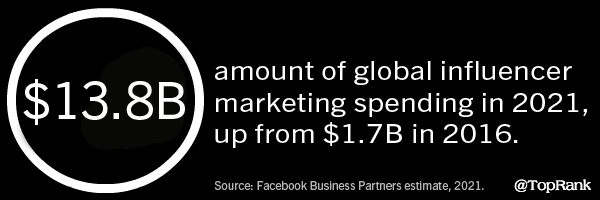
Mobile, Social, Digital Video Are Top Advertising Priorities For 2022
Mobile video and contextual targeting solutions are among the top 2022 media priorities, while 48 percent of U.S. digital media executives have said that in-stream digital audio and podcast ad formats will be a priority, according to newly-released survey data of interest to online marketers. MediaPost
The Traits of B2B Firms With Exceptional Marketing and Sales Performance
Engaging with relevance throughout the entire buyer journey and increased data investment are among the top traits of leading performers, according to new sales and marketing data research from Dun & Bradstreet. MarketingProfs
Ad Market Expands For Ninth Consecutive Month, Posts Best November Ever
The U.S. advertising market’s rate of growth grew by 10.3 percent in November compared to the same month last year, with digital categories performing the best, while overall expansion has continued for nine consecutive months, according to newly-released index report data. MediaPost
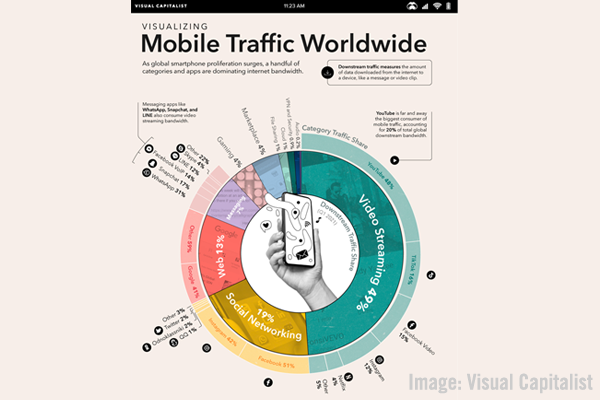
Visualizing Mobile Traffic Worldwide [Infographic]
Some 49 percent of global mobile traffic consists of streaming video content, with 19 percent accounting for social media, and 13 percent web traffic, according to recently-released mobile traffic statistical report data. Social Media Today
ON THE LIGHTER SIDE:
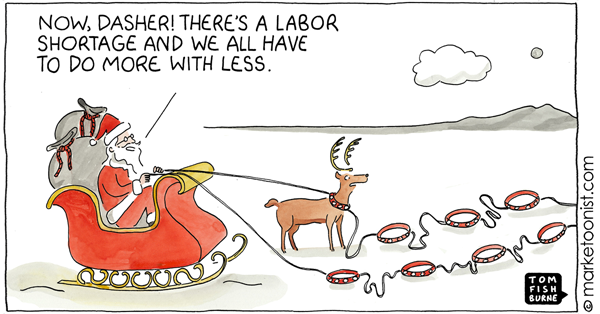
A lighthearted look at the “ho, ho, holiday labor shortag” by Marketoonist Tom Fishburne — Marketoonist
Interview with Santa, “C-Ho-Ho” of Old St. Nic Inc — Sitecore
TOPRANK MARKETING & CLIENTS IN THE NEWS:
- Lee Odden — Key ingredients of a great content marketing strategy for 2022 — Oracle
- TopRank Marketing — 10 of the Best Influencer Marketing Resources for Marketers in 2022 — Shane Barker
Have you located your own top B2B marketing news for the week? Please drop us a line in the comments below.
Thanks for joining us for this week’s TopRank Marketing B2B marketing news, and we hope that you will return again next Friday for another array of the most relevant B2B and digital marketing industry news. In the meantime, you can follow us on our LinkedIn page, or at @toprank on Twitter for even more timely daily news.
The post B2B Marketing News: Values-Driven Ads Gain Greater Trust, Podcast Engagement Rises, New Instagram Sharing Options, & Reddit’s IPO appeared first on B2B Marketing Blog – TopRank®.

A ruba anche i test COVID-19 su Amazon: ecco come funzionano

Come scegliere un router WiFi per casa o ufficio

Podcast RSI – “Su, su, giù, giù, sinistra, destra, sinistra, destra, B, A”, il codice della leggenda

È disponibile subito il podcast di oggi de Il Disinformatico della Radiotelevisione Svizzera, scritto e condotto dal sottoscritto: lo trovate presso www.rsi.ch/ildisinformatico (link diretto) e qui sotto.
I podcast del Disinformatico sono ascoltabili anche tramite feed RSS, iTunes, Google Podcasts e Spotify.
Questa è l’ultima puntata del 2021; il podcast riprenderà il 14 gennaio.
Buon ascolto, e se vi interessano il testo e i link alle fonti della storia di oggi, sono qui sotto.
—
[CLIP: Gameplay di Gradius]
Siamo nel 1985. Kazuhisa Hashimoto è un giovane programmatore in un’azienda giapponese che fa videogiochi. Il suo incarico è semplicemente convertire un videogioco, Gradius, dalla versione arcade, quella per sala giochi, alla console di gioco personale NES di Nintendo. Ma non sa che invece sta per creare una leggenda.
Questa è la storia di come una scorciatoia per risparmiare tempo durante il lavoro di un informatico è diventata un riferimento culturale non solo per i gamer ma anche nella cultura generale. È il cosiddetto Konami code, che si recita così: Su, su, giù, giù, sinistra, destra, sinistra, destra, B, A. Lo stesso codice che adesso sta facendo stupire gli utenti di TikTok perché fa fare cose strane agli assistenti vocali come Alexa o Google Home.
Benvenuti a Disinformatico Story, l’edizione del podcast Il Disinformatico della Radiotelevisione Svizzera dedicata alle storie insolite dell’informatica. Io sono Paolo Attivissimo.
[Sigla iniziale]
Se avete a portata di voce un assistente vocale, per esempio Alexa o Google Home o Siri, provate a chiamarlo e poi pronunciare questa frase: “Su Su, Giù Giù, sinistra, destra, sinistra, destra, B, A”.
Se l’avete detta correttamente, il vostro assistente vocale comincerà a dire cose strane. Questo è quello che dice Alexa [in italiano], per esempio:
[CLIP: Alexa che risponde in italiano, tratto da LegaNerd su Facebook]
Ultimamente la scoperta di queste istruzioni misteriose viene condivisa intensamente su TikTok dagli utenti di tutto il mondo, perché esiste in molte lingue, e in tanti si stanno chiedendo che cosa c’entrino i reattori e perché il loro assistente vocale dice cose così bizzarre. La notizia si è meritata anche l’attenzione di alcuni giornali, come lo statunitense New York Post e il britannico Sun, ma per chiunque frequenti l’informatica e in particolare i videogiochi questa strana sequenza di comandi è già familiare e suscita puntualmente un sorriso.
Questa storia inizia appunto nel 1985. Il giovane Kazuhisa Hashimoto sta tribolando nella conversione del videogioco che gli è stata assegnata dalla sua azienda, la Konami. Il gioco, Gradius, è il classico combattimento fra astronavi, ma alcuni livelli sono particolarmente difficili da raggiungere e Kazuhisa deve raggiungerli per poter verificare che la sua conversione alla console NES di Nintendo funziona correttamente.
Così usa un trucco molto diffuso fra gli sviluppatori di videogiochi di quell’epoca e anche di oggi: inserisce nel gioco una sequenza segreta di tasti che, se digitata sul controller di gioco, conferisce più poteri al giocatore o, nel caso di Gradius, alla sua astronave. È insomma un classico power-up.
Hashimoto ce la fa: in meno di sei mesi completa la conversione insieme a tre colleghi, verifica che funziona, la consegna al suo datore di lavoro…. e si dimentica di togliere dal gioco la sequenza segreta.
Quando la Konami si rende conto della cosa è troppo tardi: ormai il gioco è in via di pubblicazione e rimuovere il power-up potrebbe avere conseguenze imprevedibili e far funzionare male il gioco; non c’è tempo di fare prove e controlli di qualità della versione ripulita, e così la sequenza rimane. Tanto, pensano gli sviluppatori, chi vuoi che scopra per caso una sequenza di tasti così complessa?
Ma hanno sottovalutato il talento e la determinazione dei gamer. La possibilità di avere più armi e più potenza non rimane segreta a lungo fra i giocatori di Gradius, che la diffondono con il passaparola, e la cosa piace così tanto che Konami decide di introdurre lo stesso power-up anche in altri giochi, come per esempio Contra, sempre per la console NES, che nel 1988 diventa popolarissimo negli Stati Uniti e fa conoscere la sequenza “segreta” a un pubblico enorme.
La sequenza viene chiamata Konami Code, o Contra code o ancora 30 lives code, il codice delle 30 vite, perché in Contra regala appunto 30 vite, senza le quali il gioco è praticamente ingiocabile.
Da allora il Konami Code ha iniziato a comparire ovunque, a volte con leggere varianti. Per esempio, se giocate a Gradius su console più recenti, come la Nintendo Wii, dovete usare i tasti 1 e 2 al posto di A e B, ma il senso è lo stesso.
Giusto per citare qualche altro esempio fra i tantissimi esistenti, lo stesso codice segreto si trova nella serie Castlevania, in molti giochi incentrati sulle Tartarughe Ninja, in Dance Dance Revolution, nella serie Metal Gear, in Bioshock Infinite; ha fatto una fugace comparsa anche in Fortnite Battle Royale, in Overwatch e lo si trova in GTA: The Trilogy.
Ma la popolarità del Konami Code non si limita ai videogiochi. Il codice funziona anche su alcuni dispositivi usati per vedere i video e film di Netflix; nel browser Opera; in Discord (dove attiva un gioco nascosto se lo si digita su una pagina che ha dato errore 404); lo si incontra in Twitch e in molti altri software. Anche gli assistenti vocali, come avete sentito, si sono uniti al divertimento.
Da lì il Konami Code si è diffuso nella musica ed è stato ripreso da molte band, sia come titolo di una canzone o come parte del testo, ed è approdato al cinema e in televisione.
Per esempio, nel film animato Ralph Spaccatutto, quando Re Candito deve accedere al gioco sul quale è incentrata la vicenda, ossia Sugar Rush, digita molto vistosamente il Konami Code.
[CLIP: il Konami Code in Ralph Spaccatutto]
Qualcosa di analogo succede anche nella serie animata Adventure Time e persino in una serie ben lontana dal mondo dei videogiochi come NCIS: c‘èuna puntata, intitolata Giustizia o Vendetta, in cui uno dei personaggi cita proprio il Konami Code.
La lista delle apparizioni di questo codice è chilometrica e Wikipedia ha una voce apposita che tenta di catalogarle tutte (la versione in inglese è molto più dettagliata di quella in italiano). Quando visitate un sito oppure lanciate un videogioco, vale sempre la pena di provare se viene accettata questa sequenza. Ma attenzione: a volte viene modificata, usando per esempio la frase inglese corrispondente (“Up, Up, Down, Down, Left, Right, Left, Right, B, A”) oppure soltanto le iniziali (“U, U, D, D, L, R, L, R, B, A”) e in alcuni casi bisogna aggiungere Start o S alla fine della sequenza.
Il modo più semplice per sapere se un sito, un gioco o un’applicazione includono il Konami Code è andare su un motore di ricerca e scrivere Konami Code, fra virgolette, seguito dal nome del sito, gioco o applicazione in questione: quasi sicuramente qualcuno ci ha già provato e ha documentato quello che succede.
Kazuhisa Hashimoto è considerato da molti il fondatore della tradizione informatica di inserire codici nascosti nei videogiochi e nelle applicazioni in generale, sia come metodo di lavoro per poterli testare, sia come chicca nascosta da regalare ai giocatori.
Dopo aver creato involontariamente una leggenda, Hashimoto ha continuato a lavorare presso la Konami per tutta la vita, creando molti altri videogiochi. È morto nel 2020, a 61 anni, ricordato da tanti con affetto e gratitudine per le ore di divertimento regalate con quella semplice, geniale sequenza che oggi viene riscoperta dai TikToker.
Su, su, giù, giù, sinistra, destra, sinistra, destra, B, A.
[CLIP: Sigla di chiusura, coordinate e saluti standard]

Prime Video, i migliori film originali del 2021

Attacchi ransomware: i trend per il 2022 secondo Kaspersky

La FDA autorizza la prima pillola antivirale per il COVID-19

L’Antitrust sanziona Unieuro, Mediaworld e Leroy Merlin
5 Google for Creators highlights in 2021
Before we jump into 2022, the Google for Creators team is looking back at some of our favorite moments from this year. Check out our top five highlights from 2021.
The Google for Creators website features guides, event listings, a blog and more to help creators learn and grow.
1. Launching Google for Creators
In October, we launched Google for Creators, a hub for content creators looking for information and inspiration. Along with guides for creating a content strategy, expanding your audience and choosing a monetization approach, you’ll find upcoming events, tips from seasoned creators and blog posts with the latest updates from the creator economy.

2. Celebrating women of color creators
On November 19, Women’s Entrepreneurship Day, we launched The Conversation, a new video series celebrating women of color creators. Guests, like beauty and lifestyle creator Tyla-Lauren Gilmore and fashion model and creative director Hannah Mussette, talk about how their backgrounds have shaped their brands and share their personal successes and struggles as full-time creators. Stay tuned for more episodes of The Conversation in 2022.
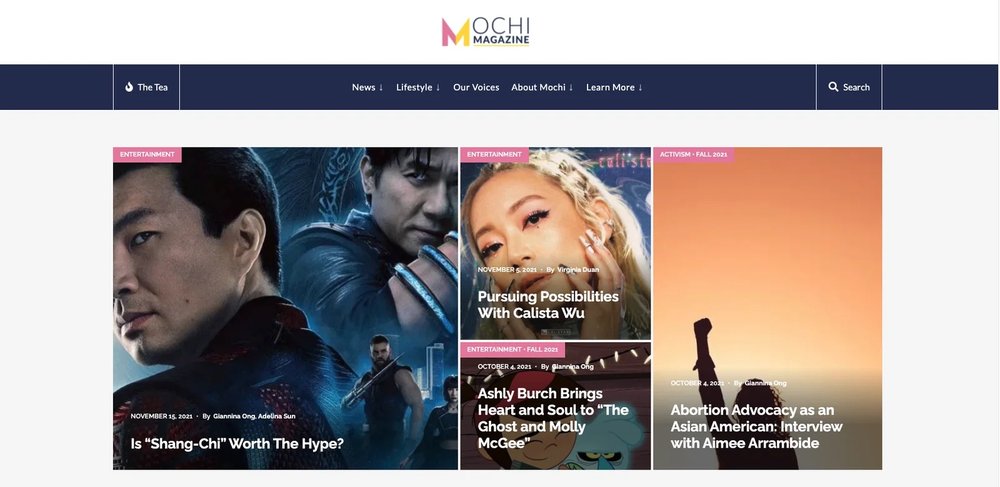
Google for Creators interviewed Giannina Ong, the Editor in Chief of Mochi Magazine, the longest-running online publication for Asian American women.
3. Interviewing inspiring creators
We’ve interviewed so many fascinating people on our blog, including the editor in chief of the longest-running Asian American women’s online magazine; a queer automotive educator, journalist and influencer who started an inclusive car blog; a former lawyer who became a full-time vegan food blogger; and a ceramicist whose content showcases her artistic process. Their stories show the endless topics, communities and niches that you can create content for and about on the web.

4. Tapping into expert insights
For our Creator Insights YouTube series, we asked some of our favorite creators — like Eden Hagos and Elle Asiedu of BLACK FOODIE, and beauty blogger Keiko Lynn — to share their top insights and strategies for creating content, building a brand and making money as a creator. Some topics included how to find your niche, avoid burnout and pitch yourself to brands.

Follow Google for Creators on Instagram and Twitter, where we regularly connect with the creator community and post advice and insights.
5. Connecting with creators on social
We hope you’ve been following Google for Creators on Twitter and Instagram, where we share everything we’re up to. We also love connecting with the creator community on our social channels. If you’ve ever wanted to ask us a question, or answer one of ours with your own tips, that’s where to do it!
We had a blast sharing stories and insights from all the creators we spoke to in 2021, and we can’t wait to connect with even more next year. See you in 2022!
HTTP Toolkit: uno strumento di analisi del traffico HTTP(S)

Il primo SMS della storia venduto a 132mila euro

Facebook, Instagram e WhatsApp: scoperti 39mila siti bufala

10 idee regalo di Natale last minute da fare in 5 minuti senza uscire di casa
The Googlers who help track Santa each Christmas
When Dave Holmes started at Google nearly 10 years ago, he couldn’t have known how many projects he’d work on or things he’d help build. One of them he’s loved working, though, is Santa Tracker. “I’ve been working on Santa Tracker…well, I think for nearly as long as I’ve been at Google.”
Santa has his own history with Google, too. A 2004 mapping software acquisition brought a new team to Google, and that team wondered: Could we put Santa’s flight on the map?
So we did. Santa Tracker launched in 2004, and has been an important project at Google ever since. While there’s a small core team dedicated to Santa, up to 20 or so Googlers volunteer to help make it happen every year, and it’s become a true community effort. It’s also a way for our developers to try things and see what Google products can do. Sam Thorogood, who’s led our work with Santa for the last seven seasons, thought he’d try it out and work on showing off cool new web technologies for a bit. “Turns out I enjoyed it a lot, and I kept coming back to keep improving it,” he says.
I like to say that everything I’ve learned at Google, I learned from Santa.
“We figured out how to do so many different things because of Santa Tracker — how to build things, how to launch things, how to make things accessible, how to improve web design, how to optimize tools,” Dave says. “I like to say that everything I’ve learned at Google, I learned from Santa.” And those lessons have benefited other areas at Google, like Doodles and apps developers create for events like Google I/O.
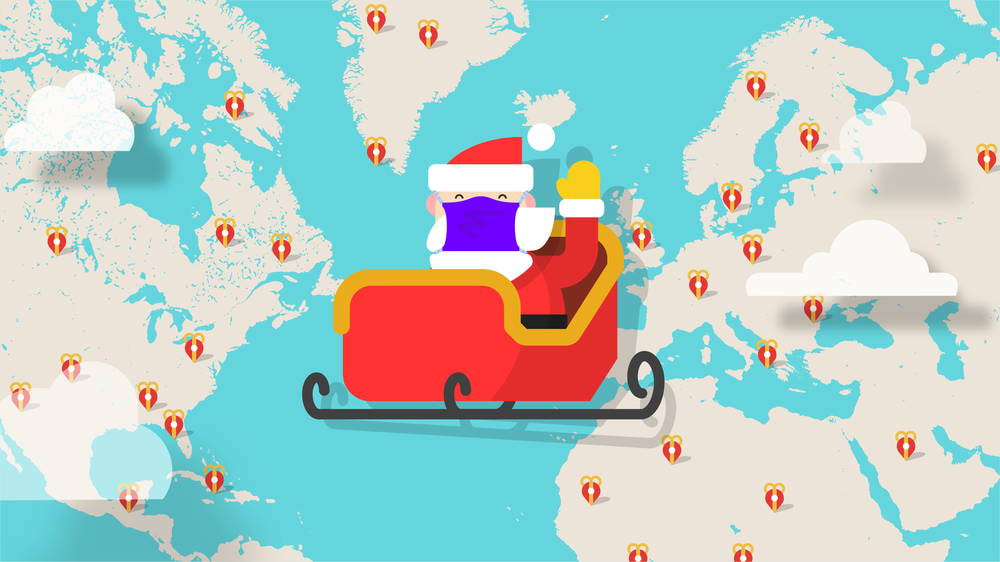
Some years the Santa Tracker team adds lots of new functions and fun interactions, and other years they simply tweak what’s already there. Santa Tracker, like so many things at Google, has adjusted throughout the years: For instance, the elves ride bikes instead of driving cars now, and last and this year Santa wears a mask to protect himself and others against COVID-19. Also this year, when you ask “Where is Santa?” on Search, you’ll see a fun surprise (no spoilers here!).
Last year and this year, Santa wears a mask to protect himself and others.
Among Dave’s favorite Santa Tracker projects is the Google Assistant integration, where people can ask to hear stories about Santa’s journey. He also enjoyed updating Santa’s soundtrack. He admits the team got a bit weary of hearing Santa’s same song on replay, so they came up with multiple tunes. “We ended up making a video similar to the crackling yule log ones, but featuring Santa.” (Go ahead and give it a listen.)
Some highlights for Sam over the years include adding Google Maps Local Guides’ photos to Santa’s route, and Code Boogie, a coding game where you can teach elves to dance. He’s also personally responsible for Elf Maker, in which you can create your own elf. “I’m really proud of that!” And he points out Snowball Storm, too, which another developer made that he was particularly impressed by.
There have also been little updates, like asking the creator of the Santa Tracker font to adjust the type so people all over the world could read it better. Of course, not everything Santa’s team worked on…worked. “One engineer who focused on AI and human movement came up with this idea for a game where you could enable tracking on your computer and teach the elves to dance,” Dave says, “and they would mimic your movement.” But just before launch…they found a glitch. “If the tracker lost you for a second…the elves’ heads and arms would go flying off!” Santa and the team decided not to launch the game. “That game was sent back to Elf engineering for further work,” Dave says.
Once all of this work is done, there’s the job of bringing Santa to everyone else. Part of Rachelle Lacroix’s work at Google for the past five holiday seasons has been doing exactly this. “Using marketing channels and social media, I help make sure people around the world can easily find and experience Santa Tracker,” she says. Rachelle says she’s loved seeing the creativity from teams come out in our work with Santa, but simply being a part of this group is one of the best parts for her. “Technical and creative Googlers alike really tap into their childhood when they work with Santa,” Rachelle says. “So much thought and care goes into every detail — and the team takes this work very seriously! Still, we find ways to have fun … it’s hard not to smile at all of the playful holiday puns that pop into our meetings and emails.”
Dave and Sam both feel the same. “It’s been the most fun meeting people — virtually or, in the ‘before times,’ by cycling around campus — who I wouldn’t otherwise interact with,” Sam says.
As the team prepares to help Santa launch this year, the work is winding down, and Dave and the rest of the group will return to their normal jobs. Still, the once-a-year project comes with its benefits. “It’s like a minor celebrity status,” Dave says. “I’ve loved telling my son I work with Santa.”

Santa Claus is coming to town — and we interviewed him
It’s 7 degrees below zero when we step off the Polar Express. There’s a slight breeze that feels almost cryogenic and a loud “crunch!” as our boots hit the snow. But the real first impression of Santa’s Village: the warm familiarity of visiting a place you’ve never been, but is exactly as you imagined.
It’s no secret that Google loves celebrating the holiday season. The Google Arts & Culture team have brought us the warmth of the Festival of Lights and the harmony of Kwanzaa; and they’ve taken us from Norway’s Trafalgar Square to the Christmas Lights of London. And of course, there’s Santa Tracker — with a few related easter eggs from the Search team that appear when users around the world search for “Christmas.”
Maybe all the free press is why this year, we’ve been invited to interview Santa. And perfect timing too: According to Google Trends, searches for “Santa Claus” are on their annual rise.
Thanks for having us! Let’s get started: Traditionally, people have been encouraged to write you letters. Any update on how to get in touch with you?
During the month of December, anyone in the world can use Google Assistant to get in touch with me directly. Just say “Hey Google, Call Santa” and we’ll have a chat, and maybe you can help the elves create a holiday song.”
Santa, have you been working on any North Pole launches lately?
A few! You’ve seen the historical depictions of me, but now you can color your own holiday works with Art Coloring Book. And it’s always fun to sing the songs of the season with your family, but you might want to give it some practice with the Blob Opera beforehand — ho, ho, ho!
Santa on Santa
We know people can call you from their Google Assistant…but you seem pretty busy. Is there a good way to check in without bothering you?
It’s never a bother! But all December we’re bringing back our North Pole Newscast. Just ask your Google Assistant “What’s going on at the North Pole?” and check in with Dimplesticks the Elf for reports from Santa’s Village.
You’ve been so generous with your time. Any last thoughts?
Santa’s Village is live and everyone is welcome to join in the fun, and see what Mrs. Claus and the elves are up to! But — biggest of all — kids around the world can start following the Santa Tracker on the big night (December 24), and Google Assistant can help. Just ask, “Hey Google, track Santa” or “Hey Google, where is Santa right now?”