
Il Centro Studi Italia-Canada partecipa al Business Forum sull’Intelligenza Artificiale della ICCC
L’Intelligenza Artificiale (IA) e le sfide dello sviluppo sostenibile saranno al centro della terza edizione del Business Forum sull’Intelligenza Artificiale organizzato, per il prossimo 18 e 19 novembre, dalla Camera di…
L’articolo Il Centro Studi Italia-Canada partecipa al Business Forum sull’Intelligenza Artificiale della ICCC scritto da MercurPress proviene da Assodigitale.

NETGEAR anticipa il Black Friday: offerte sullo Store ufficiale

Google, nuove funzioni a sostegno del giornalismo locale
How early-stage news publishers achieve sustainability
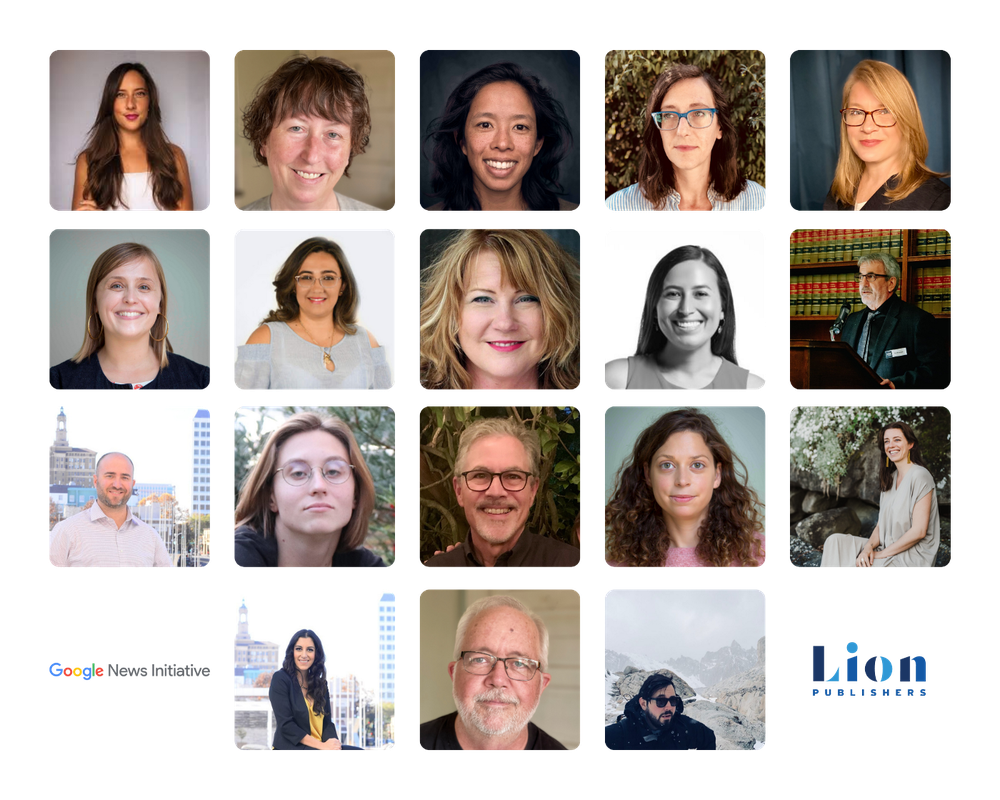
In December 2020, the Google News Initiative and LION Publishers launched the first-ever GNI Startups Lab in North America. By March 2021, 10 early-stage publishers had been selected to partake in an intensive, six-month accelerator program, during which they received coaching and financial support to help their businesses become more sustainable.
Today, we’re sharing a comprehensive report on this cohort of the GNI Startups Lab which documents everything that we learned during our time together, including the new strategies that digital publishers are using to build their businesses and connect with their communities.
Over the course of the Lab, it became clear that sustainability for independent news businesses lies at the nexus of financial health, journalistic impact and operational resilience. Many of the participants made terrific strides in making their businesses more resilient for the long-term:
- Amy Duncan is the founder and publisher of the Indianola Independent Advocate (IAA) in Central Iowa. A former Des Moines Register executive, Amy focused on improving her bandwidth as a founder, which meant learning how to develop operational workflows so that she can expand her team. Taking the advice of her dedicated Startups Lab coach, Amy added two part-time employees to IAA’s payroll. Expanding her team freed up more of Amy’s time to make crucial improvements to IAA’s digital advertising system and to explore adding programmatic ads to the website. “Before this program I didn’t realize, or accept, how much time I need to be spending on the business side. We’d been getting by on running subscription and revenue efforts when I felt like it, but I now know that I need to spend a large percentage of my time focused squarely on the business side.”
- Kara Meyberg Guzman has always been passionate about local news, even selling her car to help launch Santa Cruz Local in 2019. But it was not until recently that Kara realized the need to measure success beyond revenue and membership growth. Each team member now tracks their mental and emotional health and discusses the results at a weekly meeting. Measuring staff health led Santa Cruz Local to redistribute work among their team members and to implement a company retirement plan for full-time employees. “Through the GNI Startups Lab, I’ve learned that operational resilience — an ability for our team to work together to achieve shared goals, without burnout — is equally important,” Kara said. The Lab also helped Santa Cruz Local cultivate an experimentation mindset across all aspects of the organization, including implementing quarterly OKRs. “We learned how to divide tasks, build staff capacity, set measurable goals, track our progress, make room for small experiments, and say no to things that distract us from our purpose. Our team is so much stronger than we were a year ago.”
- Wausau Pilot & Review founder Shereen Siewert was concerned about the lack of news produced for and consumed by the large Hmong community in Wausau, Wisconsin. With support from her coach, Shereen developed an outreach strategy to help Wausau’s journalists to connect with the local Hmong community, including distributing surveys and in-person booths at local community events. Wausau grew their monthly non-English speaking audience by more than 20% during the Lab, and is building deeper connections with this historically underserved community. “Participating in the GNI Startups Lab was a game-changer for us. We left the program feeling much more confident about our sustainability and learned so much from our colleagues along the way.”
We are grateful to the 10 participating publishers of the North American GNI Startups Lab, both for their deep engagement with the program and for so generously sharing their learnings with the wider digital news ecosystem. This body of knowledge is already helping to power ongoing GNI Startups Labs in Europe, Hispanoamérica and India, and we look forward to announcing additional installments of the program in 2022.
GNI Startups Lab’s founder teams
In addition to the Lab Report, today we’re also sharing the results from the GNI’s inaugural GNI Startups Pitchfest, in which graduates from the North American cohorts of our Startups Lab and Boot Camp were invited to compete for additional funding. Nine Startups pitched a new experiment or initiative that could make their businesses more sustainable to a jury comprised of GNI and industry leadership. Congratulations to our winners:
- Annelise Pierce, Shasta Scout: Launching an innovative community engagement project to build trust, deepen coverage, and broaden readership
- Travers Johnson, Queerency: Creating a video ambassador program for content creators to produce smart, engaging, and viral-focused videos
- Megan Raposa, Sioux Falls Simplified: Developing a “Welcome Guide” to introduce new readers to the publication along with helpful content about local government, schools, resources and culture.
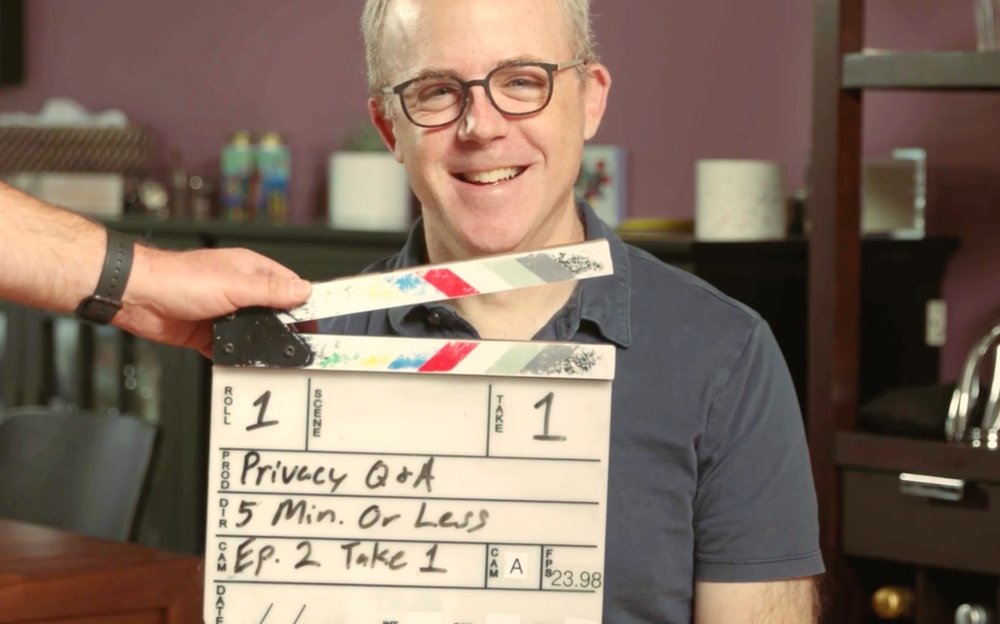
Behind ads privacy: our latest Publisher Privacy Q&A
Curious how the Privacy Sandbox will keep people’s data private?
In the second episode of our Publisher Privacy Q&A video series, we simplify how the technology behind the Privacy Sandbox works and how its solutions incorporate tested privacy practices into online advertising. We also explore how Chrome is designing new capabilities to help advertisers reach their audiences in more privacy-forward ways, and why we believe these solutions will last for the long term.
Questions covered in episode 2:
- How will the Privacy Sandbox solutions keep people’s data private?
- How will the Privacy Sandbox impact my advertisers?
- Will Privacy Sandbox solutions last?
Stay tuned for the third Publisher Privacy Q&A episode coming in January 2022. In the meantime, check out episode 1 of this series, and the Privacy Sandbox website for more information and the latest timeline on solution development, testing and releases.
The new Indigenous Americas hub on Google Arts & Culture
In the month of November and beyond, we celebrate the incredible contributions Native Americans have made to contemporary American culture. Today, there are 574 federally-recognized American Indian tribes in the United States alone; a testament to the resilience and fortitude of these nations. As tribes build towards the future of their communities, they are also drawing from their rich histories and cultures to inspire new generations.
On the occasion of Native American Heritage Month in the United States, we are proud to be collaborating with Google Arts & Culture and over 40 other cultural institutions to bring online 90+ stories to the new Indigenous Americas hub: a collection of Indigenous art and culture that spans beyond the U.S. and across the Americas to make these stories available to anyone, anywhere in the world.
Since its inception in 1998, the Harvard Project’s Honoring Nations has awarded 148 tribal programs that represent the very best in local self-governance, and serve as models of inspiration, innovation, and achievement. We invite you to dive into the stories of the Ohero:kon Youth Rites of Passage Program that supports Haudenosaunee (Iroquois) teens reconnect with their roots, the Miami Tribe of Oklahoma Language Revitalization that builds pathways for their people to maintain cultural identity through learning their native language, the Chickasaw Nation Sick Child Care Program that supports working families and improves community health, the Joint Tribal-State Jurisdiction which focuses on rehabilitation through the justice system, or the Tulalip Tribal Court AlterNative Sentencing Program to better understand the new standards of a culturally appropriate justice system to create safer communities.
These highlights from Honoring Nations are part of the the 90+ stories now available in one place for the first iteration of the Indigenous Americas hub on Google Arts & Culture, building on our work with long-standing Google Arts & Culture partners including the Smithsonian National Museum of the American Indian and Indian Arts and Crafts Board at the US Department of the Interior, among others.
On this new hub, dive into new and existing content from partners across the Americas – from the historic work of the Native American Code Talkers in the U.S. to the masters of the Totonac Spiritual Cuisine in Mexico – and celebrate the past and present of Indigenous cultures with a tour of the dizzying dwellings at Mesa Verde National Park and a look at contemporary Inuit ceramics.
We’re hoping this will inspire you to start your journey of learning more about Indigenous cultures in the Americas, and that you’ll come back regularly as we work with cultural institutions to tell more Indigenous stories.

TikTok in campo contro le challenge estreme e pericolose

Netflix, 5 film di Natale 2021 da non perdere
The media platform helping Indonesians donate for good
Editor’s note from Ludovic Blecher, Head of Google News Initiative Innovation: The GNI Innovation Challengeprogram is designed to stimulate forward-thinking ideas for the news industry. The story below by Andrias Ekoyuono, Chief of Corporate Strategy at kumparan, is part of an innovator seriessharing inspiring stories and lessons from funded projects.
As an avid news reader, I would read stories in the media every day about social problems and natural disasters, which made me want to help by donating to those in need. However, it was difficult to find a way to donate because I had to search for other websites that could channel the funds. I would also have to ensure that the donation was channeled by a credible party. My main takeaway became this: the experience of giving donations after reading the news should be easier.
Enter kumparan, one of the most widely respected online media organizations in Indonesia. Launched in 2017, it consists of 130 journalists and a media network across 34 provinces which helps media startups grow. It serves as a key resource, giving local media the opportunity to disseminate information and voice concerns at the forefront of Indonesia’s national consciousness. Its establishment has helped the general public to understand and empathize with the problems facing their neighbors every day.
In 2020, kumparan received funding from the Google News Initiative Innovation Challenge to help create kumparanDerma, a tool that shortens and streamlines the donation process to provide aid during disasters and emergencies.
The platform allows news consumers to have direct social impact, as they can read articles and give to causes that matter to them in a one-step process through available payment options. There have been ten donation campaigns across Indonesia, including in Riau, East Nusa Tenggara, North Sulawesi, Kalimantan, East Java, and West Java, resulting in over 1,400 transactions with a total readership of roughly 600,000 article views.
These campaigns have raised money for a host of different causes, including support for people whose homes had been destroyed by an earthquake and funding for a child in a remote area who needed a mobile phone to access online school classes during the pandemic.
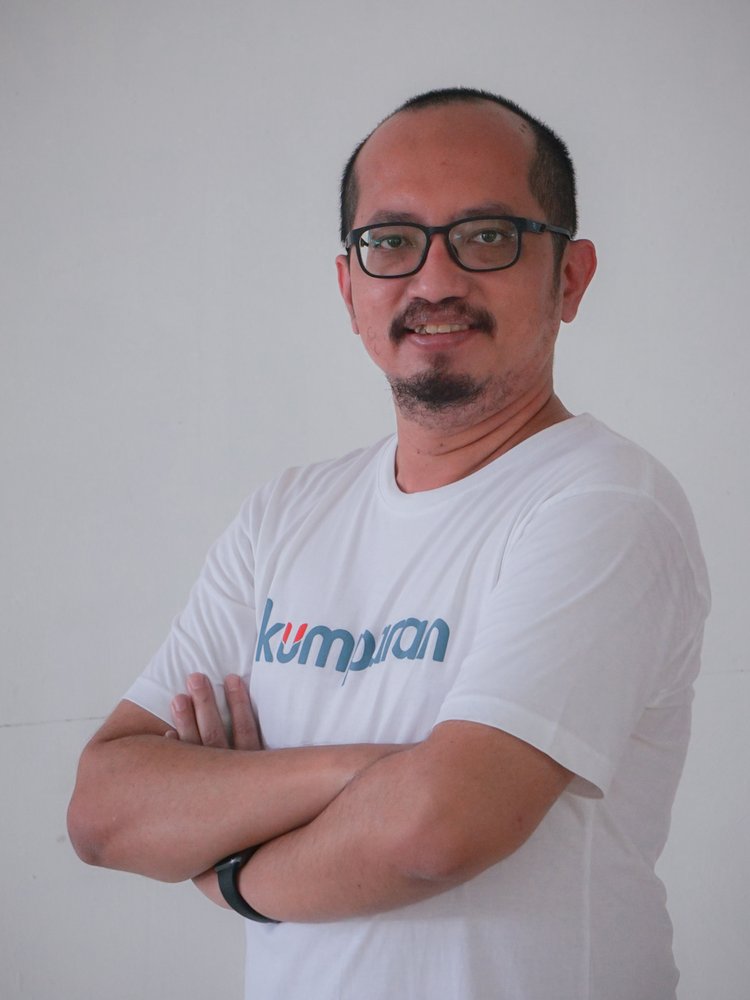
Andrias Ekoyuono, Chief of Corporate Strategy at kumparan
One of the fundraising campaigns was “Blurred Portrait of Sikka Children, Struggling with Pain Amid Limitations.” Two children in Sikka (East Nusa Tenggara) had been suffering from malnutrition and hydrocephalus for years. Both had received treatment from local health facilities in the past, but were unable to receive treatment for a period of five months because of the cost of transportation to obtain their medicines. As a result, kumparanDerma opened donations to support these children’s daily needs. While one of the boys sadly died, the money raised was eventually enough to help the surviving child and three others in similar circumstances.
kumparanDerma — with GNI’s support — has helped facilitate change through news readers’ donations, ensuring their generosity and compassion reach people across Indonesia. As we continue to expand kumparanDerma, we hope that building out donation processes through news platforms is just the beginning of the social impact we can make together.
Google News Showcase, one year in
A little over a year ago we announced Google News Showcase, our new product experience and licensing program for news, to readers and publishers all around the world. Our goal is to help publishers more deeply engage with their readers and to help readers find, follow and support the news organizations covering the issues that matter to them. One year in, we continue to learn, update and expand the product, and we’ve seen strong, steady numbers both in terms of the number of publishers signing on for the product and how readers are interacting with the content.
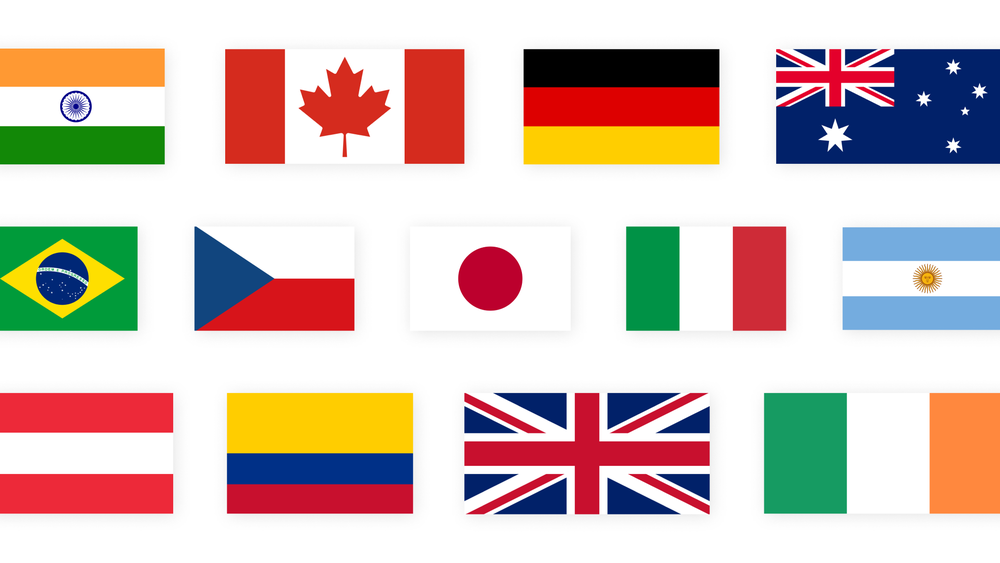
Since News Showcase launched in October 2020, we’ve signed deals with more than 1,000 news publications around the world and have launched in more than a dozen countries: India, Japan, Germany, Brazil, Austria, the U.K., Australia, Czechia, Italy, Colombia, Argentina, and just a few weeks ago we launched in Canada and Ireland. More than 90% of the publications that are part of News Showcase represent local or community news. Local news is an essential way for readers to connect to their communities and ensure they get the news that impacts their day-to-day lives.
Flags of the countries where News Showcase has been launched so far
We know how hard it can be to keep on top of the news. With News Showcase, readers see what stories key publications think are worth highlighting and get more insight directly from those publishers through curated panels. We give publishers a variety of News Showcase panel templates to use so they can give additional context to stories, add related articles, timelines and more. The panels give news publishers more direct control of their presentation and branding, helping them be more visible to their dedicated readers and to those who are just discovering them.
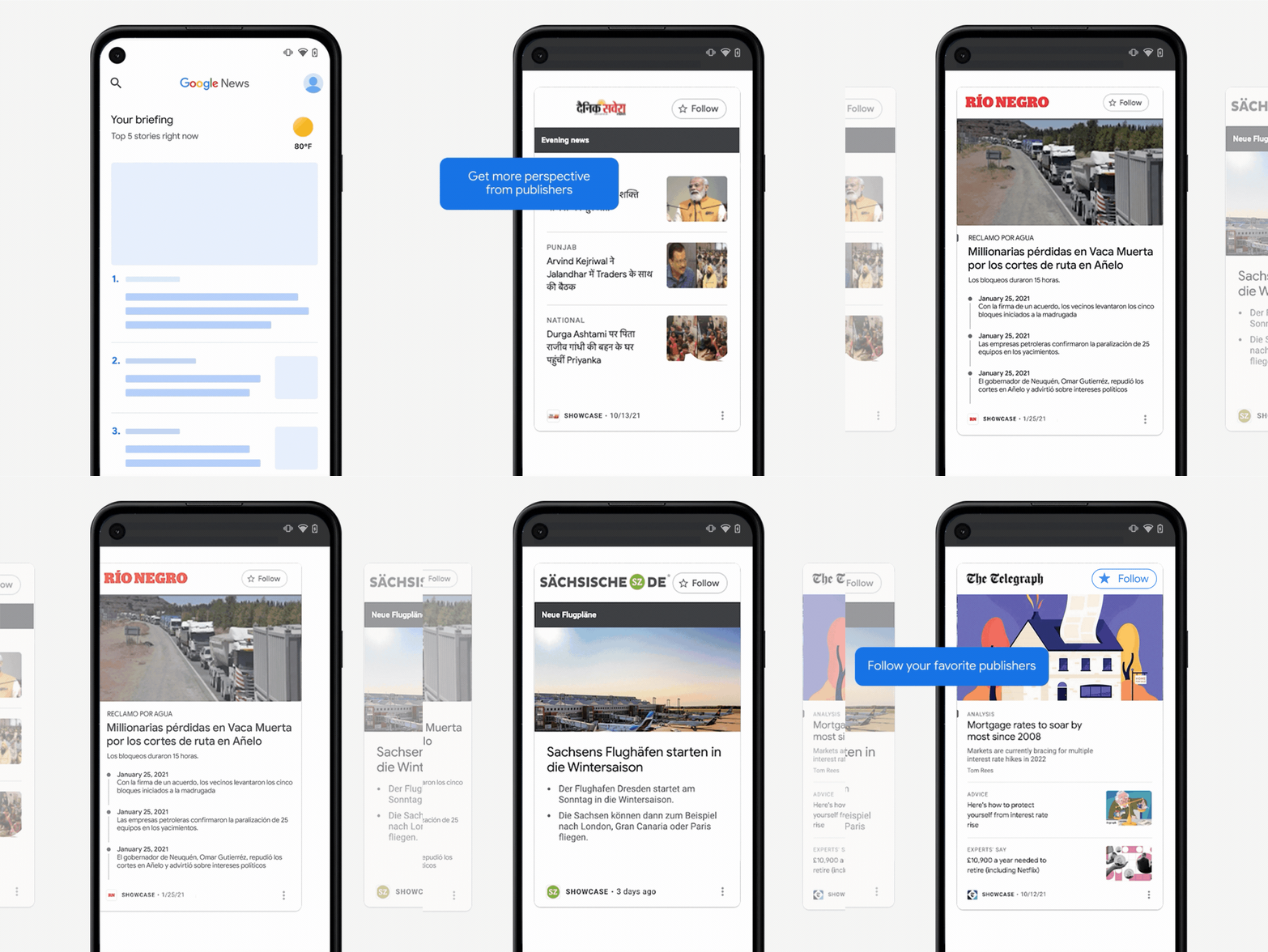
Examples of how some of our News Showcase partners around the world will appear in the product
News Showcase panels can appear across Google, currently on News and Discover, and direct readers to the full articles on publishers’ websites, helping them deepen their relationships with readers. In addition to the revenue that comes directly from these more-engaged readers, participating publishers will receive monthly licensing payments from Google.
“As a regional publisher in south and east Germany, a key objective for us is to expand our digital presence and reach to audiences,” says Daniel Torka, member of the executive board of NPG (Südwest Presse), a daily regional newspaper. “Using News Showcase has allowed us to more deeply engage our readers on important stories and give us more opportunities to tell stories differently.”
“I always work to increase the number of our users, to reach a wider audience,” says Clara Inés Araújo, editor in chief of El Pilón, a regional newspaper in Colombia. “For this, Google News Showcase has been a strategic ally. With nice designs, readers feel closer to our stories. We provide them with organized information about what is happening in our region and the country. The future is about working together, and Google News Showcase is a great example.”
“Local newspapers create essential reporting for their communities,” says Kobe Shimbun, a local newspaper in Japan that covers Hyogo Prefecture. “However, in the digital era, we need to build more touch points for us to be discovered by those readers. Google News Showcase provides us a new way for readers to find the articles they need, and enables us to strengthen our relationships with them.”
“Le Devoir is a proud partner of Google News Showcase. Google’s assistance and tools are critical in Le Devoir’s strategy to build a digital audience,” says Brian Myles, editor of Le Devoir, a Quebec-based independent news publisher. “We rely mainly on digital subscriptions and our business model is sustainable. In this regard, Google News Showcase fits perfectly with our current efforts to build a larger community of readers. This partnership will bring us a step forward in our digital transformation, while delivering our trusted and fact-based brand of independent journalism to a wider audience.”
One year in, we’re seeing robust numbers from News Showcase that indicate both publishers and readers are getting value from the quality curated content found in the product.
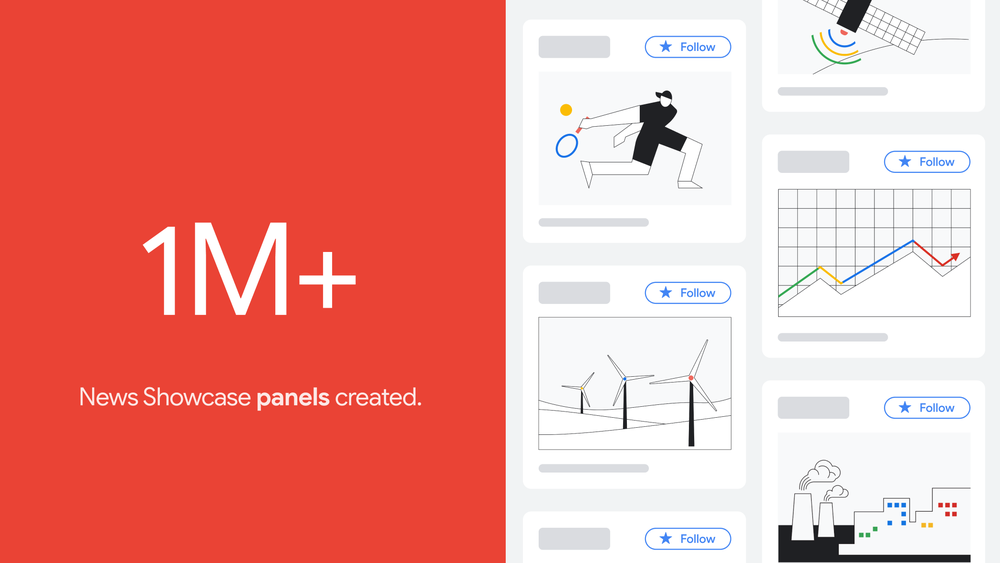
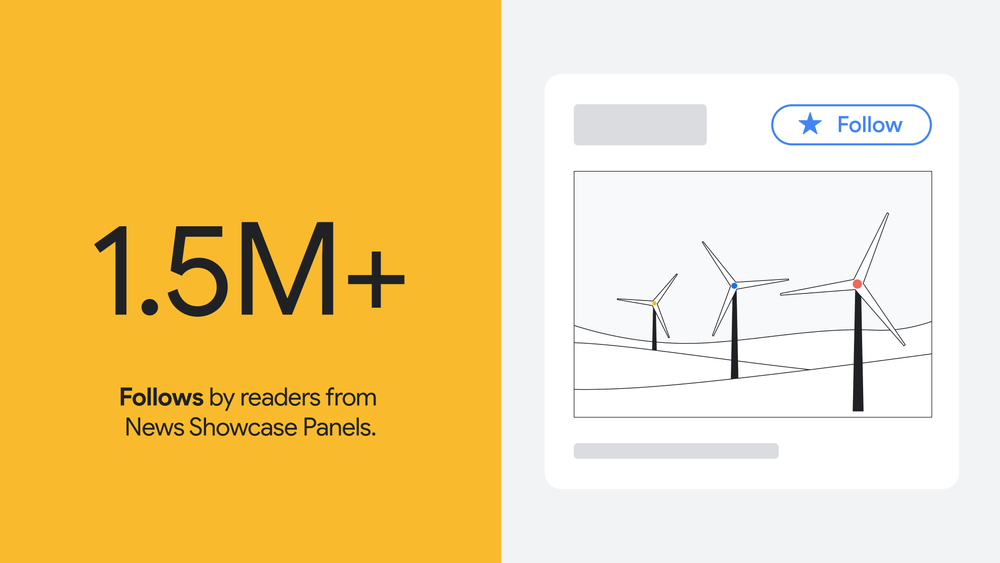
To start, participating publishers have created over one million News Showcase panels to date. And readers clearly like what they see. People have tapped the Follow button on News Showcase panels over 1.5 million times, showing they’re looking for more content from their favorite publishers or ones they have just discovered. By following a news organization on News Showcase, readers are ensuring that they get to see regular updates from these publishers every time they open Google News.
To further strengthen these relationships, we offer News Showcase readers the ability to read expanded access to select content from publishers. This feature means readers will have the opportunity to read more of a publisher’s articles, encouraging them to learn more about the publication — and potentially subscribe. Combined together, these features and numbers show that the product is supporting news organizations’ mission of reaching readers and helping to bring a deeper engagement.
We’re continuing to work with news organizations to learn more about how people engage with News Showcase to ensure we’re delivering on our long-term goal of strengthening the relationship between readers and publishers.
News Showcase is just one of our investments in our ongoing commitment to support journalism around the world. Through both our services and direct funding of news organizations, Google is one of the world’s biggest financial supporters of news. With the Google News Initiative, we offer training in digital skills and capabilities, programs like GNI Startups Lab and the GNI Digital Growth Program to accelerate small and mid-sized news organizations’ business growth, and products like News Consumer Insights and Subscribe with Google to help publishers understand their audiences and grow reader revenue. Since we launched the GNI in 2018, we’ve worked with more than 7,000 news partners in over 120 countries and territories and trained more than 450,000 journalists in 70 countries. More details on our GNI work over the past three years is available in our impact report.
Alongside governments, other companies and civic society, we’re dedicated to continuing to find ways to engage readers with journalism that matters to them and supporting the sustainability of the news industry around the world.
New tools and features to support local news
Local news is essential to building healthy communities. One of the most obvious examples of this was the spread of the COVID-19 pandemic, when different communities had different needs and were impacted in different ways. Local news ensured that people knew what to do.
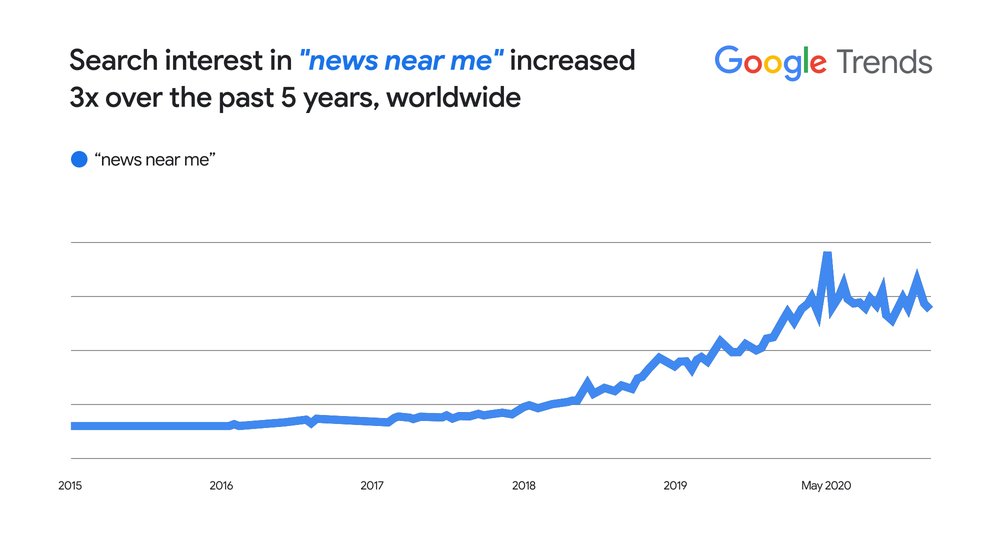
More broadly, readers are looking for local news more than ever before. Queries on Google Search like “News near me” have increased three-fold over the past five years, reaching an all time high during the COVID-19 pandemic in May 2020.
At Google, we’re dedicated to finding new ways to help readers better connect with publishers and helping publishers more efficiently and creatively produce quality journalism their readers want. A year ago, we launched Journalist Studio, a set of free tools reporters can use in their daily jobs. Today we’re announcing a number of new features to help local publishers connect to readers, and new tools for reporters to produce deeper, more digitally focused work.
New product features for news
We have a number of new news features coming to Google Search to help readers find content from local publishers even more easily than before. First, we’re expanding a feature that we initially launched for COVID searches. Readers will soon see a carousel of local news stories when Google finds local news coverage relevant to their query. This carousel will be available globally in all languages and helps readers easily find stories near them from local news publishers. The feature helps local publishers by adding another way for their essential reporting to reach the community that needs it most.
Over the past few months, we’ve also been working on improving our systems so authoritative local news sources appear more often alongside national publications, when relevant, in our general news features such as Top Stories. This improvement ensures people will see authoritative local stories when they’re searching for news, helping both the brand and the content of news publishers reach more people.
In addition, we have improved the local news experience by refining our ability to understand topics beyond just broad areas, like sports, to narrower subtopics, such as football and high school football. When paired with our location signals, this helps readers get more relevant material for the topics they are searching. For example, if you’re in Detroit and search for football, we’ll now show you results for local high school and college teams, rather than just showing you results for, say, the professional team.
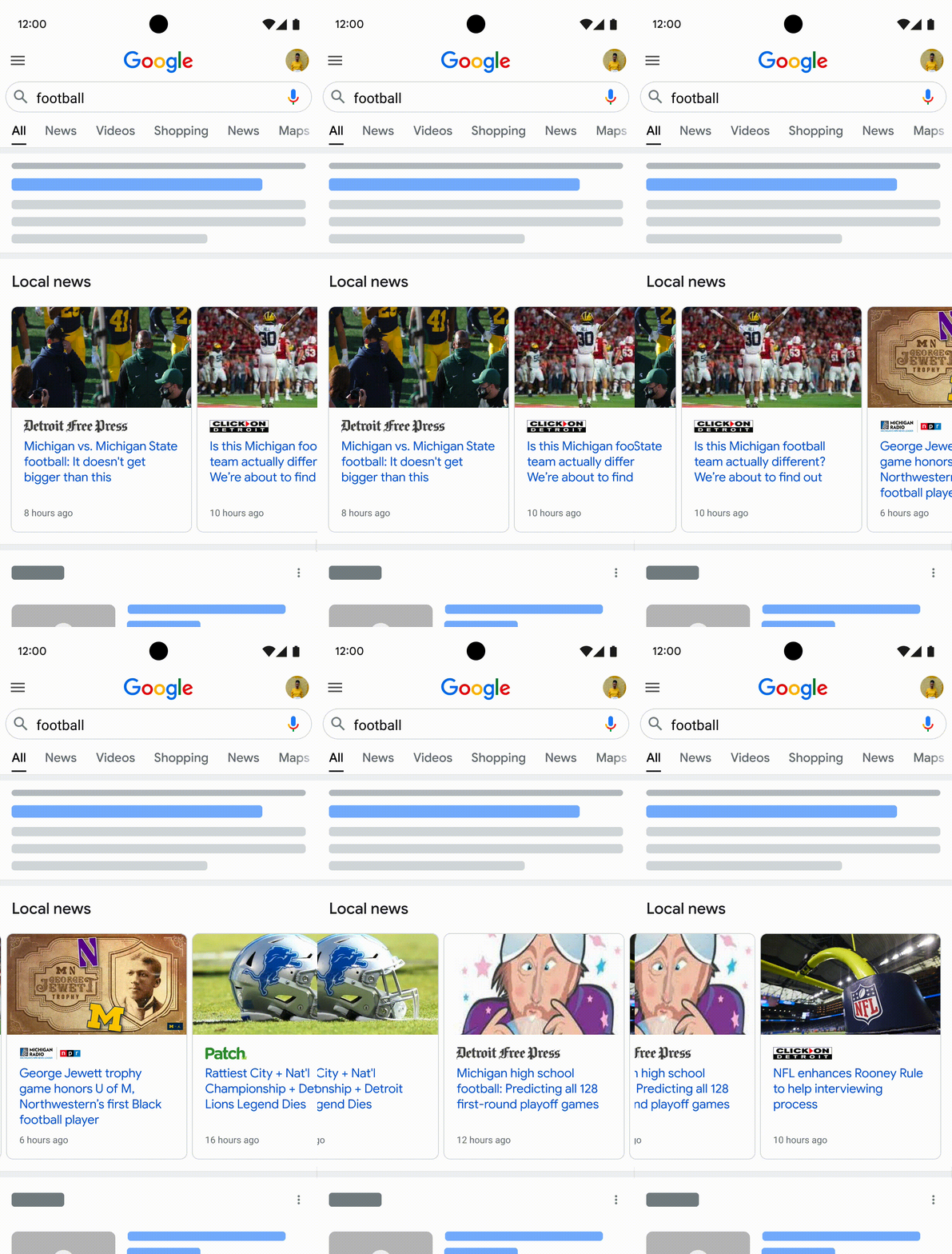
An example of how local news results will update to show additional subtopics
Social media can give readers additional information that they may be looking for about local issues. We recently launched a new way to help people find local information on the topics they’re searching for by surfacing tweets by local, authoritative sources and authors, including tweets from news organizations.
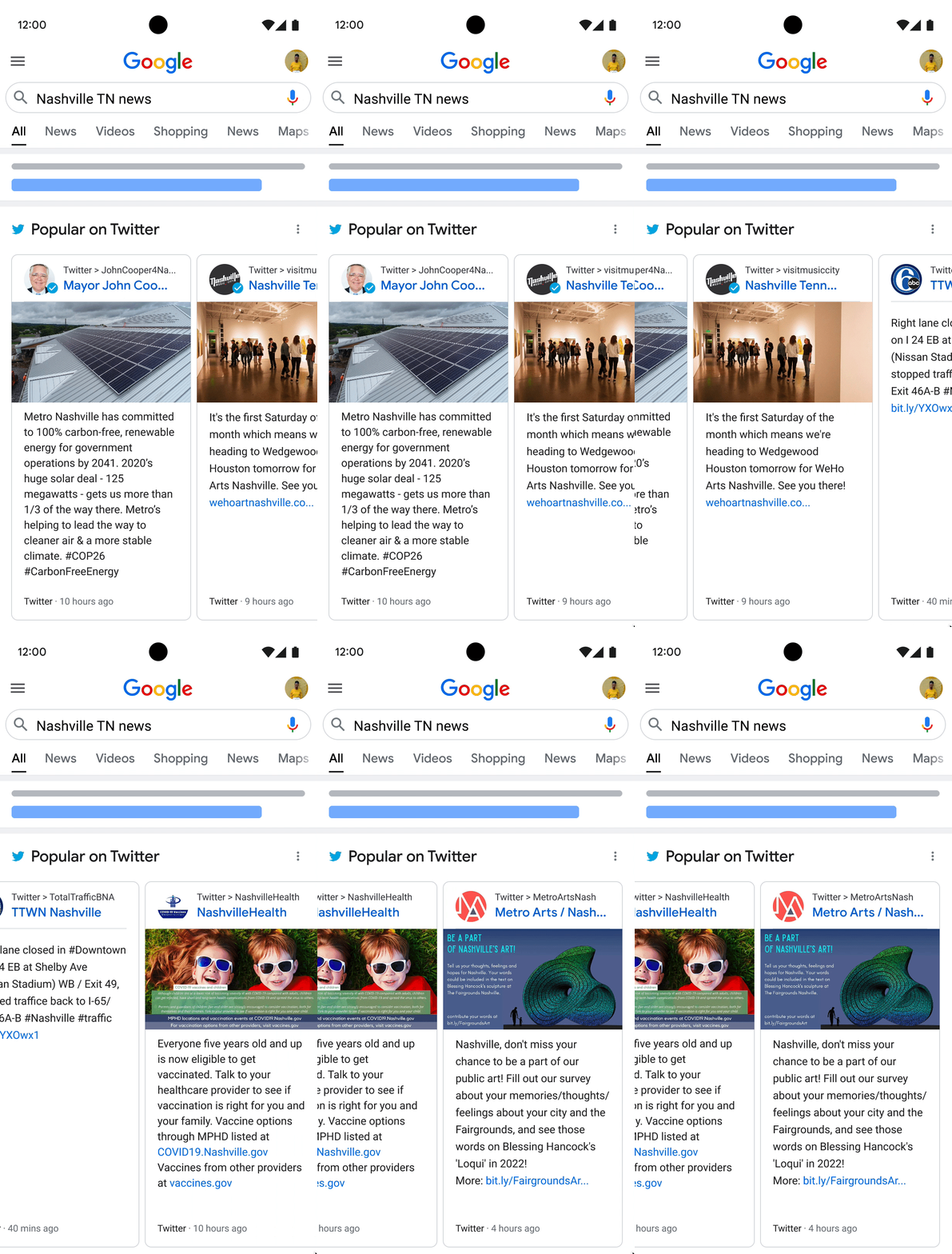
An example of how tweets by local, authoritative sources and authors can appear.
New data tools for reporters
In addition to our product news, we’ve also been looking at how we can help reporters cover stories with locally relevant data.
The U.S. Census is one of the largest data sets journalists can access. It has layers and layers of important data that can help reporters tell detailed stories about their own communities. But the challenge is sorting through that data and visualizing it in a way that helps readers understand trends and the bigger picture.
Today we’re launching a new tool to help reporters dig through all that data to find stories and embed visualizations on their sites. The Census Mapper project is an embeddable map that displays Census data at the national, state and county level, as well as census tracts. It was produced in partnership with Pitch Interactive and Big Local News, as part of the 2020 Census Co-op (supported by the Google News Initiative and in cooperation with theJSK Journalism Fellowships).
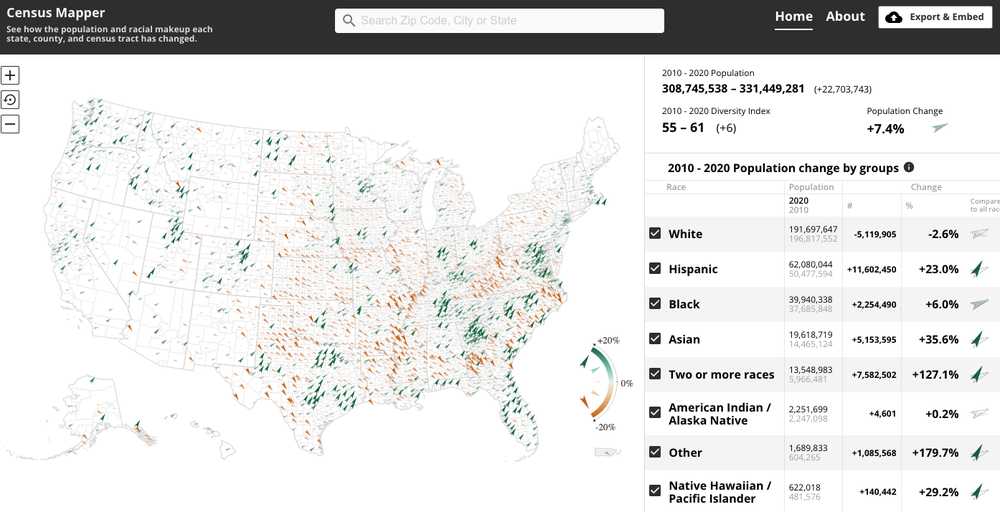
Census Mapper shows where populations have grown over time.
The Census data is pulled from the data collected and processed by The Associated Press, one of the Census Co-op partners. Census Mapper then lets local journalists easily embed maps showing population change at any level, helping them tell powerful stories in a more visual way about their communities.
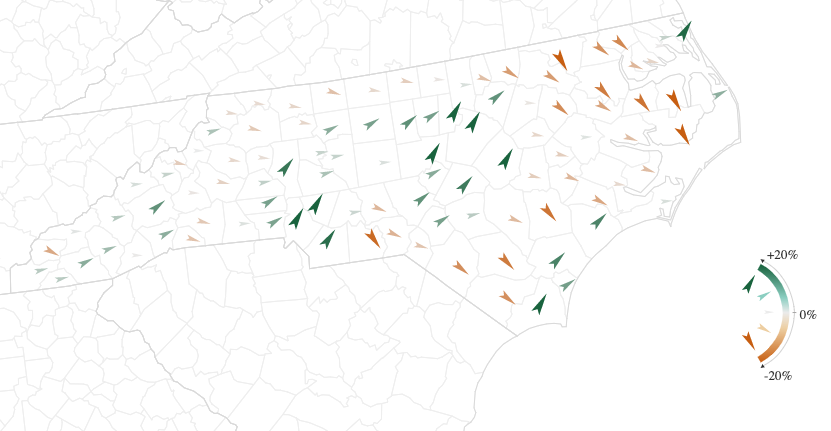
With the tool, you can zoom into states and below, such as North Carolina, shown here.
As part of our investment in data journalism we’re also making improvements to our Common Knowledge Project, a data explorer and visual journalism project to allow US journalists to explore local data. Built with journalists for journalists, the new version of Common Knowledge integrates journalist feedback and new features including geographic comparisons, new charts and visuals.
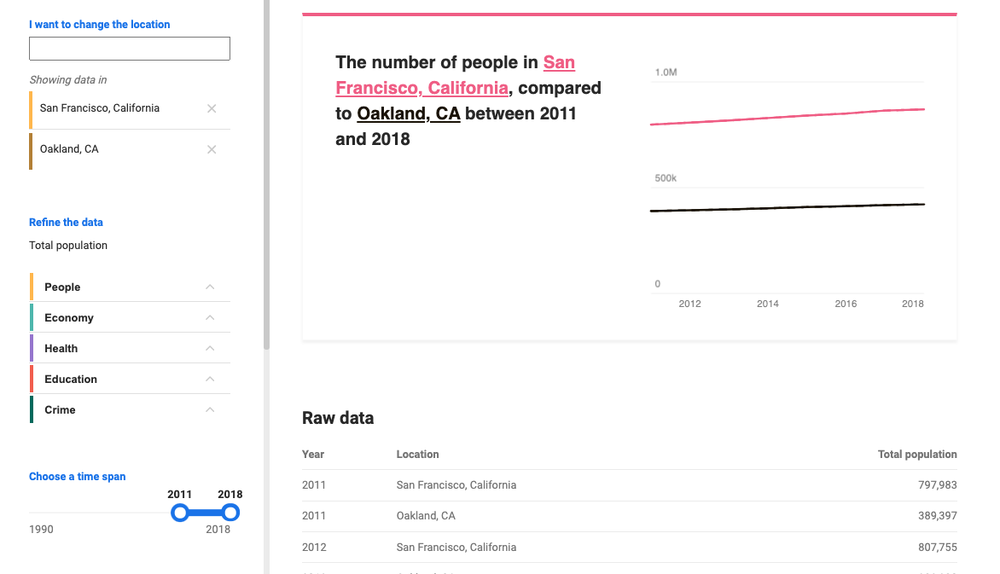
An example of the new look of the Common Knowledge Project
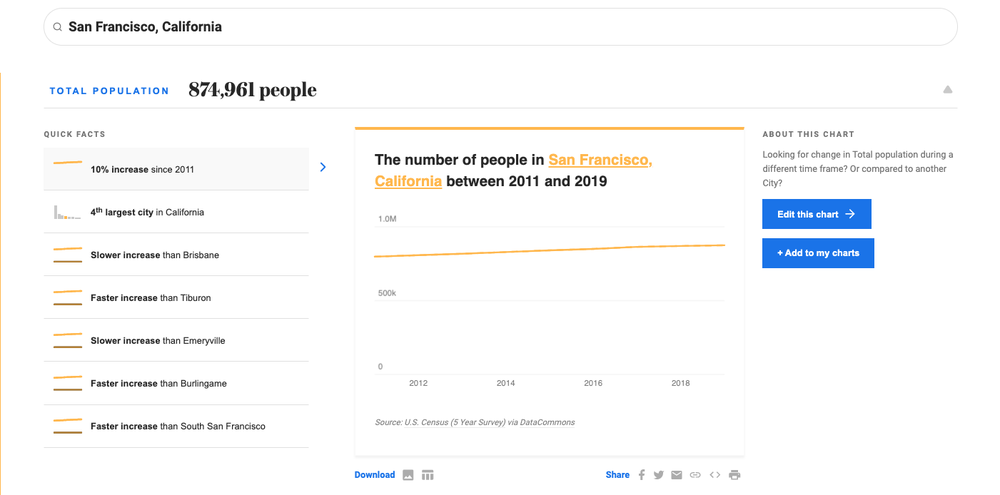
Another example of the new look of the Common Knowledge Project
We’re dedicated to supporting local newsrooms at every level of their reporting — from helping find, collect and visualize data, to searching through the data for stories. We know the importance of local news to communities and we’re invested in continuing to help local news publishers reach and engage audiences looking for their essential reporting.

How technology powered a Pulitzer Prize-winning investigation
Editor’s note: Brendan McCarthy, the Deputy Projects Editor at The Boston Globe, talks about how technology moved forward their Pulitzer Prize-winning investigation “Blind Spot.” The team analyzed thousands of documents using Pinpoint, an AI tool from Google that enables journalists to upload and analyze documents in seven languages: English, French, German, Italian, Polish, Portuguese and Spanish. Pinpoint is available now, and reporters can sign up to request access.
At the Boston Globe, we are privileged to have ample resources dedicated to accountability journalism, including the storied Spotlight Team and a quick-strike investigative team that tackles stories “off the news.” The result: We don’t just cover breaking news events but are able to pursue and dive into stories that people don’t know about yet — but they should. The best of these hold the powerful accountable.
Such a moment arose in 2019 when seven motorcyclists were killed in a New Hampshire crash. In short order, Globe reporters uncovered the truck driver’s terrible driving history and found that his license should’ve been suspended weeks prior, but wasn’t — simply because the Massachusetts Registry of Motor Vehicles had failed to open its mail and act on a warning notice from another state.
That led our reporters to ask a series of key questions: How had the driver slipped unnoticed through the cracks of the state licensing system? And how many others like him were out there?
The team requested public records from all 50 states, conducted a nationwide survey and built a database of vehicle crashes, trucking mishaps and more. Through voluminous data work and nose-to-the-grindstone reporting over the course of 11 months, the team found an answer: Deadly, preventable crashes like this are shockingly common.
Vernal Coleman was one of the investigative reporters awarded the Pulitzer Prize for “Blind Spot.”
Despite nearly 50 years of warnings by federal safety officials, the United States has no effective national system to keep tabs on drivers who commit serious offenses in another state. Enforcement relies on state agencies to do their job, which they often don’t.
When we launched the investigation, we hadn’t gotten fully acquainted with Pinpoint, a new Google tool where you can upload documents to easily search for names, places and more for patterns. But midway through our reporting process, we were dumping troves of files — court documents, photos, handwritten files, spreadsheets and more — into the tool.
A couple of helpful aspects of Pinpoint are its ability to recognize text in images and organizational capabilities, like the opportunity to quickly see, and search documents for, the most mentioned names or places and connections between people. So often in journalism — especially when you are dealing with mass troves of data — you are looking for outliers. Pinpoint let us figure out what was NOT there as much as what was there.
There’s this image that comes to mind — it’s a bit of a Hollywood, true-crime, detective trope — of a corkboard with mugshots and documents tacked up with pushpins, and lines of colorful string connecting the suspects. Technology now lets reporters take the physical pushpins and colorful string and photos and put it all on their laptop. It helps us organize the complex and see the patterns of a story.
It’s remarkable to think of the arduous, painstaking document work that newsroom data specialists did for years, all by hand, all without a laptop and technology. Don’t get me wrong, producing in-depth investigative journalism like our recent investigation is still an immense challenge. But technology is making many processes in reporting much faster.

Brendan McCarthy, the Deputy Projects Editor at The Boston Globe, edits an article at the organization’s offices
In light of our reporting, officials in several states suspended dozens of licenses. At least five motor vehicle agencies and court systems launched investigations into their failure to flag thousands of dangerous drivers. The 11-month investigation also propelled several proposed legislative reforms and reviews.
The series forced readers to confront the reality that we’ve grown numb to countless preventable deaths, and tolerable of lax government oversight that we would never permit in other arenas of our lives. For this work, the Globe received the 2021 Pulitzer Prize in Investigative Reporting.
Introducing the GNI News Equity Fund
The last few years have been challenging for everyone, none more so than marginalized communities. That’s something we recognize at the Google News Initiative, where we are committed to the fight for equity and are pushing ourselves to build diversity, fairness and inclusion standards into the fabric of every program that we build and every partnership that we create.
Given the scale of these challenges and the task ahead, we are announcing our GNI Global News Equity Fund, a multi-million dollar commitment to provide cash awards up to $250,000 to news organizations that are owned by or serve underrepresented communities around the world. These are non-dilutive awards, meaning companies won’t have to exchange ownership for the funding. We will provide more details on how to participate in the fund in early 2022.
Without question this is a movement, not a moment. All too often, efforts related to equity and representation are an isolated afterthought. We believe this new funding allows us to build on some early foundational work we have done to create a more representative and inclusive news industry, from accelerating the digital transformation of diverse publishers, to driving innovation among underrepresented news organizations, to supporting research that shines a light on the key issues facing underrepresented journalists and communities.
One of our goals at the GNI is to help in the digital transformation of diverse publishers. It’s the reason we partnered with a number of news associations in creating the Ads Transformation Lab to help 28 Black and Latino-owned publications in the U.S. grow their business for a digital future. There are some encouraging early results, with participating publishers experiencing an average of 25% increase in programmatic revenue and a 10% increase in traffic. “The GNI Ad Transformation Lab was an intense education,” says Bethany Lane, Revenue Strategist at QCity Metro in Charlotte, North Carolina. “It has pushed us further down the road toward sustainability.” QCity Metro experienced more than 100% growth in direct sold advertising revenue and average revenue per client, and secured a number of new advertising clients as a result.
Through the GNI’s North America Innovation Challenge, we funded Jambalaya News Lousiana’s project to reach their audiences in a unique and accessible way: creating an SMS alert system that sends parish-specific breaking news, local stories, events and services to the Latino, Spanish-speaking and immigrant community in Louisiana.
We’re also supporting experimental local newsrooms serving communities that have historically gone uncovered. In the U.S, we are coming on board as a financial supporter of Capital B, a Black-led, nonprofit local and national news organization that will launch in Atlanta in early 2022. Their goals include publishing impactful investigative journalism, combating misinformation and filling the basic information needs of Black residents in areas where they are underserved.
Understanding the scale of any problem often starts with data. That’s why we have partnered with organizations around the world to quantify the issue of diversity in tangible ways. A landmark study we supported from Media Diversity Australia looked at broadcast news and found almost 76% of journalists on Australian screens were found to have an Anglo-Celtic background. In Europe, our work with the German NGO Neue Deutsche Medienmacher involved industry-wide research that led to the development of a first of its kind Diversity Guide including best practices and a tool kit on hiring, team culture and reporting for all German newsrooms and broadcasters.
At this moment in time it is important to strengthen leadership across the industry to help address these challenges. In Latin America, we’ve supported theLeadership Incubator, developed by Chicas Poderosas, which provides mentoring that focuses on transformative leadership, redefining collaboration, mental health for leaders, promoting diversity and inclusion in the newsroom, and training to journalists and editors of young local and hyperlocal media founded by women and people who identify as LGBTQI+. To empower a network of women leaders in news organizations across Europe, Middle East and Africa, we created the Women in News Leadership Programme in partnership with INSEAD. The program will provide a forum to learn, connect and grow through a carefully designed curriculum.
We recognize that we have a long way to go, and that it starts within our own walls. That’s why we’re making these efforts to operate with inclusive principles and create lasting and meaningful change. People come to Google to access quality information, and we will continue to ensure that they are presented with a variety of trusted sources and voices that reflect the diversity of the world we live in.
A new fund to support investigative reporting
Investigative journalism has changed drastically over the past decade. Technology is playing a growing and evolving role in everything from gathering documents to processing data. New tools allow real-time collaboration across newsrooms and continents. While a few news organizations have the staff and resources to take advantage of these technological advances, not enough local news organizations and freelancers can say the same.
Before our current roles at Northwestern and Google, we worked together at The Washington Post. We were fortunate to be able to arm reporters with ultra-modern technology to work on document-centric news stories. The powerful combination of tools and reporters showed not only in the prizes the reporting won, but also in the tremendous impact it had on lawmakers and society. Our colleagues on The Post’s investigative team relied on technology to process and understand the large document sets that powered their award-winning work on projects like the Opioid Files and the Afghanistan Papers. These projects also motivated policy makers to bring about important societal changes.
While we met in a national newsroom, we both have roots in local journalism. We know how important accountability reporting can be to local communities. Smaller newsrooms, especially those that cover marginalized groups, need more resources to supply critical, accountability coverage.
Supporting journalists all over the world and creating tools to help them do their work more efficiently, regardless of their organization’s size, is an essential part of the Google News Initiative. Last year, the GNI launched Journalist Studio, a suite of Google tools to help journalists. This includes Pinpoint, which uses the best of Google’s search, artificial intelligence and machine learning technology to help reporters quickly search through large amounts of documents.
Today, we’re announcing The Data-Driven Reporting Project, a partnership between the GNI and the Medill School of Journalism, Media, Integrated Marketing Communications at Northwestern University. Medill will run The Data-Driven Reporting Project, which aims to address the inequality of resources for local newsrooms and freelancers when doing essential data-driven, investigative reporting. The project is committed to awarding $2 million to journalists working on document-based investigative projects that serve local and underrepresented communities throughout the United States and Canada.
The goal of the program is to help qualified applicants publish meaningful stories which make use of modern tools and resources. Medill will provide specialized training, expertise and resources to award recipients. The program also seeks to build a greater sense of community among journalists doing this kind of work. When possible, awarded projects will contribute to a growing collection of publicly accessible data for other journalists to explore and use. Medill will put together a jury of academics, journalists and technologists to vet applicants and choose projects to fund. Google will have no role in the jury or project selection process.
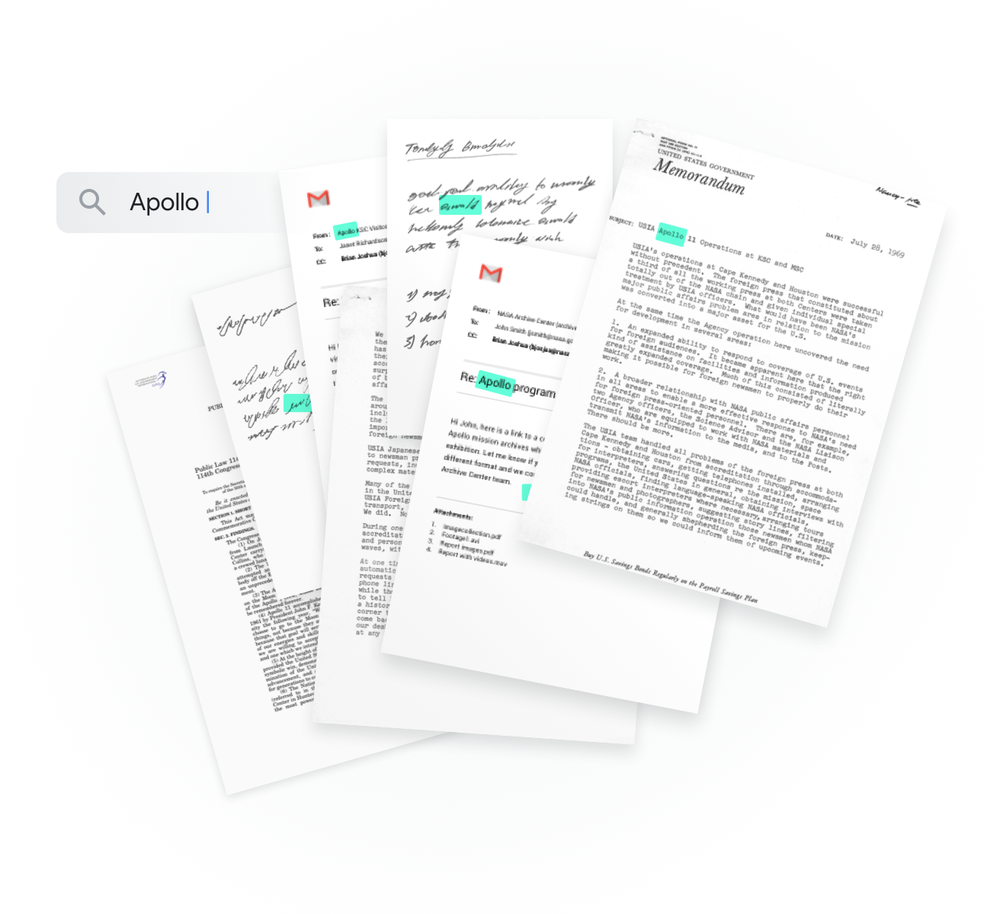
The Data-Driven Reporting Project reflects Journalist Studio’s focus on giving reporters access to tools and training. Pinpoint can transcribe audio files and recognize handwriting and text in images. The tool has proved useful to several journalists at, for example, The Boston Globe, which analyzed hundreds of documents in their Pulitzer-Prize-winning series Blindspot; Mexico-based Quinto Elemento’s investigation into corporate corruption; and the Philippines-based Rappler’s examination of CIA reports from the 1970s.
An illustration of how Pinpoint can find words across documents.
Building on powerful technology like this, the Data-Driven Reporting Project highlights three of Medill’s core strengths: its history of using investigative journalism to lift the oppressed, a focus on local newsrooms and a commitment to exploring the intersection of technology and journalism. The Medill Investigative Lab was involved in the recent publication of the Pandora Papers, a project that used technology to interrogate millions of documents to expose secret dealing by politicians and the ultra-wealthy. Medill’s Local News Initiative is working with dozens of newsrooms around the U.S. to bolster their business strategies. And Northwestern’s Knight Lab (an experimental community for journalists, technologists and designers) is working on a pair of AI-related projects, the 2021 CollabAI: Americas and the Knight Foundation’s AI for Local News initiative that seeks to apply AI methods to investigative reporting.
The Data-Driven Reporting Project will begin accepting applications beginning in December 2021. If you have a project rooted in data and documents, that could benefit from more resources, technology and training, learn more on how to apply.
Fighting the digital divide for diverse news publishers
The digital divide and technology gap that hundreds of US based Black- and Latino-owned publications face is something the Google News Initiative is working to bridge in partnership with news associations like National Newspaper Publishers Association (NNPA), the National Association of Hispanic Publications (NAHP) and the Association of Alternative Newsmedia (AAN).
As a result, we jointly developed the GNI Ad Transformation Lab, a program to support publishers serving underrepresented communities in their transition to digital. The first round of the Lab helped 28 Black, and Latino publishers advance their digital businesses and build digital advertising capabilities required to achieve growth today. This was done by providing extensive analytical and technical support alongside personalized coaching to address each organization’s distinct digital business transformation.
And while we recognize that this shift requires years of hard work, we’re encouraged by the early results. On average, participating publishers experienced a 25% increase in programmatic revenue, a 10% increase in traffic and a 30% improvement in PageSpeed scores.
Dr. Benjamin F. Chavis, Jr., President and CEO of the NNPA has noted that “it’s crucial to embrace a digital first business priority to remain financially sustainable.” And that’s why we will be continuing this partnership to launch a second Lab to help more Black- and Latino- owned publications on their steps towards a digital future.
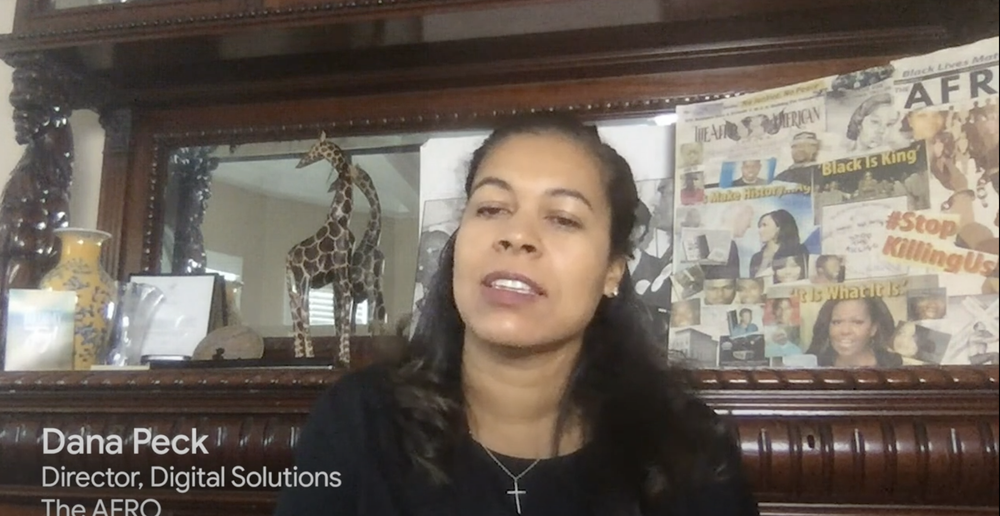
“At first, we didn’t know what we didn’t know,” says Bethany Lane, Revenue Strategist at QCity Metro based in Charlotte, North Carolina. “The GNI Ad Transformation Lab was an intense education. It has pushed us further down the road toward sustainability.” QCity Metro experienced 100%+ growth in direct sold advertising revenue and average revenue per client, and secured a number of new advertising clients due to participation in the program.
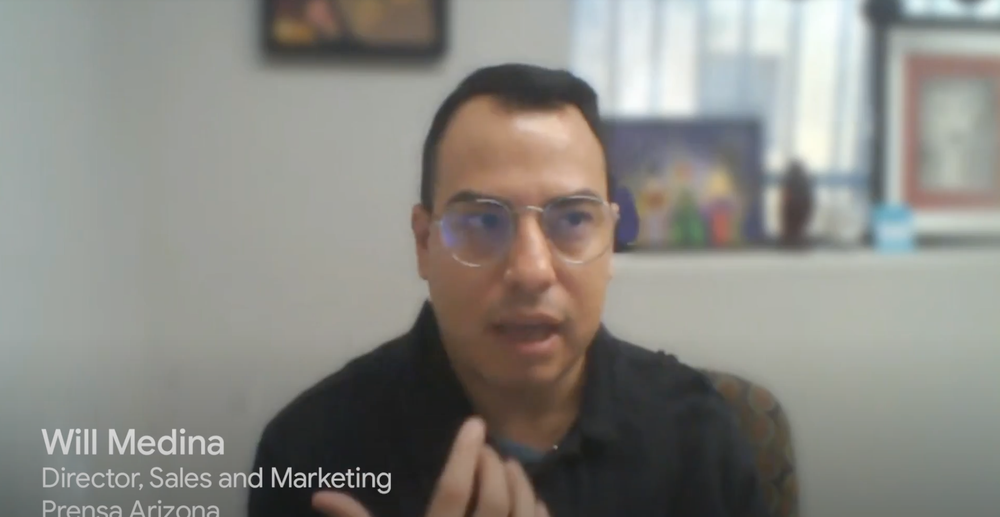
“With the GNI, we learned how to use new tools, set up digital advertising campaigns, and significantly improve our site. In seven months, we were able to grow our advertising revenue, improve our site speed, better the user experience, and motivate and energize our team,” says Jose Zelaya, Editor-in-Chief of Miami-based Noti Bomba.
Other publishers experienced similar growth. In their own words:
We look forward to sharing the insights we’ve learned with a new group of publishers next year. The application for the 2022 Ad Transformation Lab is now live. The application window will close on Monday, November 29 at 11:59 p.m. EST. We encourage news organizations and publishers who serve diverse and underrepresented communities in the United States and Canada to apply.
The GNI remains dedicated to sharing best practices with the broader community of news organizations and will continue to incorporate resources into our ongoing Digital Growth Program, available to all publishers around the world for free online.