
Videoconferenze: semplicità e sicurezza con Barco ClickShare

Disney+ accoglie Star: prezzo più alto da oggi
Disney+ introduce Star tra i suoi contenuti: si tratta di una sottosezione della piattaforma streaming che porta nel catalogo produzioni rivolte perlopiù a un pubblico di adulti. Di conseguenza, il prezzo del servizio vede un rincaro di 2 euro al mese: per abbonarsi, quindi, saranno necessari 8,99 euro mensili o 89,90 all’anno.
Problem Solved: Increase B2B Content Marketing Success by Conquering 4 Conundrums
In his recently-published book, What’s Your Problem: Become a Better B2B Marketer by Enhancing Your Problem-Solving Skills, Steve Goldhaber argues that the discipline of content marketing boils down to a simple consistent objective: solving problems.
It’s a reasonable framing. Almost every piece of marketing content is essentially aimed at solving a problem. This really gets to the fundamental intent of B2B content marketing as a practice: by helping our audience solve day-to-day problems and overcome business challenges, we hope that they’ll eventually consider using our product or service to solve a bigger problem.
But content marketers can’t focus solely on solving problems for customers. We also need to look inward and address key challenges that threaten the value and impact of our problem-solving content. The old saying about “getting your own house in order” comes to mind.
Here’s a look at four prevalent conundrums faced by B2B content marketers today, and how I recommend confronting and conquering them.
How to Overcome 4 Vexing B2B Marketing Conundrums
Content marketers need to reckon with these stumbling blocks before they can race to big success with their strategies.
Conundrum #1 ? More brands and platforms than ever are competing for the diminishing currency of attention.
On the surface, it seems like a clear positive: Fueled by social distancing and a lack of in-person experiences, audiences flocked online more than ever in 2020. Usage of mobile devices and social media apps has risen dramatically. In theory, this means it should be easier than ever to attract eyeballs and engage users via digital marketing.
So, why the conundrum?
Two reasons. First: every brand and content-creating entity is aware of this trend, so there’s been a widespread increase in supply to meet the demand. That means more competition. Second (and not unrelated), audiences are fatigued after a year of being necessarily glued to their screens. Without question, it’s growing more difficult to earn and sustain someone’s attention, not to mention drive action and engagement.
What To Do?
It has never been more important to adopt a quality-over-quantity approach. Zero in on a narrowly defined audience whose problems you can help solve. Create highly focused and directly relevant content. Personalization holds the key to breaking through with a clear message in an online environment full of buzzing static.
[bctt tweet=”“Personalization holds the key to breaking through with a clear message in an online environment full of buzzing static.” @NickNelsonMN #B2Bmarketing #personalization” username=”toprank”]Of course, the heightened competition also calls for a re-emphasis on capturing the attention of a scrolling user. Go against the grain and deliver something your audience isn’t expecting. Rock the boat in a sea of sameness.
Our clients at LinkedIn Marketing Solutions recently shared tips for thumb-stopping content that catches a user mid-scroll and invites engagement, including examples. I especially like the bear ad example from eCornell.
Conundrum #2 ? Measuring results is difficult when direct links to revenue aren’t always clear or straightforward.
During times of economic duress, there is a natural inclination for businesses to scale back on discretionary spending. In its early days, content marketing was often viewed as discretionary, or a complementary aspect of business development. While that perception has generally changed, marketing leaders still can face an uphill battle when vying for a fair share of reduced budgets.
What To Do?
The connection between content marketing and revenue is not as overt or direct as some other investments, that’s true. But it is undeniable. The ability to map content to revenue is becoming a key asset for marketing departments, and in some cases it may require rethinking conventions.
For example, some organizations need to slow down their campaign measurement, to align with a complex and lengthy buying cycle. Another opportunity: refining attribution methods to deliver more clarity and comprehensiveness. Do you track user actions across channels? Are you accounting for both post-click and post-view conversions? Are you quantifiably measuring brand awareness and engagement? If not, these are worthy aspirations in a results-oriented business landscape.
Conundrum #3 ? It’s tough to authentically integrate influencers into content when audiences are suspicious of brand sponsorships.
Influencer marketing is a broadly-applied term, and in some applications it can feel a little sketchy. When people relate the concept with Kylie Jenner shilling for Pepsi in a tone-deaf Super Bowl ad, or Instagram celebrities promoting a disastrous tropical festival, it’s understandable how they’d become skeptical. The credibility gained by associating your brand with a respected figure is negated (and then some) when the influencer isn’t genuinely interested or invested.
When done right, influencer marketing is highly effective. But more than ever, marketers need to be strategic, and mindful of optics.
[bctt tweet=”“When done right, influencer marketing is highly effective. But more than ever, marketers need to be strategic, and mindful of optics.” @NickNelsonMN #B2Bmarketing #personalization” username=”toprank”]What To Do?
It all starts with selecting the right influencers. Identify voices with strong topical and audience alignment. Aim to be more relationship-based than transactional in your partnerships. Deliver clear value to the people you work with to spur enthusiastic participation. Co-create content and find interesting ways to incorporate influencers’ expertise, perspectives, and stories.
Above all, make transparency a fixture. You don’t want your audience left to wonder about the motivations of people involved — or worse yet, feel misled.
Conundrum #4 ? Fast-rising new channels don’t have obvious applicability for B2B marketing purposes.
When glancing at recent trends and stats in content marketing, it’s hard not to notice the meteoric rise in usage of apps like TikTok and WhatsApp. Brands are gravitating toward Instagram Stories.
These channels are intriguing, but they don’t intuitively have much applicability in B2B marketing.
What To Do?
The last thing you want to do is jam a square peg in a round hole for the sake of seeming cool or hip. But that’s not to say there aren’t creative and contextually-fitting ways to market a B2B brand on B2C-centric platforms. Doing so effectively is an opportunity to stand out and differentiate, in accordance with our solution to Conundrum #1.
[bctt tweet=”“Finding creative and contextually-fitting ways to market a #B2B brand on B2C-centric platforms is an opportunity to stand out and differentiate.” @NickNelsonMN #B2Bmarketing #personalization” username=”toprank”]For inspiration, courtesy of PixelMe, here are 10 creative Instagram ads from B2B companies (led off by our clients at monday.com).
Break Down B2B Content Marketing Barriers
Both challenge and opportunity can be found within each of the conundrums presented. Those B2B marketers who take the right steps to solve them will enjoy a more smooth and frictionless path to success.
Keep four things top-of-mind as you venture ahead:
- Create with a purpose (and flair)
- Measure robustly
- Partner strategically
- Experiment away from the beaten path
For more advice on overcoming obstacles to resonate with your audience, check out my recent post on five B2B content marketing pitfalls to avoid.
The post Problem Solved: Increase B2B Content Marketing Success by Conquering 4 Conundrums appeared first on B2B Marketing Blog – TopRank®.
Updates on Google Health’s clinical tools
Healthcare professionals are healers, not data clerks. Yet many clinicians spend half their day on a computer navigating electronic health records (EHRs) and other systems. Because health records are often scattered across multiple systems, getting a full picture of a patient’s health requires a great deal of clinicians’ time, energy, and resources. These gaps in patient information can contribute to less effective and efficient care. The Google Health team started to think about how we could bring Google’s experience in organizing complex information to healthcare.
Driven by this idea, we created Care Studio, a software solution that provides a comprehensive view of a patient’s records and allows clinicians to quickly search through complex patient information. Care Studio is built for clinicians and works alongside EHR systems; it streamlines workflows and supports more proactive care. We’ve been working with the healthcare organization Ascension on a pilot of Care Studio focused on data quality and product safety with a small group of clinicians based in Nashville, TN and Jacksonville, FL. The pilot is now expanding to more physicians and nurses in the clinical setting.
How Care Studio supports clinicians
Care Studio streamlines key clinician workflows so that teams can quickly get the information they need to care for patients. It brings together patient records from the multiple EHRs an organization uses – giving clinicians a centralized view of patient data and the ability to search across these records.
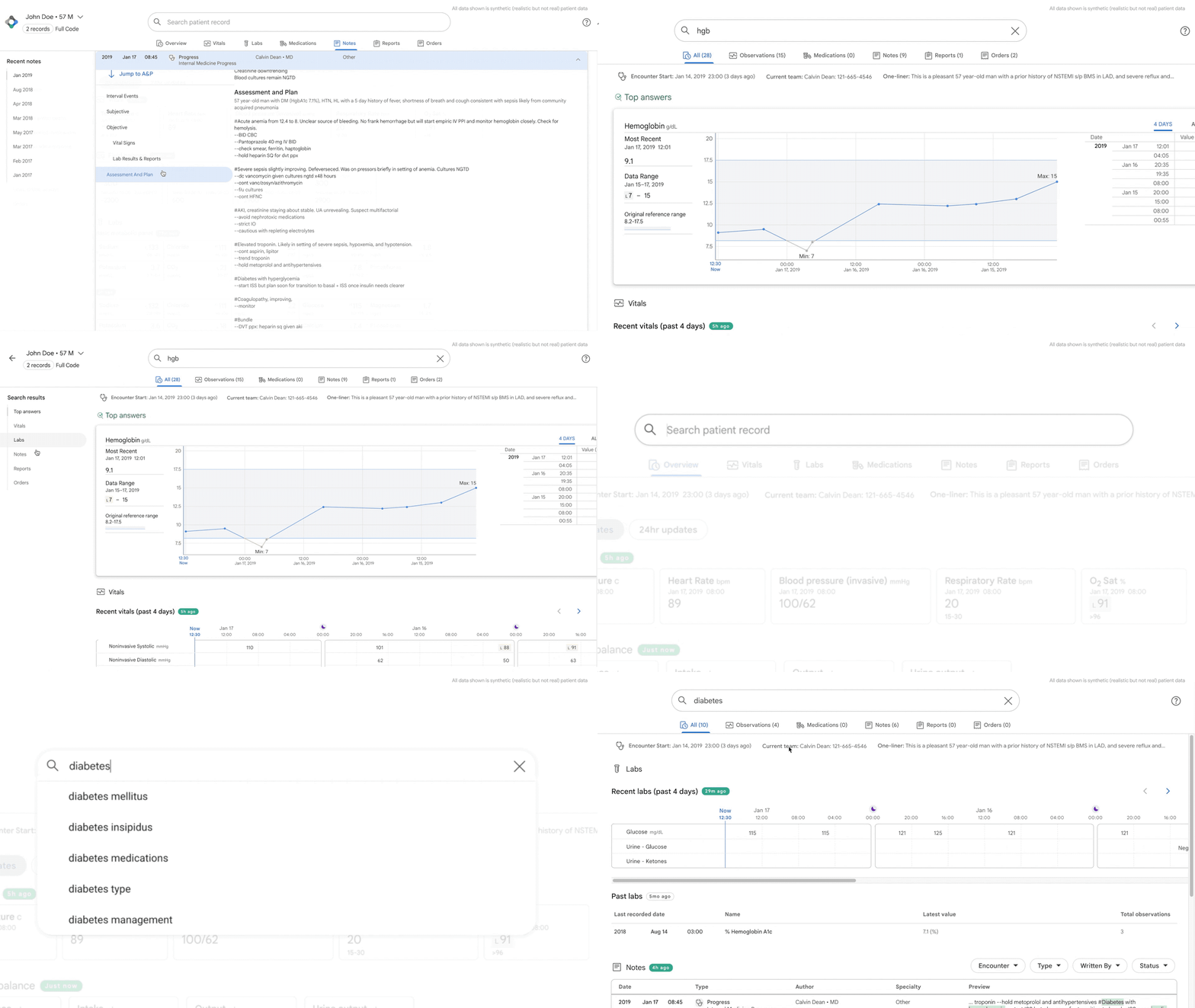
We’ve honed our search capabilities based on medical terminology and clinical shorthand, so that clinicians can simply type what they’re looking for into a search bar and instantly surface relevant patient record information. Still, a patient’s history can be long and complex, making important details difficult to find. Care Studio uses Google technology to display relevant information in fewer clicks. For example, Care Studio can automatically organize the medications in a patient’s history with information on dosing and when they were prescribed. The tool also makes it easy to find pertinent information, including lab results, procedure orders, medication orders and progress notes.
Care Studio harmonizes medical data across different systems. For example, even though health systems report measurements like blood pressure or glucose levels using different units, Care Studio automatically converts them so they are easier for a clinician to understand and compare.
Search using clinical shorthand or everyday language. All data shown is synthetic (realistic but not real) patient data.
Keeping health information private and secure
We know healthcare data is sensitive and personal, and it’s our responsibility to keep it private and secure. Google does not own, nor do we ever sell, patient data. This data from Care Studio cannot be used for advertising. Our team designed Care Studio to adhere to industry best practices and regulations, including HIPAA.
We implement administrative, technical and physical safeguards to protect information. Patient data is encrypted and isolated in a controlled environment, separate from other customer data and consumer data. Consistent with industry best practices, we also participate in regular audits and external certifications such as ISO 27001 and SOC2/3, where auditors validate Care Studio’s processes for safeguarding customer data. With these certifications, third-party specialists make sure we follow a framework of controls for a comprehensive and continually evolving model for managing security.
Taking our next step toward clinical impact
Based on feedback from Ascension, we’ve fine tuned Care Studio so it displays relevant clinical information from their systems accurately and in a way that’s useful to their physicians and nurses. Now we’re ready to expand our pilot in the clinical setting to further optimize the product for broader usage at Ascension. A select group of clinicians at facilities in Nashville, TN and Jacksonville, FL will use an early release of Care Studio alongside their existing tools during care delivery. We hope to get their feedback to further improve its usability, make the tool more useful to them and better integrate into current workflows.
Our aim is to bring Google’s experience in organizing complex information into intuitive, useful formats for the healthcare industry. As more Ascension clinicians begin using Care Studio, we look forward to supporting them in caring for their patients.

Il Fatto Quotidiano annuncia la morte segreta del Principe Filippo. Da un anno
Da un anno, ormai, sul sito del Fatto Quotidiano c’è un articolo a firma di Januaria Piromallo, che dà per morto il Principe Filippo. “La mia fonte molto, molto vicino a Buckingham Palace è autorevole”, scrive Piromallo il 26 marzo 2020: sì, duemilaventi. Poco importa, a quanto pare, che il principe Filippo sia stato poi visto in giro in buona salute. Meno male che Piromallo precisa che “il rischio che potesse essere anche una fake news mi ha portato alla prudenza e a non pubblicare niente.”
L’articolo non è stato corretto o rettificato. Copia permanente: https://archive.is/qggy8.
Ripeto, questo screenshot è di marzo 2020:

Sul Fatto Quotidiano c‘è anche un altro articolo di un anno fa (25 marzo 2020) che riporta la stessa notizia falsa, stavolta firmata da “F.Q.”. Copia permanente: https://archive.is/Dv8DN.

Però mi raccomando, le fake news sono colpa di Internet.
Questo articolo vi arriva gratuitamente e senza pubblicità grazie alle donazioni dei lettori. Se vi è piaciuto, potete incoraggiarmi a scrivere ancora facendo una donazione anche voi, tramite Paypal (paypal.me/disinformatico), Bitcoin (3AN7DscEZN1x6CLR57e1fSA1LC3yQ387Pv) o altri metodi.

Spotify Hi Fi: entro fine 2021 la qualità audio dei CD
Spotify imita Amazon Music e annuncia entro l’anno il supporto Hi Fi. La comunicazione è avvenuta da parte della stessa piattaforma musicale durante il suo evento virtuale in streaming Stream On. Spotify Hi-Fi, in sostanza, ripropone nel formato audio lossless la qualità audio dei Cd musicali che sono stati quasi del tutto soppiantati dai formati digitali. Il servizio sarà disponibile entro la fine del 2021, ma inizialmente solo in alcuni mercati selezionati. Si tratta sostanzialmente di un allineamento da parte di Spotify verso quei servizi che già offrono musica ad alta fedeltà.

Come ottenere Amazon Music HD gratis per 3 mesi
Sono passati ormai sei mesi dall’arrivo in Italia di Amazon Music HD, il servizio di streaming musicale di Amazon pensato per chi punta ad avere il massimo della qualità audio con milioni di brani in definizione ultra HD, e oggi Amazon ha deciso di dare a tutti la possibilità di toccare con mano questa novità offrendo tre mesi di prova gratuita.

Amazon Fresh arriva anche a Roma
A neanche un mese dal suo arrivo in Italia, Amazon Fresh sbarca anche a Roma a partire da oggi. Disponibile direttamente su Amazon.it – non come Prime Now, che ha un sito a parte e permette di fare la spesa online con prodotti in arrivo anche da supermercati di terze parti – Amazon Fresh ci permette di fare la spesa comodamente da casa scegliendo tra oltre 10.000 prodotti in decine di categorie diverse, con una particolare attenzione, come si evince dal nome del servizio, ai servizi freschi come carne, pesce, frutta e molto altro.

L’Urlo” di Munch, risolto il giallo della frase comparsa sull’opera d’arte
— – di Greta V. Galimberti – Trendiest News – –“L’Urlo” di Munch “può essere stato dipinto solo da un pazzo”. La frase “Can only have been painted by a madman” comparsa sul celebre quadro sottoposto a scansioni a raggi infrarossi è stato oggetto per decenni di dibattito. Ma oggi si è scoperto che non si tratta di un atto vandalico ma dalla volontà dell’artista norvegese Edvard Munch di lasciare questo messaggio inciso a matita…
L’articolo L’Urlo” di Munch, risolto il giallo della frase comparsa sull’opera d’arte scritto da REDAZIONE TRENDIEST proviene da Assodigitale.

TIM, accordo con DAZN per il Calcio di Serie A 2021/2024
Mentre si attende l’esito dell’assegnazione dei diritti televisivi del nostro massimo torneo di calcio, TIM esce allo scoperto, e dopo le indiscrezioni dei giorni scorsi ha confermato di avere un accordo con DAZN per la distribuzione in streaming delle partite della Serie A per le prossime tre stagioni.

Perseverance, il video dell’atterraggio su Marte
La NASA ha pubblicato un filmato inedito dell’atterraggio del suo rover Perseverance su Marte. Il video, della durata complessiva di circa tre minuti, mostra le immagini dell’evento attraverso il “punto di vista” di più telecamere posizionate in differenti posizioni, dopo l’entrata della sonda nell’atmosfera del Pianeta Rosso. La sequenza d’atterraggio mostra in maniera spettacolare ogni attimo dell’evento, con il dispiegamento del paracadute supersonico, il suolo di Marte che si avvicina sempre più e il rover che, appeso a tre cavi, tocca finalmente “terra”.

Video stupefacenti da Marte: l’atterraggio di Perseverance
La NASA ha appena rilasciato una serie di video assolutamente, inimmaginabilmente spettacolari ripresi dalle telecamere di bordo durante l’atterraggio di Perseverance, insieme a una bordata di fotografie, alcune delle quali sono già state elaborate per creare immagini panoramiche a 360° come questa (che vista in un visore per realtà virtuale è totalmente immersiva, sembra proprio di essere seduti sul Rover a guardare il panorama di Marte):
O queste:
Non c’è niente da fare: il video a colori batte completamente la fotografia statica nel dare la sensazione di essere lì e nel permettere di capire concretamente la dinamica degli eventi.
Pubblicherò le altre man mano che mi riprendo dall’emozione. Per ora chiarisco che le immagini sono grezze e non sono ancora state elaborate per fornire i colori reali (ossia come li vedrebbe il nostro occhio) e segnalo che le immagini vengono pubblicate man mano a questo indirizzo:
https://mars.nasa.gov/mars2020/multimedia/raw-images/
—
Questaè la zona di atterraggio di Perseverance, vista dall’orbita marziana grazie allo strumento HiRise a bordo della sonda Mars Reconnaissance Orbiter. Da sinistra, il paracadute e la carenatura posteriore; lo stadio di discesa; il rover vero e proprio; lo scudo termico. Ognuno dei riquadri ha un lato di circa 200 metri (credit: NASA/JPL/University of Arizona). Stando ai dati dichiarati nella conferenza stampa dalla NASA (la trovate più sotto), rispetto a Percy lo stadio di discesa si trova a circa 700 metri, il paracadute sta a circa 1200 metri e lo scudo termico è a 1500 metri.


Alcuni dettagli dell’immagine di HiRise: ecco Perseverance (fonte).


Lo stadio di discesao “gru volante”, il cui impatto intenzionale ha creato un ventaglio di detriti:


Il paracadute:


Suoni! Uno dei microfoni di bordo ha registrato il rumore di bordo del veicolo e una folata di vento marziano. Altri campioni audio sono qui. Siamo talmente abituati al silenzio delle riprese nel vuoto che non pensiamo mai al fatto che questi veicoli sono pieni di motorini, attuatori, parti mobili che fanno rumore. E il fatto che si possa sentire questo rumore ci ricorda molto potentemente che questa sonda è su un pianeta, un pianeta che ha un’atmosfera, non un deserto senz’aria come la Luna.
Il paracadute, con la sua colorazione asimmetrica usata per rilevare eventuali rotazioni o deformazioni:

La gru volante a razzo, uno dei veicoli spaziali più pazzeschi mai concepiti, vista da sotto, dal punto di vista di Percy durante lo sgancio. Notate che i motori non emettono fiammate: sono alimentati a idrazina, che brucia senza produrre fiamme colorate, esattamente come avveniva per le missioni lunari (cosa che i lunacomplottisti non hanno ancora capito).

Questa è un’elaborazione stereoscopica delle immagini riprese dalla “gru volante” (servono gli occhialini rossi e blu), creata da Nathaniel Bradford:

La conferenza stampa di presentazione delle immagini e dell’audio (da 38:22), che fornisce moltissimi dettagli della manovra di atterraggio e spiega bene cosa si vede nei video:
Sul rover ci sono dei pannelli di riferimento per la calibrazione del colore nelle foto. La calibrazione e i suoi pannelli sono spiegati in grande dettaglio, insieme al significato delle icone e delle diciture, qui):

Uno dei pannelli è questo, segnalato da @Rainmaker1973:

Chicca: c’è anche una “foto di famiglia” dei vari rover marziani, che ricorda molto gli adesivi che si mettono sulle automobili per rappresentare le famiglie a bordo:

Questo articolo vi arriva gratuitamente e senza pubblicità grazie alle donazioni dei lettori. Se vi è piaciuto, potete incoraggiarmi a scrivere ancora facendo una donazione anche voi, tramite Paypal (paypal.me/disinformatico), Bitcoin (3AN7DscEZN1x6CLR57e1fSA1LC3yQ387Pv) o altri metodi.
A Czech developer helps fellow students learn remotely
As students all over the world were making the transition to online learning last spring, 17-year-old Matěj Krček, a Google Developer Group member, realized that many of his fellow students in Czechia needed tutorials in their native language on how to use Google Workspace.
Matěj usually works on coding and programming projects within his Google Developer Group, a program that connects local developers with similar interests, and it gave him a deep familiarity with Google technologies. He realized that sharing his knowledge with others in their own language was a seemingly small initiative that could have a big impact. So even though it was beyond the scope of the group’s usual activities, he reached out to his local Google Developer Group leads, who helped connect him to the Grow with Google team to produce a series of instructional videos in Czech.
A major focus of Matěj’s videos was helping students replicate their in-person learning experience. So he offered tips on things like digital time management with Google Calendar, how to save and keep track of assignments on Google Drive and best practices for submitting assignments via mobile phones with Google Workspace.
Along with these organizational lessons, Matěj offered tips and tricks for younger students, many of whom were using the internet on their own for the first time. These videos centered on helping them understand proper internet etiquette, how to find supplemental learning materials, and how to work with others virtually.
After his tutorials went live on the Grow with Google website, Matěj had the chance to share his unique lessons on online learning at the Czech Ministry of Education Conference. His talk focused on what practices he had seen particularly help students succeed in this new virtual environment.
Clubhouse “bucato”: rubati e condivisi audio su altre piattaforme
Mentre Clubhouse dichiara tramite i suoi sviluppatori di voler aumentare il livello di sicurezza dei propri “canali”, arriva la conferma del primo “buco” nel muro eretto dall’app per evitare che malintenzionati mettano le mani sugli audio degli utenti. Come conferma Bloomberg, un utente rimasto anonimo, è riuscito a trasmettere ad un sito terzo alcuni feed audio presi da alcune stanze di Clubhouse. Come è stato possibile? La società si è affrettata a replicare che l’utente è stato già bannato in maniera permanente e che al contempo sono state prese delle contromisure volte ad evitare che un tale “furto” di audio si possa ripetere. Secondo la prima ricostruzione, per estrapolare le tracce audio, l’utente autore dell’operazione ha utilizzato lo stesso toolkit JavaScript con cui è compilata l’app, attualmente disponibile solo per dispositivi iOS.
How to Elevate B2B Marketing with Always-On Influence #B2BMX
While 96% of B2B marketers we surveyed in or State of B2B Influencer Marketing Report are confident about influencer marketing, the majority are still approaching influencer engagement on a periodic or campaign basis vs. Always-On. That short term approach is costly:
12X more B2B marketers are very successful by running Always-On influencer programs vs. those engaged in intermittent campaigns.
With all the challenges brought by the pandemic and uncertainty in the world, an increasing number of B2B marketers are working with influencers on an ongoing basis to create more trusted content with credible distribution and authentic engagement.
But it’s important to understand that there’s nothing wrong with running influencer campaigns. When a message, available experts and readiness of an audience all align with the right approach, you can see influencer content campaign outcomes like:
Cherwell Software – Generated 22% of their annual sales pipeline from an influencer marketing pilot focusing on 15 tech leaders sharing their insights on next generation IT service management.
Alcatel Lucent – Facilitated $2 million in sales pipeline from a first of it’s kind pilot campaign for the company featuring influencer judges and an effort to impart influence amongst IT network and enterprise communications prospects being awarded for their contributions to the industry.
But these examples are exceptions and not the norm.
That said, when properly planned and executed as a strategy vs. an afterthought tactic, influencer collaborations can drive success for B2B marketing programs. The problem is, only working and engaging influencers when you need them for campaigns doesn’t build momentum. And in 2021, B2B brands need momentum more than ever to take and keep the lead in an oversaturated digital marketplace of information.
Always-On thought leadership and influence are more important now than ever because the customer never turns off.

Brain Solis, Digital Anthropologist, Futurist at Salesforce
An Always-On approach to working with influencers builds the relationships needed in order to activate the most credible voices that have the attention and trust of your customers for brand message ideation, communication, promotion, engagement and advocacy. Some of the ways successful B2B marketers are engaging influencers on an ongoing basis include:
- Social nurturing
- Repurposing influencer content
- Micro-activations
- 1-1 and 1-small group engagement
- Building an influencer community
- Activating organic advocacy
What these successful B2B marketers understand is that influencer engagement isn’t only about a transactional value exchange for compensation, access or exposure. Always-On influence is about building a relationship between the brand and industry experts around a common purpose with shared values.
The benefit of an Always-On approach creates value for your customers by making content more relevant, trustworthy, and actionable. Optimizing B2B brand content with the third party credibility of relevant influencers can create substantial lift for brand and content marketing as we found in our research:
- 75% Increased views of brand content
- 70% Improved credibility of brand content
- 60% Increased share of voice
- 55% Increased media mentions of brand
- 50% Increased brand advocacy
There are myriad other benefits not covered in our research from facilitating thought leadership to having credible voices at the ready during a crisis.
Building a Community of B2B Influence at LinkedIn
By taking a strategic approach to influencer engagement through building relationships, LinkedIn has been able to grow a 75 strong sales and marketing community of the top voices in the industry. Of course this community didn’t happen overnight. LinkedIn is a beloved brand with many self-proclaimed influencers seeking partnerships but not everyone is qualified to be a voice for the LinkedIn brand.
The first step LinkedIn took was the development of an influencer marketing strategy and a relationship focused approach towards identifying, qualifying and engaging with those sales and marketing voices that align with LinkedIn values, content creation expectations, audience topic preferences and authenticity. LinkedIn effectively worked to nurture and build relationships with prospective influencers before inviting them to take part in content activations.
These B2B influencer activations were designed to accentuate the best capabilities, message and audience of the respective influencers within the context of LinkedIn’s messaging strategy. Activations took several forms including:
- Social First Influencer Content on LinkedIn
- Influencer Interviews
- eBook Contributions
- In-Person Event to Co-Create Content (pre-COVID)
- Conference Mixers (pre-COVID)
- Ongoing Social Nurturing
The impact of having a community of vetted industry experts excited about collaborating with the LinkedIn brand meant over 2,000 brand mentions by influencers and their networks and over 84 million in social reach during the initial phase of activations. Working with influencers in this way boosted social engagement by 200-450% above previous social efforts by LinkedIn on its own platform. See the full LinkedIn influencer marketing case study here.
An Always-On approach means the relationship ceases to be “transactional”. Because of this foundation, we’ve been able to immediately activate influencers for external, public-facing advocacy and amplification.

Garnor Morantes, Group Marketing Manager at LinkedIn
As with many growing B2B marketing disciplines, it’s the competency of being able to create and execute the right approach and tactics that can be the difference between breakout success and mediocrity. You can see even more examples of Always-On B2B influence in action here.
However, not every B2B brand needs to dive into an Always-On approach right away. It’s perfectly fine to conduct a pilot or even a few campaigns before embarking on an Always-On approach. But how can B2B marketers evolve from a pilot to an Always-On influencer program?
How to Elevate B2B Marketing with Always-On Influence
Luckily, I will be presenting on this very topic at this week’s B2B Marketing Exchange Experience. A virtual B2B marketing conference happening Feb 22 – 24.
B2BMX includes 6 tracks and over 50 sessions with expert B2B marketers from top B2B brands including Dun & Bradstreet, Microsoft, Tealium, Demandbase, Salesforce, Forrester, Fujitsu, McAfee, SurveyMonkey, Cisco, Oracle, Okta, BMC Software, Honeywell, SAP Concur, Terminus, ON24, and many more.
I’m also happy to see some of the biggest names in B2B marketing speaking including Ardath Albee, Jay Baer, Ruth Stevens, Jon Miller, Matt Heinz, Mark Bornstein, Rob Leavitt, Pam Didner and others.
My presentation is part of the Marketing Strategy track, Pilot To Program: How To Elevate B2B Influence To Always-On on Wednesday Feb 24th at 1:45. Here’s what to expect:
Based on recent research, 12X more B2B marketers are very successful with always-on influencer marketing programs compared to those running periodic campaigns.
B2B influence is a relationship business and authentic advocacy can bring big returns. But how can marketers gain the confidence to evolve from testing to ongoing influencer marketing programs?
This session from B2B influencer marketing expert Lee Odden of TopRank Marketing could be the catalyst that helps you:
- Match the right benefits of Always-On influence with your marketing goals;
- Hit the ground running with early wins influencer engagement; and
- Create a crawl, walk, run influencer marketing program plan.
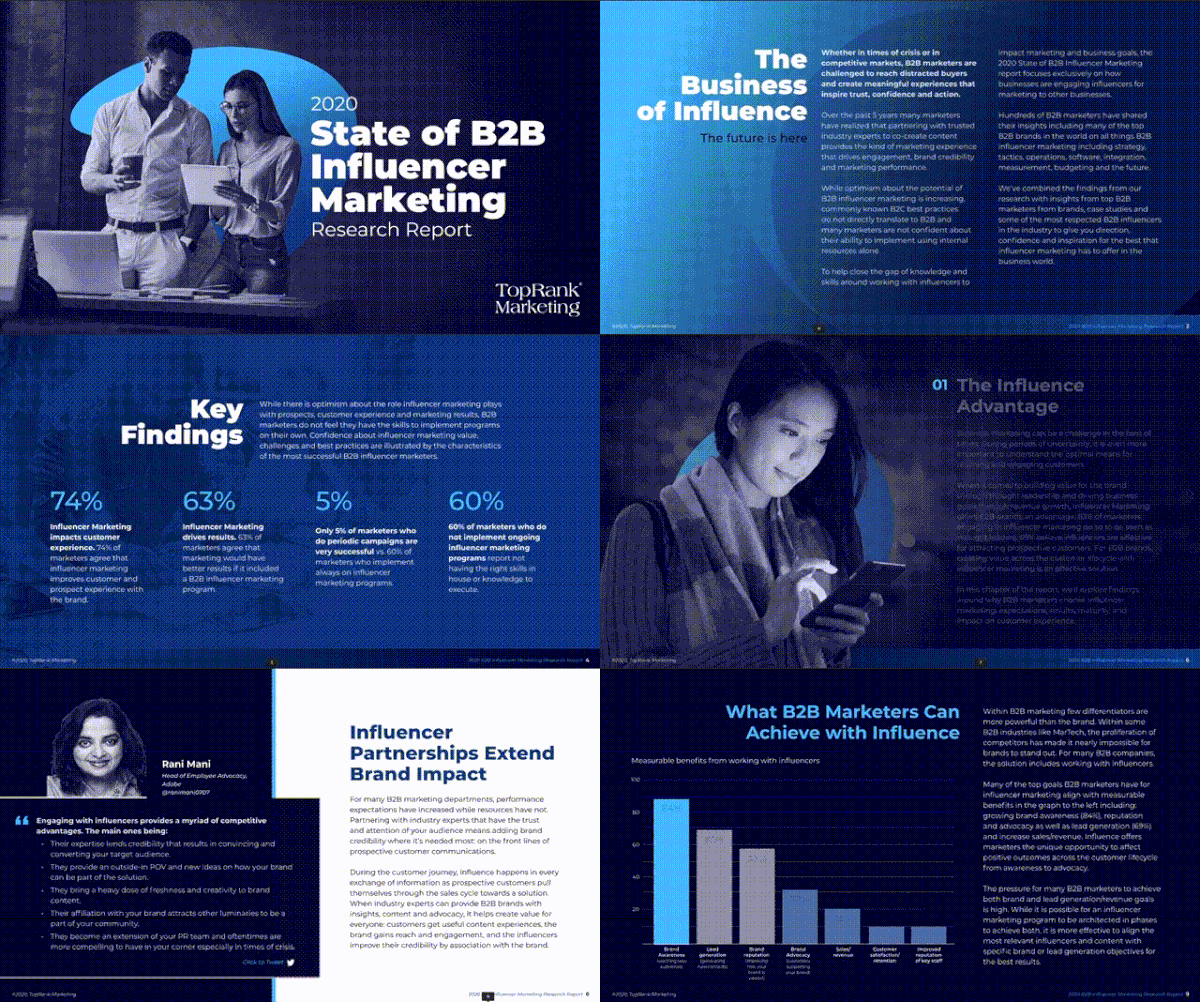
Of course, if you haven’t checked out our research into Always-On B2B influence, you can access and download the report here.
And if you have seen the report and are interested in learning more about how to launch an influencer marketing pilot or elevate your influencer marketing program to Always-On, our team at TopRank Marketing are ready to help.
The post How to Elevate B2B Marketing with Always-On Influence #B2BMX appeared first on B2B Marketing Blog – TopRank®.