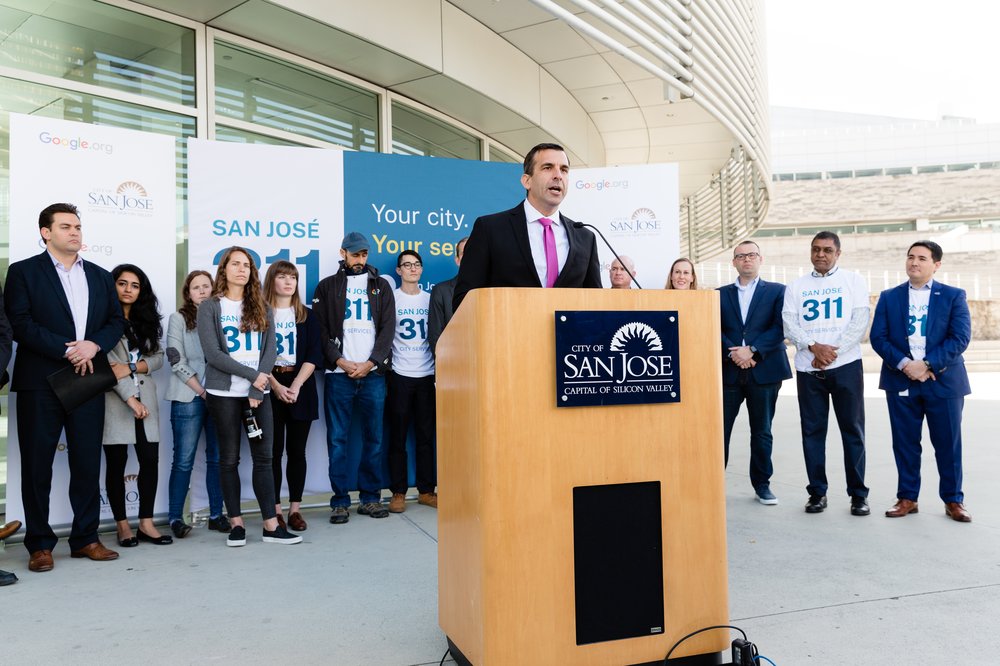
Reimagining 311 for the City of San José
Editor’s Note: Today marks the second annual National 311 Day. We talked with the City of San José’s CTO to learn about how they worked with Google.org Fellows to connect residents to the information they needed.
National 311 Day is a day to remind communities nationwide to use 311, a resource to connect with their city’s non-emergency services. It’s an important tool that cities use to unburden 911 call-takers of non-emergency calls, allowing them to quickly respond to residents’ most urgent needs. It’s also a time to honor the hardworking call-takers, especially after the past year as they’ve worked tirelessly to connect millions of local residents to critical services during the COVID-19 pandemic. We like to say that 911 is for the burning building, and 311 is for the burning questions, like the latest information about COVID-19, who provides garbage and recycling services or how to report a water leak.
At the beginning of 2019 San José identified a clear problem: it was taking too long for first responders to answer 911 calls. The State of California requires that 95% of 911 calls be answered within 15 seconds, and San José fell short of this goal in 2017 and 2018. That’s when we reached out to Google for help and were selected for a Google.org Fellowship. Together, we worked with a team of pro bono full-time Google.org Fellows to reduce 911 and 311 response times, improve the customer service experience, make 311 more accessible to residents, and address the growing load on call centers with solutions like a machine learning-based virtual agent.
First, the Google.org Fellows talked to residents and analyzed call volumes to understand what was contributing to the issues. They shadowed over 60 hours of calls to identify the most impactful ways to improve the response time, how to educate residents about 311 services, and ways to make it accessible to the residents of San José. San José is also one the most diverse U.S. cities, with residents speaking more than 100 languages. This demanded a new approach to automating the intake of requests from a majority population whose first language is not English, so equitable access was also top of mind for the Google.org Fellows.
Siamo nel 2021 e ANSA non ha ancora capito la differenza fra polizia cantonale e polizia cantonese. E tutti la copiano senza fiatare
Comunicazione di servizio per i colleghi giornalisti: la polizia svizzera è la cantonale. Non la cantonese. Se confondete le due cose, prendete una cantonata.
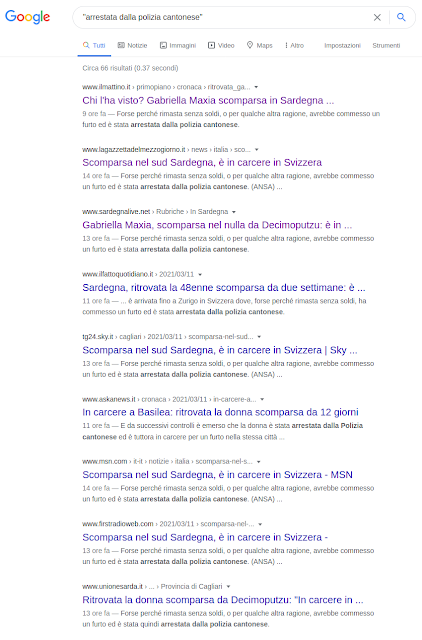
Per vedere quanto è diffuso questo errore grazie al copiaincolla senza rileggere è sufficiente cercare in Google “arrestata dalla polizia cantonese”. Ci sono cascati Il Mattino, La Gazzetta del Mezzogiorno, Il Fatto Quotidiano, Sky.it, L’Unione Sarda, La Gazzetta di Parma… perché tutti ripubblicano ciecamente senza rileggere e senza controllare.

La notizia, diffusa dall’ANSA, riguarda una donna che è “arrivata fino a Zurigo in Svizzera dove, forse perché rimasta senza soldi, ha commesso un furto ed è stata arrestata dalla polizia cantonese.”
Copia permanente: https://archive.is/icAQt. Screenshot: qui sotto.

Le parole di Internet: link rot, ossia quando il Ministero della Cultura italiano linka un sito porno
A volte capita che il proprietario di un nome di dominio smetta di pagare il canone annuo di mantenimento del nome, per varie ragioni, e quindi cessi di esserne il proprietario. A quel punto il nome di dominio torna sul mercato e può essere acquistato da qualcun altro, che ci mette i propri contenuti, magari di tipo completamente differente. Fa parte del normale corso delle cose su Internet.
Ma tutti i siti che hanno citato con un link quel nome di dominio non vengono avvisati del cambiamento, per cui finiscono per linkare qualcosa che non c’entra più con l’originale. Questo è il link rot: la “marcescenza dei link”.
Il link rot è un problema molto serio di tutta Internet, ma è particolarmente sentito in campo scientifico e amministrativo. Uno studio del 2013 dei link nella letteratura scientifica ha rivelato che la vita media di un link è circa 9 anni. Un altro studio sulla letteratura legale statunitense nel 2014 ha indicato che la metà dei link citati dalla Corte Suprema degli Stati Uniti non punta più all’informazione originale e quindi è inutile o fuorviante.
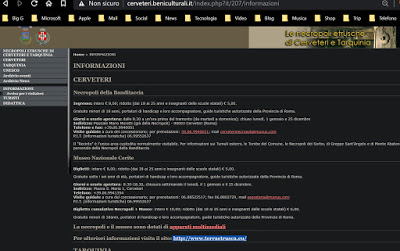
Un esempio particolarmente illuminante del fenomeno del link rot mi è capitato sotto gli occhi pochi giorni fa grazie a una segnalazione di un lettore: una pagina del sito del Ministero della Cultura italiano Beniculturali.it, dedicata alle necropoli etrusche di Cerveteri e Tarquinia, conteneva un link a www punto terraetrusca punto eu, che però nel frattempo aveva cambiato proprietario.

Il nuovo proprietario ci ha messo un redirect che porta a un sito pornografico, di cui posso mostrarvi solo una parte, perché questo è un blog per famiglie.
Grazie alla memoria storica di Internet, ossia Archive.org, possiamo vedere cosa c’era in origine, quando il ministero italiano scelse di linkarlo nel 2017:

Oggi invece il link porta a contenuti statuari, ma di altro genere:

Ovviamente ho segnalato la cosa ai responsabili del sito, ma la mia mail è stata respinta perché i responsabili accettano soltanto la PEC. Così è stato necessario segnalare pubblicamente la questione, anche questo avrebbe comportato regalare visibilità e quindi traffico al sito pornografico in questione.
Buongiorno @MiC_Italia , segnalo che la vostra pagina https://t.co/cTbavSHGrG contiene un link che porta a un sito pornografico.
Il link è quello che comincia con “terra”. pic.twitter.com/0olbjmy1WL
— Paolo Attivissimo (@disinformatico) March 10, 2021
La pagina è stata rapidamente corretta eliminando il link. Ma restano tutti gli altri siti che contengono ancora il link (per esempio Ancient-origins.net o TurismoItaliaNews.it o ExperienceEtruria.it, ed è impensabile avvisarli tutti uno per uno.
Se volete sapere come si fa a trovare i siti che ospitano un certo link, posso consigliarvi OpenLinkProfiler.org. Un tempo Google consentiva di fare ricerche usando l’operatore link, ma non funziona più dal 2017 circa. Si può però digitare il nome del sito in Google fra virgolette.
Helping publishers thrive in today’s privacy environment
Advertising plays an important role in helping publishers fund the content that people love to read, watch and play online. But it has become essential to evolve digital advertising practices to address people’s changing privacy expectations and keep online content accessible to everyone. We’re committed to helping publishers of all sizes navigate today’s privacy environment, and what lies ahead. With this in mind, today we’re sharing how we’re experimenting with new technologies to help our partners sustain advertising revenue as the web evolves.
People shouldn’t have to accept being tracked across the web in order to get the benefits of relevant advertising. That’s why, as we shared last week, we will not build alternate identifiers to track individuals as they browse across the web, nor will we use them in our products once third-party cookies are phased out. We believe the Privacy Sandbox is critical to a privacy-first future for digital advertising — one that protects users while still delivering results for publishers and advertisers.
Over the past year, we’ve been teaming up with ecosystem partners to test new solutions, including privacy-preserving APIs that move away from tracking individuals across the web while maintaining advertising effectiveness. The great news is we don’t anticipate publishers will need to put in significant work to benefit from the Privacy Sandbox when it’s rolled out to the industry at large. Google Ad Manager and AdSense, for example, will use the public privacy-preserving APIs to build support for these solutions, so publishers don’t have to.
Activating first-party relationships
In addition to the Privacy Sandbox, we believe that publishers who have built first-party relationships with their audiences should be able to provide personalized ad experiences to those customers. That’s why we’re investing in — and empowering publishers to adopt — strategies that support those direct relationships.
Bringing first-party audiences to programmatic
When publishers have direct relationships with their audiences, they can use insights from those users’ interactions with their content to responsibly deliver relevant and helpful ads and earn more revenue.
Today, many large publishers with existing first-party data strategies are using Publisher Provided Identifiers (PPIDs) in Ad Manager to deliver personalized ad campaigns in a privacy-first way. This feature allows publishers to build custom audience segments, deliver campaigns via traditional reservations or Programmatic Guaranteed deals, and in turn, make more money.
To enable publishers to further increase their inventory’s value, we’re working to help them expand the use of their PPIDs to more programmatic campaign types, including the Open Auction. We’ve begun testing this functionality and look forward to reporting progress.
Enabling first-party data for publishers of all sizes
We’re also experimenting with a new feature that will help publishers of all sizes more easily access the benefits of their first-party data in Ad Manager. With minimal technical effort, the solution will enable publishers to activate data from user engagement on their own sites. This capability will help publishers, who choose to use it, increase programmatic demand and the value of their audiences. We will share more on this experiment later this year.
Respecting publishers’ trusted connections
We’ve long supported trusted, direct relationships between publishers and buyers and want to ensure our ad products continue to enable those connections in a secure way. Additionally, we aim to provide partners with the flexibility and choice to implement the monetization strategies that best support their business goals.
That’s why we’re experimenting with functionality that will provide publishers with the option to share encrypted signals directly with Authorized Buyers or Open Bidders with whom they already have a direct relationship. Publishers will have full control over what data is collected, and who can receive the signals. Google will not be able to read or decrypt the signals. Ad Manager will only act as an intermediary on behalf of the publisher to pass the signals to the third-party bidders they choose. We are currently testing this feature and look forward to sharing more details.
To maintain a vibrant and open publisher ecosystem that provides people with access to the diverse content they care about, we will continue to invest in technology that helps our partners succeed while protecting people’s privacy online. As we move forward in 2021, you can expect to hear more about how progress in the Privacy Sandbox can be applied to your business, as well as updates on the experiments we’ve shared today.
Three new ways anyone can update Google Maps
With all the change our world saw over the past year, people are relying more than ever on high-quality, updated information about the places around them — like if a nearby restaurant is open or if a local grocery store has updated hours.
To make sure your map reflects the real world, we make it easy for anyone with a Google account to contribute their local knowledge about more than 200 million places in Google Maps. These community-led updates help people everywhere make better decisions about what to do and where to go. And at the heart of the fresh information you see on Google Maps are Local Guides. This community of contributors who help others by updating Google Maps has reached a new milestone: 150 million Local Guides around the world.
Today, we’re introducing three new Google Maps features that will help make sharing and finding local recommendations and information easier.
Leave reviews and updates as part of a community challenge
We see people showing love and support for local businesses in Google Search and Maps by leaving photos, writing reviews or updating factual information like a store’s new hours. We want to amplify that same local love with a feature we are now piloting.
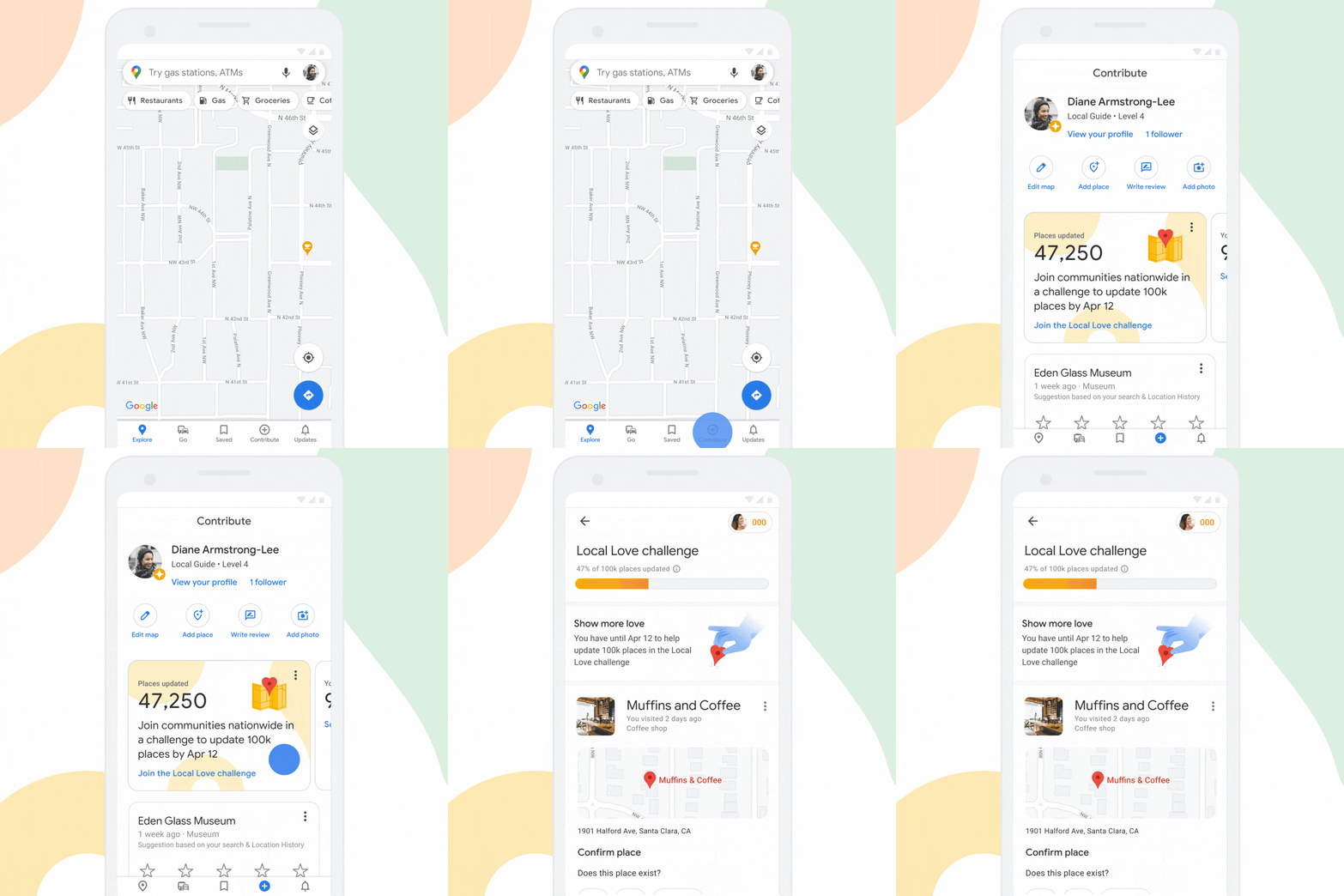
For the next month, most people using Android in the U.S. can join our first nationwide challenge to rally helpful reviews, photos and updates from sea to shining sea. Simply jump into the Contribute tab in Google Maps to join the “Local Love challenge” and add ratings, reviews and confirm information to support local businesses you’ve visited, from your go-to bakery to the neighborhood hardware store. Each contribution will count toward a collective goal of updating 100,000 businesses. We’ll use feedback on the Local Love challenge to guide future campaigns in more countries.
Take a virtual tour with a professional pizza enthusiast
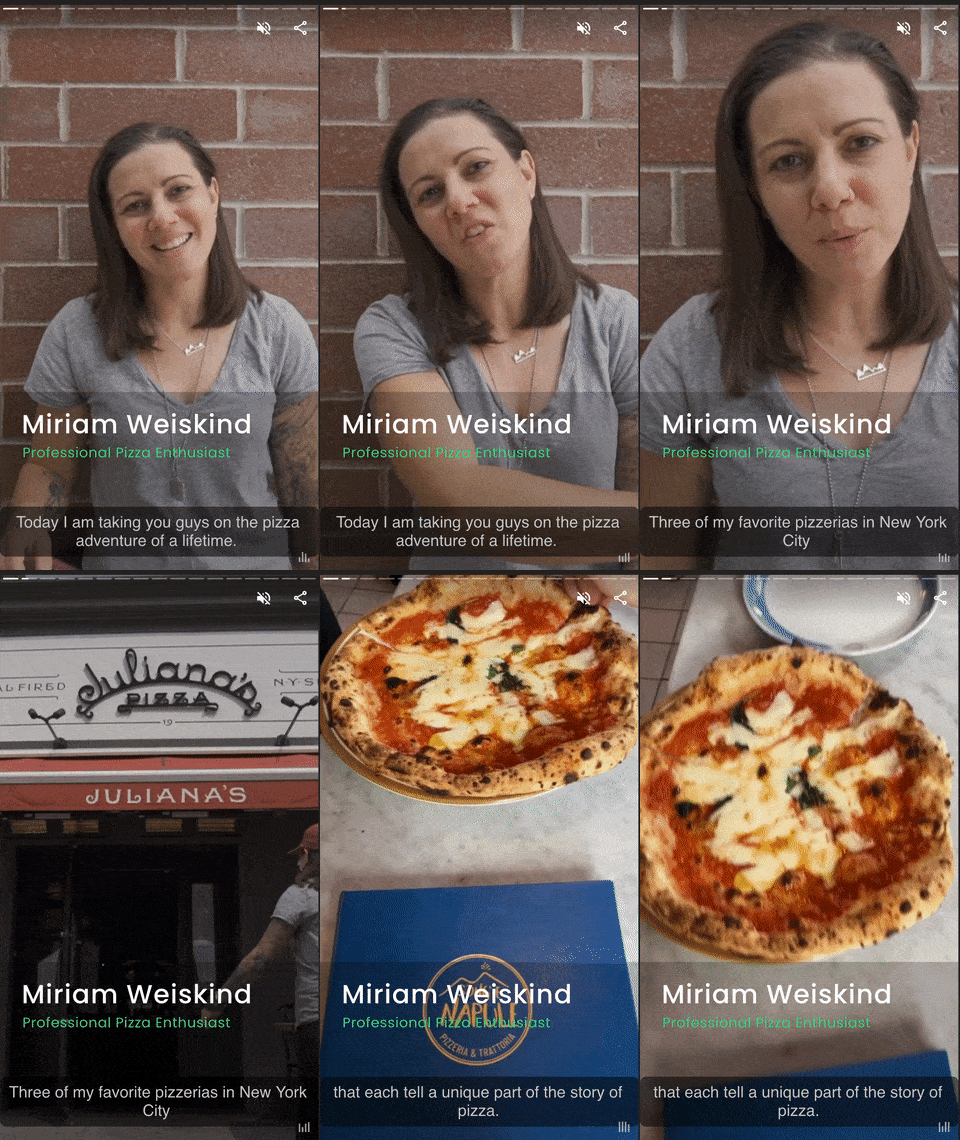
You might think you love pizza, but Miriam Weiskind truly loves pizza. She has given pizza tours of Manhattan and Brooklyn for Scott’s Pizza Tours for over eight years, runs a website and blog at the ‘Za Report, is active on Instagram at @thezareport and now makes her own pies for her local community — with a month-long waiting list. And while Miriam also runs a Brooklyn-based creative studio called mdoubleu Design, she is clearly a professional pizza enthusiast.
To help people around the world learn a bit about Miriam and her passion for pizza, the Google Web Creators team partnered with her on a Web Story showcasing a virtual pizza tour of Brooklyn.
The story’s title page draws you in with a mouth-watering video of a pizza being tossed and baked. The personal introduction makes you feel like you’re right there with her. She also appears throughout the Web Story, offering her opinions on what makes each pizza great.

Break Free B2B Marketing: Eric Vanderburg of TCDI on The Changing Cybersecurity Landscape
For more than a decade our team at TopRank Marketing has fostered a potent community of leading influencers, developing close relationships with subject matter experts in a wide variety of industries.
When it comes to B2B influencer marketing, it’s only natural to wonder just what an industry influencer actually looks like?
In our third season of Break Free B2B Marketing video interviews, we’re continuing in-depth conversations with a powerful selection of top B2B influencers, and taking a close look at the issues that each expert is influential about in their industry.
Every successful B2B influencer has a rare mix of the 5 Ps — proficiency, personality, publishing, promotion, and popularity — as our CEO Lee Odden has outlined in “5 Key Traits of the Best B2B Influencers.”
Combining every one of these qualities and plenty more is Eric Vanderburg, vice president of cyber security at TCDI, who we’re thrilled to be profiling today.
Cybersecurity has always been a priority for smart B2B marketers and business owners, but it’s never been more of a concern than it is right now. In fact, a recent CSO survey has found that over 60% of small and medium business owners are more concerned now about security risks for their remote employees than they were at the beginning of the pandemic.
That fear isn’t without good cause. Phishing attacks are up. People are spending more time online than ever before — not just working, but shopping, chatting, browsing, and beyond. Potential pathways to risk are everywhere and that begs the question: how do you keep your employees and data safe?
Luckily, while there are a lot of risks out there, there are also industry experts leading the charge when it comes to avoiding them. Experts like Eric Vanderburg. Eric has made a name for himself helping equip businesses with the right tools and knowledge to keep their cybersecurity practices effective and up-to-date. That’s the reason why our Joshua Nite interviewed him for today’s new episode six of the Break Free B2B Marketing Interview series.
Break Free B2B Interview with Eric Vanderburg
If you’re interested in checking out a particular portion of the discussion, you can find a quick general outline below, as well as a few excerpts that stood out to us.
- 3:01 – Cybersecurity progress separate from the pandemic
- 4:10 – What can remote workers do at home to support better security for their organizations?
- 5:27 – Are recent cybersecurity changes here to stay or are we going to regress to the mean?
- 7:01 – Any cybersecurity mistakes being made that should be addressed?
- 8:10 – What will the cybersecurity landscape look like when things start to open up again?
- 9:20 – What can executives or B2B leaders do to better plan for the future?
- 11:34 – How do you become a thought leader in the cybersecurity space and build an audience?
- 15:03 – Does having a large following ever get in the way of saying what you want to say?
- 18:56 – What makes Eric more (or less) likely to want to be involved in a project?
- 21:07 – Where can people find Eric if they want to get in touch?
Josh: Have you seen any people that were truly prepared for something like this to happen, or has it generally been folks in a bit of a scramble?
Eric: I wouldn’t say anybody’s been fully prepared — there’s been a little bit each company’s had to do. Some companies have been a little bit better prepared. On the technology side, they had what they needed to enable employees to work from home and have the security in place, and they had good procedures and training. But then, you know, they miss out on some other elements and communication breaks down. And now business email compromise was their downfall, or they got all the others and they didn’t do the training, or they had issues implementing the technology, and vulnerabilities or other issues allowed attackers in. So you know, there’s a lot of different things you have to do to be secure. And with this pandemic, it’s caused many companies to have to react. Unfortunately, when you’re reacting without necessarily having a plan in place, it introduces faults and errors.
Josh: We’ve talked a lot about — when we talk about the pandemic — how people’s five year plan suddenly became a five week plan or a five day plan. I can imagine there are just a ton of moving pieces that people had to consider as they move forward?
Eric: Yes, there really were these complete changes in the way we do business, and not one that companies necessarily plan for somewhere along the line — distributing the workforce and utilizing more contract work, or using us as part of their digital transformation. But others were just blindsided by the whole thing.
[bctt tweet=”“Unfortunately, when you’re reacting without necessarily having a plan in place, it introduces faults and errors.” — Eric Vanberburg @vtamethodman #BreakFreeB2B” username=”toprank”]Josh: Are you seeing that as some of these things are rolling out, that there are things that people are overlooking, or getting wrong, or making mistakes that you’d want to correct?
Eric: Yes, well, there’s quite a few. When a lot of companies that have employees who start working from home, many are using personal equipment, maybe they didn’t have a company device, or have a way of properly managing those. So we’ve had a huge influx out of BYOD — bring your own device — and some companies weren’t ready for that. They didn’t have a process in place that others were able to take care of with the right approach, either securing those devices with endpoint agents, or just taking the personal device, not really out of the mix, but connecting them into virtual desktops and keeping local resources. And that’s helped to secure it, and also giving them the same applications and everything else that they had when they were in the workplace.
Josh: I think you address pretty well some of the steps that people can take to solve some of these security issues. So let’s talk about when things are starting to open up again. What do you think that the cybersecurity landscape is going to look like as that starts to happen?
Eric: I think that we’re going to certainly have quite a few new players. I think we’re also going to have companies who are much more agile, or used to using some of those resources they are utilizing, which could be in addition to the regular workforce — a lot of other outside consultants or flex resources. We’re going to see fewer people in the office, and maybe some offices closing down and opening up other regional places because it’s easier to work remotely and to coordinate. Certainly a lot more use of technologies to help coordinate and share, your project management type tools and communication platforms and all that — those are have already seen a big surge. I think we’re going to see a lot more there.
[bctt tweet=”“We’re going to see fewer people in the office, and maybe some offices closing down and opening up other regional places because it’s easier to work remotely and to coordinate.” — Eric Vanberburg @vtamethodman #BreakFreeB2B” username=”toprank”]Keep your eye on the TopRank Marketing Blog and subscribe to our YouTube channel for more Break Free B2B interviews. Also check out episodes from season 1 and season 2.
Take your B2B marketing to new heights by checking out out previous season 3 episodes of Break Free B2B Marketing:
- Episode 1: Kevin L. Jackson, GC GlobalNet — The Future of Cloud Computing
- Episode 2: Tim Crawford, AVOA — The New Normal
- Episode 3: Oliver Christie, PertexaHealthTech — The Future of Artificial Intelligence
- Episode 4: Liam McIvor Martin, Time Doctor — Trends in Remote Work
- Episode 5: Sarah Barnes-Humphrey, SHIPZ — The Future of Supply Chain
The post Break Free B2B Marketing: Eric Vanderburg of TCDI on The Changing Cybersecurity Landscape appeared first on B2B Marketing Blog – TopRank®.

Career certificates and more ways we’re helping job seekers
At Google, our mission has always been to make sure that information serves everyone in important moments, whether it’s helping you find a COVID vaccine near you or get a new job that creates a better life for you and your family.
For Rey Justo, the last year has been full of important moments. When the pandemic hit, he lost his job installing fireplaces in Sacramento, Calif., and he and his family had to move in with his grandparents. He had always been interested in technology, so he enrolled in the Google IT Support Certificate through Merit America. After completing the program in three months, he was hired as an apprentice at Zennify, a computer software company.
With more businesses embracing digital ways of working, it’s estimated that 50% of all employees will need reskilling by 2025. As U.S. job growth returns with more people getting vaccinated, we are committed to ensuring that all Americans have the skills they need to benefit from greater economic opportunity. To help, today we’re announcing new efforts, including opening up enrollment for our latest career certificates, expanding our employer consortium, and introducing new tools to improve the job search.
Enroll now: More Google Career Certificates
Starting today, enrollment is open for our latest Google Career Certificates, in the fields of Data Analytics, Project Management, and User Experience (UX) Design. We’re also announcing a new Associate Android Developer Certification, which prepares learners for entry level jobs in Android development. With 1.3 million jobs open in these fields right now in the U.S., the opportunity is significant.
We’re also providing 100,000 scholarships to be distributed through nonprofits, workforce development boards, and other community organizations such as Per Scholas, NPower and Goodwill. And we’re working closely with the National Association of Workforce Boards to make sure that local workforce programs, one-stop centers, and community employers know how to refer local job seekers to these certificate programs, as well as connect graduates to local jobs.
These certificates have already been successful in bringing in more talent from groups traditionally underrepresented in tech: 53% of graduates of the IT Support Certificate in the U.S. have been female, Black, Latino or veterans. And 82% of graduates overall say the program helped them advance their career within six months, including getting a raise, finding a new job, or starting a new business.
Get hired: Expanding our consortium to 130+ employers
More than 130 employers have joined our employer consortium, eager to hire people who have earned these certificates. Graduates can share their resumes directly with employers like Anthem, Verizon, Bayer, Deloitte, SAP, and Better.com, who are joining Accenture, Walmart, Infosys and, of course, Google. We’re also partnering with Guild Education, which works with Fortune 1000 companies, to bring Google Career Certificates to help some of the country’s largest employers upskill their workforce.
Not only is Google hiring these certificate graduates, we’re using the certificates themselves to upskill and reskill Google teams, from IT support techs to data analysts. We’re also opening applications for Google’s apprenticeship program in our Career Certificate fields in addition to a few other professional tracks. We will hire hundreds of apprentices over the coming years to participate in on-the-job training and applied learning.
Globally, we’re sponsoring 100,000 scholarships for our Career Certificates in Europe, the Middle East and Africa. In India, we’re working to make certificates more accessible and launch an employer consortium. And in addition to our Career Certificates, today we’re also making our cloud computing, big data and machine learning trainings free for U.S. job seekers to help prepare for jobs in these high-growth fields.
Improving the Job Search experience
For many job seekers, it can be difficult to find open roles that match their experience and education. Over the past year, Google Search queries like “great jobs without a degree” spiked 850% in the U.S. Now when you search for “no degree jobs” in the U.S., you’ll see a new job carousel highlighting relevant opportunities near you. You can also filter by education and experience requirements, and there will be new labels on positions that do not mention degrees in their requirements. We’re also working with job sites — including Glassdoor, LinkedIn, ZipRecruiter, Snagajob and CareerBuilder — and U.S. employers to make education and experience requirements clearer on job postings.

OPPO Find X3 Pro: il primo con display e fotocamere da 1 miliardo di colori. Anteprima

La NASA rivela per errore come ha fatto a nascondere le sue missioni segrete
Questa foto d’archivio della NASA risale all’11 marzo 1971, esattamente cinquant’anni fa. Mostra l’astronauta lunare Dave Scott, al centro, nel New Mexico.


Questo spiega TUTTO.
Se ve lo state chiedendo, il dispositivo dovrebbe essere un telemetro. Questo articolo vi arriva gratuitamente e senza pubblicità grazie alle donazioni dei lettori. Se vi è piaciuto, potete incoraggiarmi a scrivere ancora facendo una donazione anche voi, tramite Paypal (paypal.me/disinformatico), Bitcoin (3AN7DscEZN1x6CLR57e1fSA1LC3yQ387Pv) o altri metodi.

MotoGP 21, primo filmato mostra il gameplay del gioco
Milestone e Dorna Sports S.L. hanno rilasciato il primo video di gameplay di MotoGP 21, il prossimo capitolo della famosa simulazione su due ruote che arriverà su PlayStation 4, PlayStation 5, Xbox One, Xbox Series X|S, Nintendo Switch, PC, Steam ed Epic Games Store a partire dal 22 Aprile 2021. Il titolo proporrà i roster e i circuiti ufficiali della stagione 2021 del mondiale di motociclismo, ma arricchirà l’offerta anche con una modalità che consentirà ai videogamer di rivivere la storia della MotoGP con più di 40 piloti e le loro moto iconiche.

LG svela le nuove smart TV LG QNED Mini LED TV
LG ha presentato le collezione di TV del 2021 e tra i miglioramenti apportati alla linea TV OLED e le potenti smart TV NanoCell, l’azienda ha svelato anche le nuove tv top di gamma, la serie QNED Mini LED, definita da LG “il punto d’arrivo in termini di qualità d’immagine dei televisori LCD“.
LANCIATO IN ITALIA IL PASSAPORTO SANITARIO BASATO SU BLOCKCHAIN DI ALGORAND
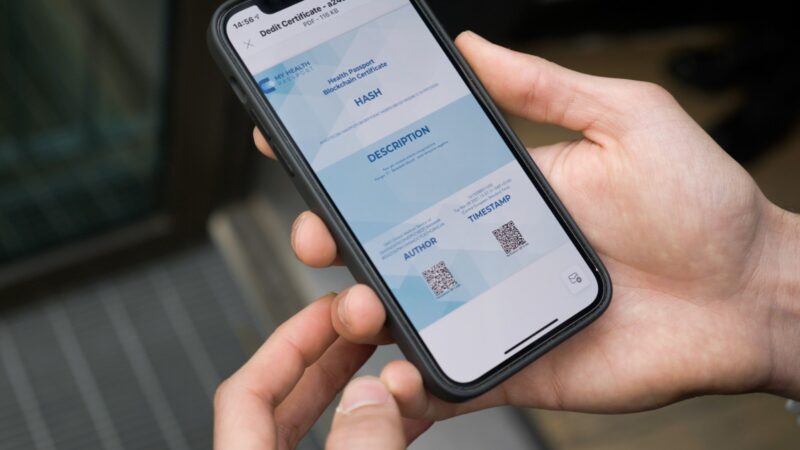
PASSAPORTO SANITARIO ELETTRONICO l’app My Health Passport: IN ITALIA PRONTA ALL’USO UNA SOLUZIONE CHE UTILIZZA LA TECNOLOGIA BLOCKCHAIN Durante l’evento per l’inaugurazione di Hangar21 a Milano sono stati certificati per la prima volta su blockchain gli esiti dei tamponi effettuati a tutti i presenti, organizzatori, staff tecnico, ospiti e artisti. E dopo la presentazione presso l’ente europeo INATBA, ora la soluzione My Health Passport sarà portata all’attenzione delle istituzioni pubbliche e private sia italiane che internazionali…
L’articolo LANCIATO IN ITALIA IL PASSAPORTO SANITARIO BASATO SU BLOCKCHAIN DI ALGORAND scritto da YOUR_DIGITAL_VOICE! proviene da Assodigitale.

Lotteria degli scontrini: ci sono i primi 10 vincitori
L’Agenzia delle Dogane e Monopoli ha estratto i primi 10 vincitori della Lotteria degli scontrini, l’iniziativa che il governo Conte 2 ha promosso assieme al Cashback, ovvero il rimborso del 10% delle transazioni elettroniche fino ad un massimo di 150 euro. I primi 10 vincitori della lotteria degli scontrini, cui andranno 100mila euro ciascuno, dopo la pubblicazione dei codici vincenti sul profilo Twitter dell’Adm, saranno contattati tramite Pec o raccomandata tradizionale e dal momento della ricezione della stessa avranno a disposizione 90 giorni per riscuotere il premio.

OPPO presenta i nuovi smartphone della Find X3 Series
OPPO ha fatto le cose in grande per la nuova serie di smartphone in arrivo anche in Italia, la Find X3 Series, presentando tre diversi dispositivi che puntano a conquistare un’ampia fascia di pubblico, da utenti più esigenti che puntano ad avere il top di gamma con OPPO Find X3 Pro 5G a chi vuole caratteristiche di altissimo livello ad un prezzo più contenuto con la versione Lite, OPPO Find X3 Lite 5G.