20 milioni di euro per sostenere l’economia sociale europea
Tia Taylor, founder di Colory*: “Colory* è uno spazio che vive sui social, creato da e per gli italiani di seconda generazione. I finanziamenti di Google.org ci stanno aiutando ad amplificare la voce delle generazioni future, a creare una realtà in cui le persone possano sentirsi ascoltate, viste, riconosciute.”
Deborah Choi, Founderland: “Il nostro obiettivo è creare un nuovo standard inclusivo e intersettoriale per gli imprenditori. I finanziamenti di Google.org ci aiuteranno a sostenere alcune donne fondatrici di attività commerciali, che da sempre vengono tenute ai margini e dimenticate, affinché possano diventare leader aziendali affermate, favorire una crescita sostenibile e raccogliere capitali.”
Kristian Rönn, cofounder di Normative: “Il finanziamento tramite donazioni di Google.org ci ha permesso di accelerare il nostro lavoro per garantire alle PMI un accesso libero a statistiche e dati specifici per settore, disponibili tramite il programma sostenuto dalle Nazioni Unite SME Climate Hub. Questo approccio ha avuto un grande impatto e, ora che disporremo di 12 dipendenti Google che ci forniscono assistenza a tempo pieno per 6 mesi, ci aspettiamo che possa portare a cambiamenti ancora più importanti.”
Anisa Morridadi, Beatfreeks: “Google.org sostiene da diversi anni la nostra missione: offrire informazioni approfondite e promuovere l’impegno dei giovani nelle aziende del Regno Unito per aiutarle ad accogliere un’ampia varietà di idee e talenti, migliorare il business e plasmare la cultura.”
Scritto da: Adaire Fox Martin, VP Cloud EMEA; Rowan Barnett, Head of Google.org EMEA

The James Webb Space Telescope in your living room
On December 22, the world’s biggest and most powerful space science telescope will launch from Kourou, French Guiana, providing an unprecedented glimpse of our universe. NASA’s James Webb Space Telescope, a partnership with the European and Canadian space agencies, will study every phase of cosmic history — from within our solar system to distant galaxies in the early universe. As an infrared telescope — using infrared light to detect celestial bodies — Webb’s scientific explorations will help us better understand the origins of the universe and our place in it.
After launch, the telescope will unfold into its final shape. This process takes about two weeks. By a month after launch, the telescope will reach its extra-terrestrial destination a million miles from Earth. The telescope must then cool down in the shade of its sunshield, down to its cryogenic operating temperatures, under 50 Kelvin (-370 °F). The mirrors will be precisely aligned and the instruments calibrated. Approximately six months after launch, we’ll be ready for the telescope to capture images of space that we’ve never seen before.
According to Mike Menzel, lead NASA mission systems engineer for the telescope, “Webb is a first-and one-of-its-kind space telescope designed to detect the first galaxies that formed in our universe, observe how galaxies evolve over cosmic time, study the formation of stars and solar systems, and perform detailed observations of planets around other stars. It has been my privilege to be part of this team for the last 24 years. It is my sincere hope that I can someday say that I worked on the space telescope that detected the first-light galaxies, or detected the building blocks of life on a planet around another star. It is also my hope and expectation that this world-class facility will detect some cosmic phenomenon that is totally new and unexpected, which opens up a whole new field of astronomical research. If past history of space observatories, such as Hubble, are anything to go by, there is a very, very good chance of this.”
We hope you follow along on NASA’s Google Arts & Culture page, where we’ll be periodically sharing new stories and images from the telescope’s discoveries. And until then… check out 10 things to know about the James Webb Space Telescope and enjoy the 3D model!

Abuso di posizione dominante: multa da oltre 1,2 miliardi per Amazon
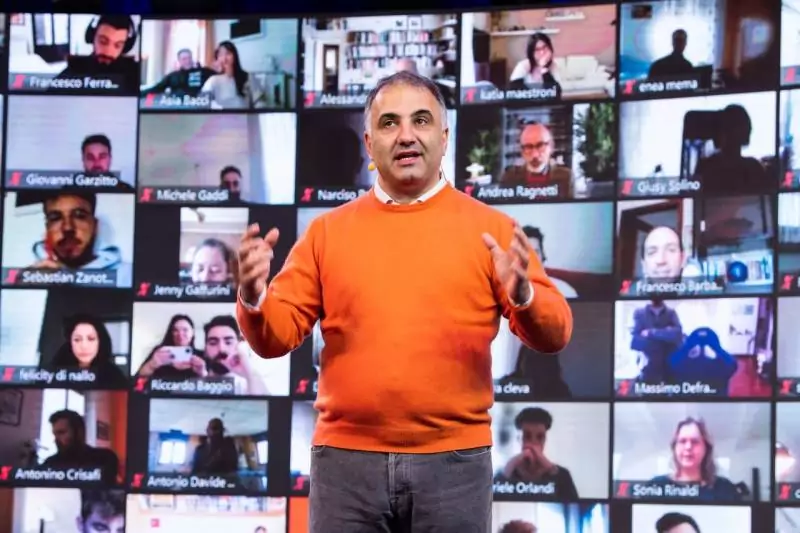
Proiezioni di Borsa. Alfio Bardolla riceve il “Premio Eccellenza”
Alfio Bardolla premiato all’Annual Meeting di ProiezionidiBorsa Nella splendida cornice di Palazzo Ferrajoli a Roma, in occasione del 1° Annual Meeting di ProiezionidiBorsa, testata online salita nell’ultimo anno al primo…
L’articolo Proiezioni di Borsa. Alfio Bardolla riceve il “Premio Eccellenza” scritto da Paolo Brambilla proviene da Assodigitale.

Rightmove sets up home with Google Cloud
Rightmove’s mission is simple: make home moving easier. In 2020, its app and website saw over two billion visits from people looking to find the right property for them. In fact, the online property titan has had a bumper year, with over 100 of the company’s busiest ever days for visits all happening in the last 12 months.
Having led the charge in transforming the UK property market for both home-hunters and estate agents since 2000, Rightmove is no stranger to innovation. Its mature multi-site data centre infrastructure and CI/CD tooling has served it well. However, to meet increasing demand for its services and continue its market-leading innovation, it needed to take its technology platform to the next level. This meant finding a solution that would enable more agility and velocity for the product and platform teams, in a highly efficient way, all while delivering on its sustainability goals.
And so, boxes (theoretically, of course) were packed and the moving van was on the way to a new life with Google Cloud.
Moving with containers
While Rightmove’s audience may use boxes to move, Rightmove is using containers – over 1,000 of them at any time — and has chosen to start using Google Kubernetes Engine (GKE), a managed, production-ready environment for running containerised applications. “We are continuously striving to provide a better experience for consumers on the Rightmove website and better products for our customers. We release over 2,000 updates a year to our applications, so a key focus area for us is reducing time to production and, in turn, time to market,” explains Andrew Tate, Head of Technology Operations at Rightmove. GKE will enable the company to build and deliver new services faster, automate upgrades, and importantly, scale in line with traffic peaks. In the UK, that’s at 8.48 pm on Wednesday during the final ad break on prime-time TV. With this approach it will also reduce its operational overheads, enabling engineers to focus on higher value work, experimentation and innovation.
A sustainable Rightmove
As part of Rightmove’s own sustainability journey to net-zero, it wants to be able to run services more environmentally consciously. Our commitment to 24/7 carbon-free energy by 2030 was another key driver for the move. Through Google Cloud, theindustry’s cleanest cloud, the company will be able to not only run workloads in the places that have the most carbon-free energy supply, but also ensure that it is consuming the minimum amount of power that is needed to support maximum users at a given point in time.
Looking to the future
Already utilising Google Cloud’s data analytics capabilities to inform its marketing campaigns, Rightmove is also looking to expand its use of BigQuery — our serverless, highly scalable data warehouse — in order to transform the way it uses data internally, and eventually create a more centralised data solution on Google Cloud. By unifying different data sources internally, it will be able to gain valuable insights that will enable its teams to make more effective, data-led decisions and enhance its product set further.
We’re delighted the UK’s #1 property website is moving in the right direction with Google Cloud.

Microsoft Surface Go 3: ricetta vincente non si cambia
Amazon Smart Air Quality Monitor è disponibile in Italia
€20 million to support the European social economy
Social entrepreneurs tackle big societal challenges that benefit people and the planet alike — with sustainable business models.
In Europe, there are an estimated 2.8 million social enterprises that employ 13.6 million people and contribute to a more inclusive, resilient and sustainable economy. However, the pandemic has exacerbated some of the challenges these social entrepreneurs face, including existing inequalities and access to resources.
Which is why today, we’re committing €20 million in cash funding through the Google.org Social Innovation Fund to support underserved social entrepreneurs across Europe.
Social entrepreneurs need more support
According to a study released today by ChangemakerXchange and The Possibilists and co-funded by Google.org, only 1 in 5 young social entrepreneurs can live off their venture and over 60% have experienced burnout. Entrepreneurs from underserved communities experience these challenges more acutely. In addition, research from Euclid Network shows that social enterprises face significant barriers to growing their business and scaling their impact. In particular, they lack access to capital and support from companies and governments.
Private companies need to play their part in helping the social economy. Today, the European Commission is setting out a strong policy agenda to support social enterprises in its EU Action Plan on the Social Economy, and calling on governments, funders and companies to do more to support the social economy. We’re committed to doing our part — and to building on our work at Google for Startups in Europe over the last ten years, our Google.org Impact Challenges and the more than €10 million in Google.org funding that we’ve awarded to social enterprises to support charitable projects over the last 3 years.
Paris-based social enterprise Chance (previously called YGeneration) knows first-hand how critical such support can be — now more than ever. In 2015 Google.org awarded them $200,000 to further their mission of using technology to help people from underserved communities access career guidance, digital coaching and the job market.
Seven years later — with the help of mentoring from Google volunteers and an additional $2 million in Google.org funding — they’ve helped 10,000 job seekers find roles and improve their careers. They also inspired additional funders to invest over €5 million, and will soon announce that they’ve attracted additional funding to reach even more people in French and English speaking countries.
We know there are more social entrepreneurs who could have a positive impact on their communities, if they could get more support.
Supporting underserved entrepreneurs and social economy ecosystems
Today’s announcement will deepen our support, with €20 million in cash funding, as well as additional in-kind support through AdGrants.
€13 million will go toward strengthening local social economy ecosystems across Europe, and creating better access for underserved entrepreneurs. This funding will support leading social economy organizations to create and scale programs that help build the capacity of underserved entrepreneurs, and provide access to networks, upskilling and tools.
Our first grant will be €1 million to Fund 05 in Slovenia to help catalyze the country’s nascent social entrepreneurship sector. We’re also supporting the Euclid Network to gather social economy leaders so they can share insights, learnings and solutions across borders.
In addition, we’re giving a €7 million grant to INCO to provide access to capital and support for entrepreneurs from underserved communities in the form of cash grants between €25,000 – €100,000 each to scale up their enterprises. INCO will also help individuals who are just starting out turn their idea into a business, with funding of €4.000 – €10.000 alongside mentoring and incubation services.
To unlock the full potential of the social economy, we need to work together — that includes governments, companies, foundations, investors, nonprofits, cooperatives and social enterprises. That’s why we’re joining the World Economic Forum’s COVID Response Alliance for Social Entrepreneurs.
As we work towards an inclusive economic recovery, the decisions that companies, funders, foundations and policymakers make now will determine what our economies of tomorrow will look like. We hope that social entrepreneurship — which truly puts purpose, people and planet at the center of business goals — can influence the economy going forward.

Supporting digital education in Europe
The way we teach and learn has changed. We have all seen the world shift beneath our feet during the pandemic, as homes became classrooms and teachers found new ways to connect with their students while using technology in new ways.
While schools around the world are now moving back towards in-classroom learning, the importance of access to digital tools has been brought into focus, not only to support hybrid learning practices but also to ensure students are equipped with the tools and skills that set them up for success in building the future they want for themselves.
We’re excited to see that many EU member states, guided by the Digital Education Action Plan, have allocated a significant portion of Recovery and Resilience Facility funds towards national digital education transformation plans. However, large-scale projects in digital education sometimes struggle to deliver expected benefits or outcomes, and investments in digital equipment for schools are often under-utilized. To address this challenge and to support countries with their digital education transformation plans, Google is thrilled to announce the €15 million Google for Education EU Digital Support Fund.
Working with SMEs to support digital education
The Google for Digital Education Fund is designed to foster the development of a high-performing digital education ecosystem, including the provision of infrastructure, connectivity and digital equipment, enabling digitally competent and confident teachers, and training staff. The Fund is open to local SMEs who are supporting national education projects funded by the EU’s Recovery and Resilience Facility program. They can apply for funding from Google for the duration of the program (or until the funds have been exhausted) to cover Google’s digital equipment and software. In this way, the Fund will contribute to addressing key digital education priorities in the EU by stimulating local innovation ecosystems in education and training.
The fund can be used towards supporting teacher training to help them leverage the most out of devices in the classroom
What does that look like in practice?
We have already seen impactful ways this could work across the EU region. The Municipality of Plovdiv in Bulgaria exemplifies the type of digital education transformation program that the Google Digital Education Fund intends to support. The aim of the Municipality of Plovdiv’s program was to successfully implement a cloud platform in order to deliver on the “digitalization and modernization of the learning process” and elevate the digital skills of educators and learners in all 77 of the schools in the Municipality. This program was delivered over three years from 2017-2019 and was the first digital education program of its kind in Bulgaria. Plovdiv’s School in the Cloud program has become the benchmark for all of Bulgaria and has led to widespread use of the Google for Education platform, with more than 10,000 teachers trained (over 1,000 of them certified by Google), and thousands of Chromebook devices being used across the country in accordance with acceptable use policies established by the Ministry of Education in Bulgaria.
Looking to the future
Our goal is to provide the information, tools and services that help students build knowledge, fuel curiosity, and prepare for what’s next. We are proud and excited to support the European Digital Education Action Plan, and look forward to helping EU Member States deliver successful digital education transformation programs.
The Google for Education EU Digital Support Fund is available to qualifying SMEs that are supporting EU Member State national digital education transformation programs funded through the Recovery and Resilience Facility and related to the provisioning of Chromebooks (with the associated Chrome Education Upgrade license) and Google Workspace for Education. Click here to learn more and to apply.
Gioca con lo streamer, la nuova funzione di Facebook Gaming

Eurobarometro, gli italiani conoscono poco i loro diritti digitali

Meet the Japanese students whose hobby is fact-checking
Koya, Masataka and Rion are not your typical third-year Japanese law students. When they aren’t attending classes at Sophia University in Tokyo, they spend their time fact-checking online information. And they’re good at it —their team recently came first in the Google News Initiative (GNI) 2021 APAC University Verification Challenge, beating 267 other teams from 13 countries or regions.
“I have had many experiences of believing information on [social media], only to find out later that it was false. So I understand how important fact-checking is,” said Rion. He convinced his friends Koya and Masataka to sign up to the inaugural University Verification Challenge, so they could all test their skills.
The Challenge — a half-year campaign organized by the GNI with local fact-checking organizations — was held to raise awareness and build up basic fact-checking knowledge among university students across Asia. It kicked off on April 2 (International Fact-Checking Day) in seven languages, including Japanese.
The Challenge tested students’ skills but also taught them new ones through live workshops taught by fact-checking experts, introducing them to fact-check tools like reverse image search and social media time stamps. During the live-action verification challenges, students had to solve quizzes with their teammates before the time was up. These challenges required extra attention to detail, and amazing teamwork, with the level of difficulty increasing after each round. Winning teams from each country or region proceeded to the final round to battle each other, with simultaneous translations to ensure all teams were on an equal footing. Teams from Japan took the first two spots, while Korean students took third place.
Ultimately, Rion, Masataka and Koya were surprised at their first place finish. The challenges were difficult, and they didn’t think they could verify that much, that quickly. But the skills they’d learned and practiced paid off, and they are convinced the same skills can help others navigate online information.
As Koya puts it: “People tend to see and believe only the information they want to believe. It is important to look at information from all sides.” Masataka adds: “Newspapers and TV may not always be right, but we should consume a variety of media to ensure we are looking beyond our biases.”
Fact-checking has been around for a long time, as part of a journalist’s work to ensure factual and accurate reporting. But in an environment where information is so easily accessible and shareable online, all of us can benefit from adopting a journalistic mindset. Through the GNI University Verification Challenge, we hope to equip the next generation across the region with the tools to approach the internet with confidence. After the success of the 2021 edition, students across the region are ready for the next round in 2022!

Il Sole 24 Ore e i trilioni; La Stampa fa gli articoli usando Deepl
Questo è un “articolo” de La Stampa. Uso le virgolette per via di quella frase finale, lasciata in bella mostra: “Tradotto con DeepL.com/Translator (versione gratuita)”.
Oggi il giornalismo si fa così: si piglia un articolo straniero altrui (avendone i diritti o no, non si sa), lo si ficca in un traduttore automatico, e si pubblica il risultato. Grazie a
Il Sole 24 Ore, intanto, scrive che “trilione” vuol dire 3000 miliardi (grazie a
Mi piacerebbe sapere se i giornali fanno lavorare gli inetti perché costano poco o perché i loro capi sono inetti anche loro e non si rendono conto delle cretinate da analfabeti che pubblicano, ma ho paura della risposta in entrambi casi.
Non ho altro da aggiungere.
Questo articolo vi arriva gratuitamente e senza pubblicità grazie alle donazioni dei lettori. Se vi è piaciuto, potete incoraggiarmi a scrivere ancora facendo una donazione anche voi, tramite Paypal (paypal.me/disinformatico) o altri metodi.
Your guide to user-generated content
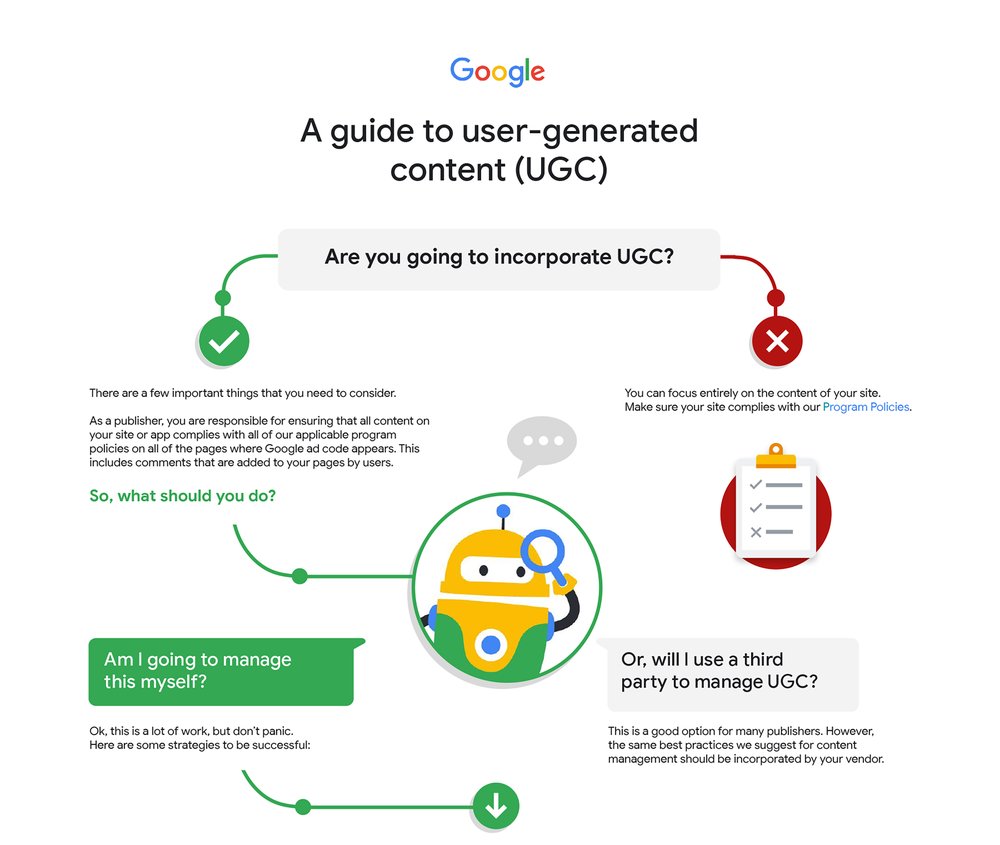
User comments are a great way to drive discussion and engagement around articles. But if a publisher wants to run ads on pages where user comments appear, all of the content on those pages — including comments — must follow our Publisher Policies. Publishers are responsible for ensuring that comment sections, forums, social media postings or anything else that users generate on their site or app are compliant with our Program Policies. This content is also subject to our Publisher Restrictions.
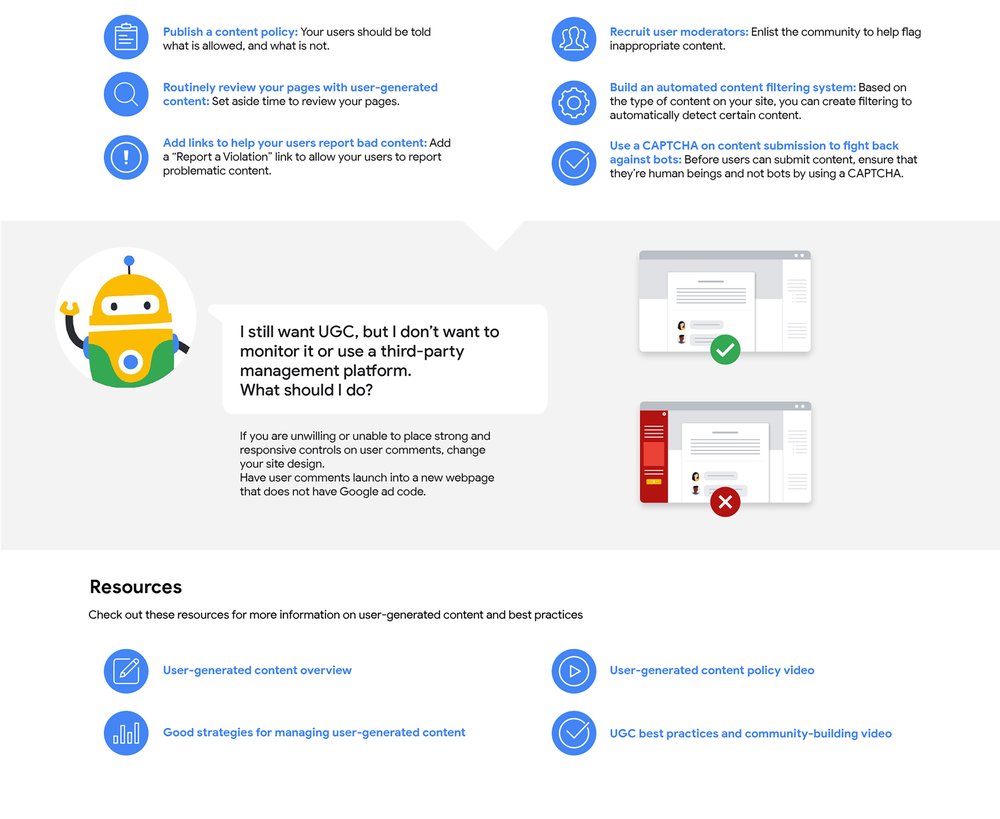
To help publishers manage user-generated content (UGC), we’re sharing a new infographic and troubleshooter with important information, like what to consider before incorporating UGC and helpful management strategies.
Check out the infographic below, and download or bookmark it for easy reference.
Explore resilience in the face of the California wildfires
The years 2020 and 2021 have seen the largest number of acres burned across the state of California since record keeping began, with a record 4 million acres burning in 2020 alone as the state faces one of the worst droughts in living memory. That year brought a day that many in the San Francisco Bay Area remember as the “Orange Day,” as we awoke to darkness when there was usually light and wandered the streets in bewilderment as the sky glowed with a dull orange and street lights remained illuminated in the middle of the day. The smoke that converged on the Bay Area that day was driven by a number of fires, including the CZU Lightening Complex, that began in the early hours of the morning on August 16th as thunderstorms rolled over the Santa Cruz hills sparking fires that would consume over 86,000 acres and 1,400 structures—including large swaths of the Big Basin Redwoods State Park.
Big Basin is California’s oldest State Park, established in 1902 and today covering over 18,000 acres. It includes some of the most beautiful terrain in the coastal ranges from lush canyons and waterfalls to sparse hilltops with magnificent views. Big Basin is perhaps best known for its majestic stand of coastal redwoods, many of which are easily accessible on the Redwood Grove Trail that features named trees such as the Mother of the Forest that soars 282 feet above the forest floor. This grove suffered tremendous damage, but the natural resilience of the coastal redwoods means that almost all will survive unlike the historic Headquarters Administration Building and other structures that were completely destroyed. Overall 97% of the park suffered damage from the fire but the work to rebuild has already begun with the removal of over 25,000 dead trees and the beginning of the planning process for a reimagined park design.
In the Spring of 2021, CyArk partnered with California State Parks to digitally document the impact of the fire on some of the most well known old growth redwood trees and the headquarters area of the park. Through detailed 3D models of famed redwood trees, archival photographs, and multimedia stories from Park employees, you can now explore Resilience of the Redwoods on Google Arts and Culture. Travel through time at California’s first park from the budding preservation movement to Park Rangers’ connections to the trees today. Through interactive 3D, explore centuries of scars and growth of some of the oldest trees in the park and learn about the increasing impacts of fire on the ancient redwood habitat.
The stories highlight the complex relationships between trees, people, and fire in the past and today. While the interactive 3D models demonstrate loss of significant cultural heritage at the park, they also provide an opportunity to reimagine a future for places like Big Basin and what we can all do to ensure redwoods remain resilient for generations to come.