Netflix, serie TV e film in uscita tra il 1 e il 7 novembre 2021
Linux 5.15 LTS: le principali novità del kernel

Google’s approach to Europe’s Copyright Law
Countries in the European Union are currently in the process of implementing the European Copyright Directive, which includes Article 15 or the “neighboring right”, into national law. Developed and debated over many years, the Directive gives new rights to news publishers online while ensuring that consumers can continue to freely access information through online platforms. As countries implement this new law, we have started negotiations with news publishers to license content under these new rights.
The Directive provides two important guiding principles. On the one hand, people and platforms can continue to link to, and include, very short extracts of publishers’ content (referred to as the snippet exemption or snippet exception in Germany). At the same time, the law creates new rights for news publishers when extended previews of their work are used online.
While the law in most countries does not define the scope of protected content, we have already started discussions with hundreds of news publishers across countries including Germany, Hungary, France, Denmark and the Netherlands where the law is now in effect. As part of this process, we are making offers for Extended News Previews, to cover the display of content from news publishers that goes beyond links and short extracts. Where possible, these offers take into account a publication’s readership, the “journalistic nature” of press publications (meaning the focus a publication has on producing journalism compared to other content) and editorial investment.
Many Member States are still in the process of implementation and it will take some time to come to agreements with news publishers that reflect national laws and the Directive itself, and we are taking on board feedback from our early discussions. Google is one of the world’s biggest financial supporters of journalism and our products and services create significant value for publishers through traffic, advertising technology and funding. At the same time, we don’t show ads — or make money — on the vast majority of searches and we don’t run ads on Google News. And, as always, publishers have full control over whether or not their content shows up in Search and how much of that content they want to be used in a preview.
Alongside these discussions, we will continue to invest in products and programs to provide even more support for journalism. Google News Showcase is another example of Google’s financial support to the news industry: more than 1000 publications are signed up around the world and more than half of those are in Europe, including in Italy, Czechia, Ireland and Germany.
We look forward to working with publishers and journalists on all these efforts in the coming months, building on our long track record of support for journalism.

PEC, SPID, FIRMA DIGITALE E NON SOLO: LE DEFINIZIONI DA CONOSCERE
Firma digitale, PEC e SPID sono alcuni dei lessemi riferibili alle novità tecnologiche con cui gli italiani hanno iniziato a familiarizzare negli ultimi anni. In un mondo in cui tutto…
L’articolo PEC, SPID, FIRMA DIGITALE E NON SOLO: LE DEFINIZIONI DA CONOSCERE scritto da YOUR_DIGITAL_VOICE! proviene da Assodigitale.

SEGA e Microsoft si alleano per il cloud gaming Next-Gen

Verifica Green Pass: il Garante avvia indagine su app pirata

DAZN, le partite di Serie A si potranno vedere a 1080p

Vote for a Google.org Impact Challenge Bay Area winner
As someone who was born and raised in the Bay Area, I know nonprofits are the true backbone of our community. They help us tackle our most pressing challenges and are the lifelines for community in our moment of need. Growing up, I spent time volunteering at Martin De Porres House of Hospitality and St. Vincent De Paul Soup Kitchen where I witnessed the impact a meal can have for those whose dignity is constantly questioned. These experiences inspired and motivated me to find a career path that would allow me to help empower organizations to change my community’s circumstances.
At Google.org, we believe that community organizations most closely connected to those in need can offer solutions to rebuild a better, more equitable Bay Area — especially as we continue to deal with the pandemic’s impact. For over 20 years, Google has called the Bay Area home and has granted over $420 million to local nonprofits; I’m proud that we’re consistently one of the largest donors in the region and that we’re building on our impact today.
Google.org’s Impact Challenge Bay Area includes $10 million in grants to 35 nonprofits, and, today, we’re sharing the top ten finalists that are eligible for the Public Choice award. These organizations are committed to efforts centered on housing and homelessness, improving access to education, offering resources for families in need, rethinking criminal justice, and so much more.
Rick Astley rivendica il rickroll per il gioco dei Guardiani della Galassia

Amp It Up: What B2B Marketers Need to Know about Social Influencer Amplification
Allow me one more scary story, even though Halloween is over…
Once there was a marketer who created an eBook with content from ten respected influencers in their industry. The marketer released the eBook, sent an email to notify the contributors…
And not one of them shared the content. Without amplification, the content was dead on arrival, and some say it haunts the marketer’s office to this very day…
Whew! Spooky story, right? One of the big benefits of influencer marketing should be built-in amplification of the content.
But influencers don’t always hold up their end of the bargain. Fortunately, there are a few things that B2B content marketers can do throughout the content co-creation process to help influencers follow through on amplification.
5 Tips for Social Influencer Amplification
Before you even choose influencers for your project, you can start strategizing for maximum amplification. Here are my top tips in chronological order.
1 — Pick Influencers Who Engage
If you’re relying on follower count to choose the right influencers, you may be missing the mark. Some B2B thought leaders have hundreds of thousands of followers, but very rarely interact with their audience. The biggest red flag: If someone only posts links to their own content, they’re not likely to promote yours, even if they contributed to it.
Instead, look past follower count to find influencers who are enthusiastically engaging with their audience. They should be sharing other people’s valuable content, replying to comments on their posts, and generally treating social media like a conversation instead of a broadcast medium.
That genuine enthusiasm for their chosen subject matter is irreplaceable. If you have to choose between a broadcaster with millions of followers and an engaging expert with thousands, pick the latter.
[bctt tweet=”“Look past follower count to find influencers who are enthusiastically engaging with their audience. If you have to choose between a broadcaster with millions of followers and an engaging expert with thousands, pick the latter.” @NiteWrites” username=”toprank”]2 — Give Before You Get
B2C influencer marketing is usually transactional: I give you these shoes, you post some videos of yourself skateboarding in them, I cut you a check. For B2B, however, we have an opportunity to build relationships that are mutually beneficial beyond just compensation. That’s not to say you shouldn’t pay influencers, of course — just that money shouldn’t be the only reason they’re on board.
To make sure you’re going beyond the transactional, start by selflessly promoting the influencers you’re courting. Share their content with your audience. Curate quotes from them and link back to their blog. Make sure you include thoughtful commentary that demonstrates your admiration is genuine.
In short, make sure the influencer knows you’re as dedicated to their success as you are to the brand’s — that’s how you build a relationship that makes influencers want to share your co-created content.
3 — Co-Create Something Awesome
Here’s a dispatch from the Stating the Obvious Department: If you want influencers to share your content, create content worth sharing.
What does shareworthy content look like? Among other things:
- It’s valuable to the influencer’s audience
- It’s visually stunning and creative
- It’s a topic the influencer is passionate about
- The influencer was an essential part of the creative process, not grafted on at the end
For example, our client Dell created an eBook about data management. But it’s not a dry, dull document. Beat the Data Paradox borrows from spy and heist movies for an undeniably cool, fun reading experience. The influencers involved feel proud of the end product and incentivized to share.
4 — Form a Community
Influencer marketing can be a one-and-done process, starting from scratch with every new project or asset. But forming a community of influencers that are tapped for multiple projects is much more efficient, and a much better experience for brand and influencer alike.
When you feature multiple influencers in your content, make sure to introduce them to each other. Give them a dedicated space to interact and learn from each other, whether it’s a video call, a forum, or even an email chain. Encourage them to promote and lift each other up.
[bctt tweet=”“When you feature multiple influencers in your content, make sure to introduce them to each other. Give them a dedicated space to interact and learn from each other.” — Joshua Nite @NiteWrites” username=”toprank”]When influencers feel like they’re part of a community, they’re more likely to share the co-created content. Provided, of course, that you…
5 — Make Sharing Easy & Beautiful
B2B thought leaders are busy folks. They may absolutely intend to amplify your content, but never get a chance to sit down and put a post together. You can help by providing a “social media kit” that removes as much friction as possible.
Our agency always provides pre-written social messages and images for influencers. They’re welcome to create their own, of course — but this ensures they’ll have something that’s high-quality and ready to share with minimal effort. We’ve found that influencers appreciate the gesture, and are more likely to share even if they don’t make use of our resources.
Ensure Ample Amplification
Amplification isn’t the only reason to include influencers in your content, of course. There’s added credibility, increased relevance, the chance to feature potential clients — a host of benefits. But the ability to get great content in front of more eyeballs is a substantial benefit for influencer marketing.
If your influencer contributors are enthusiastic about the topic, love the content you create together, and have resources on hand to make sharing easy, they’re far more likely to amplify.
Check out our State of B2B Influencer Marketing report for more insights and best practices.
The post Amp It Up: What B2B Marketers Need to Know about Social Influencer Amplification appeared first on B2B Marketing Blog – TopRank®.
Honoring Indigenous communities around the world
Shekoli (hello)! Today, we kick off Native American Heritage Month in the U.S. I am a citizen of the Oneida Nation of Wisconsin, or Onyota’a:ka, and I am thankful that I was able to grow up on my tribe’s reservation, which is on the ancestral lands of the Menominee Nation. I celebrate the resiliency of the Menominee, Oneida, and the 10 other tribal nations of Wisconsin, honor their sovereignty, and acknowledge their connection to the lands and waters of this state.
My tribe is just one of the nearly 600 federally recognized tribes in the U.S. Every year, I look forward to this month as an opportunity to learn more about the diverse tribes, nations, communities and pueblos that make up Indian Country, a term used to describe Native economies and spaces in the United States. Like many Native people alive today, I am a descendant of survivors of residential schools which were created in the 19th century, and carried on into the 20th, as part of the United States’ assimilation policy. Learning about and celebrating Indigenous culture means so much to me because I know how much was required to carry it on.
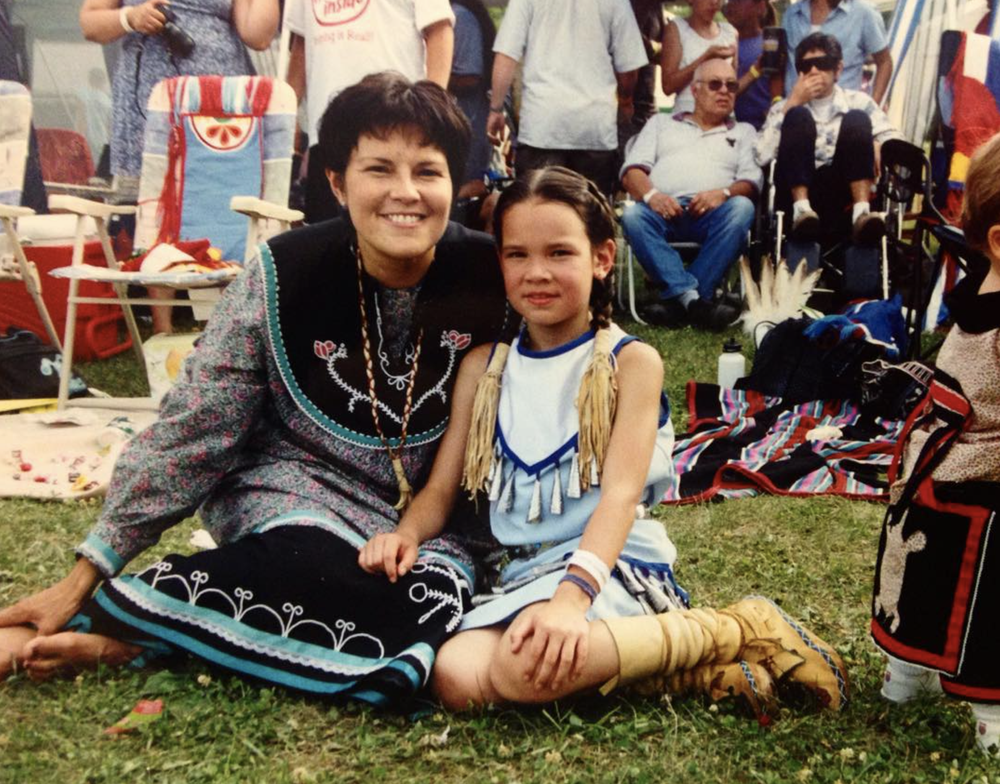
Olivia with her mother at the annual Oneida Pow Wow when she was a child.
I’m proud to serve as a lead for the Google Aboriginal and Indigenous Network (GAIN), an employee resource group which supports our growing community at Google and helps make a positive impact in Native communities outside Google. What started out as a majority U.S-focused group back in 2012 (and previously named the Google American Indian Network) has now grown to include Googlers from around the world, including First Nations, Métis and Inuit in Canada, and Aboriginal and Torres Strait Islander communities in Australia. This year, we partnered with teams across Google to support Native-serving organizations, celebrate Indigenous artists, and amplify the stories of people building Indigenous futures.
Supporting Native jobseekers and small businesses
Across the U.S. the compounding effects of COVID-19 continue to disproportionately impact vulnerable populations, including the Indigenous community. According to a report from the Center for American Progress, “COVID-19 will cost Indian Country an estimated $50 billion in economic activity and place the livelihoods of 1.1 million tribal business workers—both Native and non-Native—at risk.” Small businesses drive local economies and help foster a sense of belonging in the communities they serve and represent.
Last year, as part of our economic recovery efforts, Google.org provided $1.25 million in grants to the National Congress of American Indians (NCAI) to help support Native-owned small businesses like Earth and Sky Floral Designs and Gallery. Shayai Lucero, a tribal member of the Acoma Pueblo and Laguna Pueblo, started Earth and Sky Floral Designs and Gallery used funding from NCAI’s program to keep her floral business running and to hire fellow local tribal members during the pandemic.
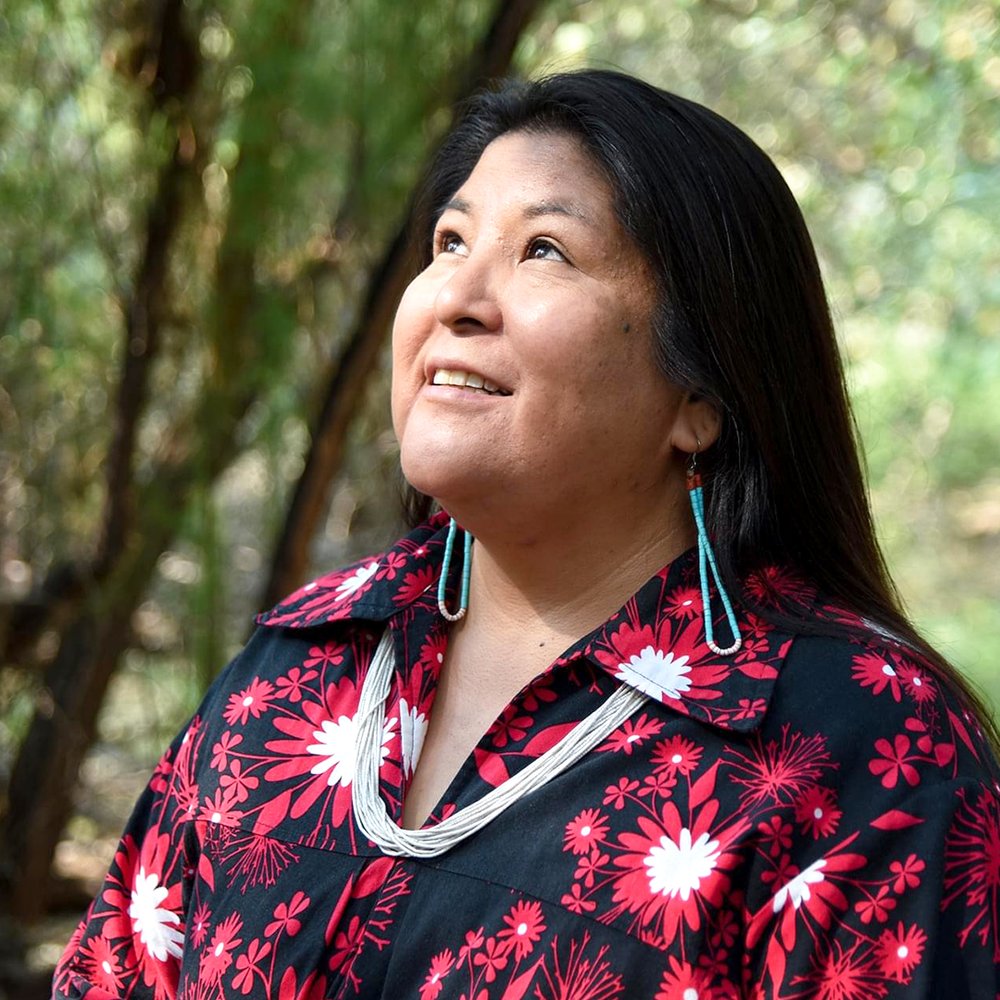
“I hired a graphics designer who is from Laguna Pueblo to do some graphics and revisions to my company’s logo. I was able to pay him at a non-discounted price thanks to the grant. The logo revision has allowed me to market in ways I haven’t before” shares Shayai Lucero, owner of Earth and Sky Floral Designs and Gallery.
In addition to our support of Native small businesses, we are also giving $1 million to Partnership With Native Americans to help train 10,000 students at more than 50 Native-serving organizations by 2025 through the Grow with Google Indigenous Career Readiness Program. Over the next four years, we will provide digital skills curriculum and trainers to career services at Tribal Colleges and Universities and other Native-serving institutions. And because we know students are often at different starting points in their educational journeys, the program will also reach high school upperclassmen who are preparing for college and careers, as well as vocational and non-traditional students.
This work builds on our HBCU Career Readiness and HSI Career Readiness and is a part of a larger strategy to expand our Career Readiness program to Black, Latino and Indigenous communities.
Celebrating artists, past and present
Today’s interactive Doodle, illustrated by Zuni Pueblo guest artist Mallery Quetawki, honors the late We:wa, a revered cultural leader and mediator within the Zuni tribe who devoted their life to the preservation of Zuni traditions and history. The late We:wa was also a fiber artist, weaver and potter, and in this interactive Doodle you can try the art of weaving yourself, while learning about Zuni people and listening to music created by the Zuni Olla Maidens. To discover more about the late We:wa, and the process of bringing this Doodle to life, check out the Behind the Doodle film. There will also be a fun celebratory surprise when you look up the late We:wa or Native American Heritage Month on Search.

This year’s Native American Heritage Month is an interactive Doodle by guest artist Mallery Quetawki honors the late We:wa, a revered cultural leader and mediator within the Zuni tribe.
In collaboration with long-standing Google Arts & Culture partners including the Smithsonian National Museum of the American Indian and Honoring Nations, among others, we’re spotlighting extraordinary stories of Indigenous art and culture. Dive into existing content from partners across the Americas – from the historic work of the Native American Code Talkers in the U.S. to the masters of the Totonac Spiritual Cuisine in Mexico – and celebrate the past and present of Indigenous cultures with a tour of the dizzying dwellings at Mesa Verde National Park and a look at contemporary Inuit ceramics.
If you’re interested in learning more about the rich culture and history of Native American communities, simply say “Hey Google, give me a fact about Native American Heritage” on any Google Assistant-enabled smart speaker, display or phone. When you do, you can explore some of the many contributions of Native Americans and hear about significant events in our shared history. There’s something new to discover every day throughout the month of November, including facts about the first Native American to earn an Academy Award nomination and how the Iroquois Confederacy influenced the U.S. constitution.
Keeping a global perspective
This year, U.S. Search Trend traffic for the term “Indigenous” surpassed searches for “Native American” and “American Indian” for the first time, demonstrating a growing interest in Indigeneity. You can learn more about Search Trends related to Indigenous topics on our Native American Heritage Month Search Trend feature.
Earlier this year, we partnered with the National Congress of Americans (NCAI) to share Inclusive Marketing Guidelines for Indigenous people, which consist of recommendations and learnings to prevent stereotypes and promote authentic portrayals in marketing.
While November is when we celebrate Native American Heritage Month in the U.S., we are always celebrating Indigenous culture around the world. In Canada, we honored the life and efforts of Mary Two-Axe Early, a Kanien’keháka (Mohawk) woman who fought for more than two decades to challenge sex discrimination against First Nations women embedded in Canada’s Indian Act. We also continue to actively support the Indigenous Mapping Workshop, a collaborative effort across Indigenous communities to decolonize geographic resources and promote Indigenous rights and interests.
In Canada, Indigenous Peoples remain largely underrepresented in the technology workforce, so to begin to address this disparity, we have also invested in Indigenous education through a Google.org grant to ComIT, a tech-focused charity that provides IT training for Indigenous students and early career professionals facing employment barriers.
I am thankful that this month I am in Onyota’a:ka (Oneida) to celebrate with my family. I will have many bowls of o·nʌ́steˀ (Oneida White Corn) soup, one of our traditional crops that have been in the Haudenosaunee (Iroquois) diet for hundreds of years. If you are looking for ways to honor Indigenous people this month, I encourage you to take a moment to explore some of the stories we’ve shared today or learn about the people that are Indigenous to the land you are on today.
OPPO Reno6 Pro 5G protagonista alle World Finals del Lamborghini Super Trofeo

Honor 50: il ritorno in grande stile (e con Google)! La recensione
