We support comprehensive climate and clean energy policy
Last year we announced Google’s third decade of climate action and set an ambitious moonshot goal to operate on 24/7 carbon-free energy by 2030. This means that every hour of every day, our data centers and campuses will use clean energy that doesn’t emit any carbon.
We’re already hard at work and as of 2020 we are operating at over 67% carbon-free energy across our data centers, up from 61% in 2019. We’re investing in new technologies like advanced geothermal and dragonscale solar to reduce emissions at our data centers and campuses, and are beginning to demonstrate that it’s possible to operate truly carbon free.
Beyond Google, a grid powered by clean energy will reduce a major source of greenhouse gas emissions and unleash sustainable innovation in other parts of our economy, like electrification of the transportation sector. This is good for the planet, good for business, and good for American competitiveness.
Corporate commitments for carbon-free energy are helping scale up clean energy across America, and we’re seeing hundreds of companies take action. In fact, we’ve encouraged the U.S. government to adopt a 24/7 carbon-free energy goal for federal facilities and helped launch a 24/7 Carbon-free Energy Compact with SE4ALL and UN Energy.
But for us and other companies to realize this future, we need to galvanize investment and modernization of our energy infrastructure. It’s for this reason that we have supported strong climate policies like clean energy standards and renewable energy tax incentives, which have helped enable clean electricity generation to grow dramatically in dozens of states.
And it’s why we support the clean energy and climate provisions in the bipartisan infrastructure and budget reconciliation packages. These provisions provide the funding and supportive regulatory climate to promote important investments in clean energy that help the U.S. move toward a cleaner and greener energy system, putting the vision of carbon-free operations within reach.
This is a pivotal moment. Strong, comprehensive climate and clean energy policy can help lead the way to 24/7 carbon-free grids and to the transition to a 1.5°C world. The moment is now.

PATRIMONIO IMMOBILIARE DI PREGIO IN ITALIA. PERCHÉ RENDE POCO?
Intervista ad Andrea Corati, immobiliarista romano ITALIA, UN PATRIMONIO IMMOBILIARE DA RIQUALIFICARE Nel nostro Paese una parte del patrimonio immobiliare rende poco o niente. Paradossalmente è proprio quello di fascia alta e…
L’articolo PATRIMONIO IMMOBILIARE DI PREGIO IN ITALIA. PERCHÉ RENDE POCO? scritto da Paolo Brambilla proviene da Assodigitale.
“ASPIRANTI IMPRENDITORI CERCASI”
LA NUOVA FABBRICA DI STARTUP DI ENRICO PANDIAN STARTUPGYM STUDIO CERCA FONDATORI E “LANCIATORI” DI STARTUP PER ASSUNZIONI A TEMPO INDETERMINATO “Aspiranti imprenditori cercasi”, questo è quanto stato pubblicato, sul proprio…
L’articolo “ASPIRANTI IMPRENDITORI CERCASI” scritto da Paolo Brambilla proviene da Assodigitale.
Phishing campaign targets YouTube creators with cookie theft malware
Google’s Threat Analysis Group tracks actors involved in disinformation campaigns, government backed hacking, and financially motivated abuse. Since late 2019, our team has disrupted financially motivated phishing campaigns targeting YouTubers with Cookie Theft malware.
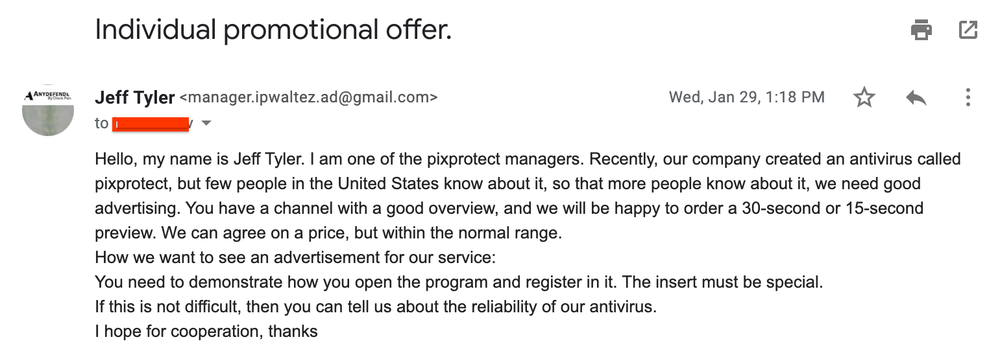
The actors behind this campaign, which we attribute to a group of hackers recruited in a Russian-speaking forum, lure their target with fake collaboration opportunities (typically a demo for anti-virus software, VPN, music players, photo editing or online games), hijack their channel, then either sell it to the highest bidder or use it to broadcast cryptocurrency scams.
In collaboration with YouTube, Gmail, Trust & Safety, CyberCrime Investigation Group and Safe Browsing teams, our protections have decreased the volume of related phishing emails on Gmail by 99.6% since May 2021. We blocked 1.6M messages to targets, displayed ~62K Safe Browsing phishing page warnings, blocked 2.4K files, and successfully restored ~4K accounts. With increased detection efforts, we’ve observed attackers shifting away from Gmail to other email providers (mostly email.cz, seznam.cz, post.cz and aol.com). Moreover, to protect our users, we have referred the below activity to the FBI for further investigation.
In this blog, we share examples of the specific tactics, techniques and procedures (TTPs) used to lure victims, as well as some guidance on how users can further protect themselves.
Tactics, techniques and procedures
Cookie Theft, also known as “pass-the-cookie attack,” is a session hijacking technique that enables access to user accounts with session cookies stored in the browser. While the technique has been around for decades, its resurgence as a top security risk could be due to a wider adoption of multi-factor authentication (MFA) making it difficult to conduct abuse, and shifting attacker focus to social engineering tactics.
Social engineering YouTubers with advertisement offer
Many YouTube creators provide an email address on their channel for business opportunities. In this case, the attackers sent forged business emails impersonating an existing company requesting a video advertisement collaboration.

Attacco hacker alla SIAE, rubati 60 GB di dati messi in vendita
Simple device management with Android Enterprise Essentials
Editor’s note: Today’s guest post is from William Vincent, Financial Controller, S. Morris Ltd.
S. Morris Ltd. is a family-owned business that creates and delivers high-quality construction materials to customers throughout southwest England. With products like concrete blocks and bricks, ready-mix concrete and flooring materials, we provide our customers with many of their building project essentials.
Strong customer service and timely delivery are key to our success, and we’re always looking to refine our operations. In fact, we recently shifted our ordering and delivery confirmation processes from paper to digital. As part of this move, we wanted to provide mobile devices to our delivery drivers so they could easily confirm orders and accept digital signatures.
To protect company data, we needed to have the right device management. But we didn’t want an overly complex solution. My team has many responsibilities, so we needed a smooth and efficient way to manage these devices. Android Enterprise Essentials was just what we were looking for — an easy way to manage Android devices with the security controls we needed to ensure data security and privacy for our small business.
Simple, secure device management
Setting up devices and getting them into the hands of our delivery drivers was quick and easy. We selected Samsung Galaxy A02 devices from our service provider Tela, which arrived at our office ready to use, right out of the box.
With Essentials, we were able to enforce necessary security policies, like requiring a PIN code to unlock the device and ensuring that the malware protection provided by Google Play Protect is always in place. Our devices are regularly shared among different drivers we contract with, some of whom will also work for our competitors. So when a contractor has completed their assignment, I simply jump into the portal and assign a new PIN to a device.
Our delivery teams have a lot to keep track of. With Android devices, they now have access to business-critical apps that make the delivery process smoother for our team and customers. And Essentials ensures that this customer data is secure on the device. No more paper receipts, and our inventory is automatically up to date.
New digital efforts through Essentials
Our success with Essentials has inspired us to look at other areas of the business that would benefit from digitization through Android — like capturing, sharing and saving information more efficiently. With Essentials’ security features and simple management tools, we’ll have the ability to scale our efforts with ease.

Google for Creators: Helping creators learn and grow
Whether you’re a fashion influencer, aspiring photographer or travel blogger, Google is committed to helping all content creators connect with their audiences. We believe that getting discovered on Google and having a presence on the open web is an important part of a creator’s success. So today, we’re introducing Google for Creators, a new home base for creators to learn, grow and get inspired.
Discover expert tips to grow and succeed
Google for Creators shows how the web can become part of your content mix. A quick quiz on the homepage provides personalized recommendations with topics most relevant to you. So if you’re just getting started, the quiz might recommend that you check out guides for finding a niche or creating a content strategy. Or if you’re a more seasoned creator, you might see recommendations for learning how to grow your audience and make more money.
Take the creator quiz to get personalized recommendations for content on our site.
Get inspired by a community of creators
Our new site reflects the guidance and inspiration we’ve been sharing on our blog and YouTube channel. This includes profiles of creators like Nakisha Wynn, who started a blog for moms and has become a full-time content creator, coach and speaker. And Nomadic Matt who, after starting his travel-focused website in 2008, has become a best-selling author and still engages with the community he built on his site.
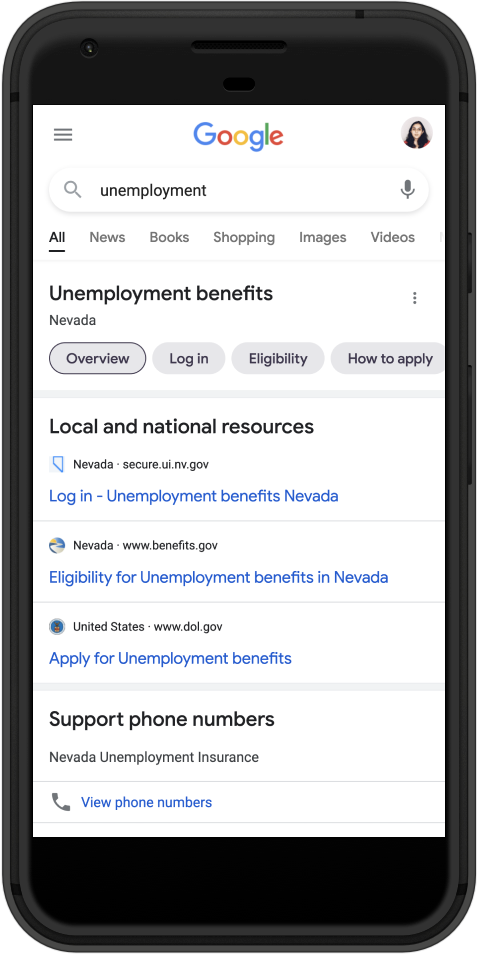
How user research helped create unemployment assistance tools
In 2020, as a result of the COVID-19 pandemic, people across the United States were losing their jobs or experiencing job insecurity. Over the course of the year, one in four people in the U.S. would apply for unemployment. People were looking for information on government assistance — in fact, searches for “unemployment benefits” increased by more than 5,000% in 2020.
While the pandemic caused a spike, people have long been searching for this kind of information. Back in 2019, a team at Google wanted to look into helping people navigate government services online. The team, led by User Experience Research (UXR) Manager John Webb, started looking into how Google could help. Initially, John explains, the team was seeking users’ input to build a Search feature that would explain civic services and government quickly and easily. “Obviously, things became more complex — and urgent — very quickly,” he says.
Sydney Hessel is also one of the leads on the project. She’s been a UX researcher for more than five years. As a result of COVID-19, she saw close friends lose their jobs suddenly. She knew how important this research could be. “We approached our work with empathy,” she says, “so we could deeply understand people’s experiences and how we could support them in the products we design.” The Google Experience Research Program recently relaunched its site, so more people can sign up to participate in future research like this to inform all kinds of products.
Being proactive and doing interviews in person before COVID became more serious is what allowed us to jump into building the product so quickly. It helped us create a more empathetic tool.
As 2019 became 2020, the User Research team began recruiting study participants from a diverse group of people from different backgrounds and industries who’d been laid off, furloughed or had their shifts cut during COVID’s early days. Then, they used Google Meet for in-depth, one-on-one interviews. “We asked about their job situation, what they saw as their next steps to make ends meet and how Search could be designed to better support them,” Sydney says. Everyone from product managers to engineers joined the sessions.
“Our team also conducted both in-person and remote studies with more than 100 people,” John says. “Before COVID-19, we had teams in many different places, working to understand what people in these places needed.” On-the-ground research was cut short and interviewing moved to Google Meet, which John says went pretty smoothly. Being able to continue interviews via video calls was essential, and meant that people could offer insight about employment conditions as they developed. Plus, the early, in-person research had its benefits, too. “Being proactive and doing interviews in person before COVID became more serious is what allowed us to jump into building the product so quickly,” John explains. “It helped us create a more empathetic tool — we were more aware of cultural nuances, and how people in different countries with different government benefits would need different kinds of help.”
Information about unemployment benefits eligibility and other government services can be hard to understand, making it difficult to navigate the process and make informed decisions. “We actually found that a lot of the people we talked to didn’t even know there were benefits they qualified for,” John says. So UXR took what they learned back to product teams at Google — which soon led to the launch of new, dedicated information panels in Search for Unemployment and other benefits. These information panels include robust local information about eligibility, as well as direct links and information about how to apply in each state.
Sydney says seeing the team’s research inform the design of the product — and such an important one — was incredibly encouraging. “It was a really moving and motivating experience for the whole team,” she says. “These interviews fired us up to build quickly and intentionally for the many people facing economic hardship during this time.”
We encourage everyone to help shape the future of Google and our products. Sign up to lend your insights to the Google Research team.

God Of War sbarca finalmente su PC!
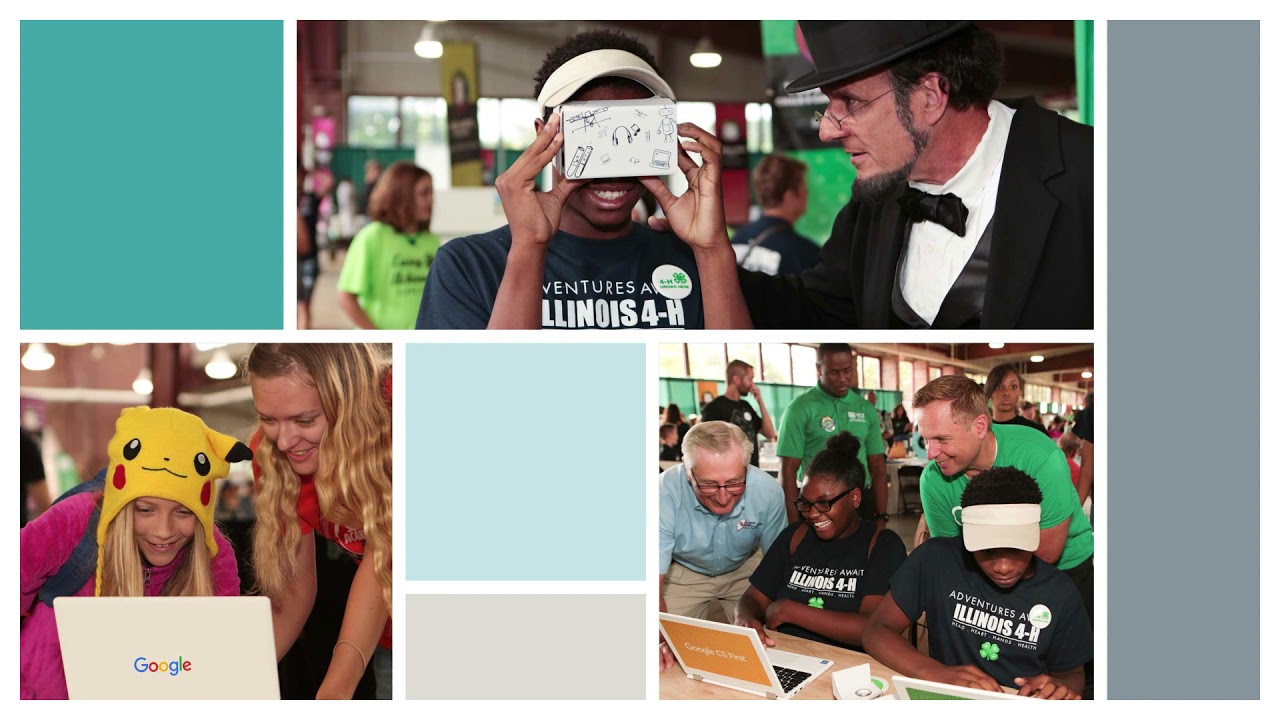
Inspiring 1.4 million students to learn computer science
For many of the challenges our world faces — like access to healthcare and climate change — technology will be part of the solution. For those solutions to affect change, the technologists behind them should be reflective of everyone. However, in the U.S. today 26% of computing professionals are women, 8% are Hispanic and 9% are Black.
Access to education is at the root of this inequity. Girls, historically underrepresented groups and students from small and rural towns are less likely to have the opportunity to build interest and confidence in computer science and STEM (science, technology, engineering and mathematics) skills. To help make sure every student has the chance to build confidence and interest in computer science, 4-H, an organization working to give all youth equal access to opportunity, with Google.org support, created the Computer Science Pathway. This program teaches technical subjects — like data analytics and robotics — and equips students with essential life skills — like problem-solving and leadership.
In 2019, 4-H and Google.org set a goal that with Google.org’s support, 4-H would introduce one million students to computer science within three years. Members of our own Code with Google team assisted the National 4-H Council and local 4-H chapter leaders to pilot, train and iterate for several months to help establish the foundations of the Computer Science Pathway program. Fast forward to now, just two years later, and 4-H has already reached over 1.4 million students. Of those 1.4 million, 47% are from historically underrepresented groups in computer science, 65% live in rural areas and 56% of teen leaders for the program are girls.
These numbers represent real kids finding their voice, discovering a brighter future and realizing their dreams.
- Aubree from Utah is using her newfound voice to encourage educators to offer computer science in their schools. “I am only the beginning of a long list of students,” says Aubree. “My greatest hope is that I will never be the end.”
- Jeffery from South Carolina says the program inspired him to reach for a brighter future. “I want to become a Computer Engineer and create innovation that improves our daily lives.”
- Aja from Illinois was looking for a place to belong as a student with learning difficulties. Now, she has her very own organization, See Me in STEM, to empower minority youth to get involved in science, technology, engineering and mathematics. “4-H inspired me to be the change I wanted to see.”
Why Empathy Matters More than Ever in B2B Content Marketing (And How to Get It Right)
B2B marketers, ready for some TRUTH BOMBS?
Here we go: We need to make our content more human and more empathetic. B2B content doesn’t have to be boring; in fact, it can’t be boring and be effective. B2B buyers are just people — we need to talk to them like people.
Are you blown away by the depth and breadth of my insight? Ready to book me at your next marketing conference?
Okay, all sarcasm aside: We all have heard the old “B2Me” speech a dozen times. I’m not here to give it to you again.
Instead, I want to get deeper into the specifics of what it means to be empathetic and provide value with content.
I say this because, despite the hours of keynote speeches on the topic, B2B marketers are still coming up short. In a recent poll, 79% of buyers surveyed said they were served irrelevant content.
Your buyers need to make informed decisions and they crave intelligent direction. But a lot of them aren’t getting it.
Why Empathetic Content Matters Now More than Ever
Most B2B buyers are feeling the crunch right now. They’re looking to bounce back from the pandemic — many with newly-structured workforces and processes. They need to create momentum, establish a productive new normal, and roll with the changes that have been forced on every business.
And for most, they need to do all of the above within tight budgetary constraints and increased executive oversight.
In short, the pressure’s on to make the right decisions and champion change. Stagnating isn’t an option.
To cope with these issues, B2B buyers rely on content that is trustworthy, helpful and informative. The brand that can become a trusted advisor is far more likely to win the business.
But when it comes to relevant, empathetic content, we’re talking about more than stat sheets, white papers or case studies.
Three Key Elements of Successful Content
It can seem like marketing’s goals for content and buyers’ goals for reading it are at cross purposes. Marketers are trying to prompt action; buyers are trying to get information. In reality, though, the two goals go together fine. Informative content can provoke action, if it’s done right.
Truly valuable content should be:
- 1 — Helpful. First and foremost. But it’s important to define what “helpful” means. Helping means giving the reader information that can help them improve their working life. What information can you give that will make your reader better at their job? Or help them impress their boss, get promoted, or round out their skill set? A recent dispatch from Google put it this way: “People report that helpfulness is their top expectation of brands since the start of the COVID-19 pandemic, with 78% saying a brand’s advertising should show how it can be helpful in everyday life.”
- 2 — Audience-Focused. Too often, marketing content starts with a brand’s product or service, and reverse-engineers it to fit the audience’s pain points. “Our product does X, therefore we need to prove that audiences need X, create that demand and then CTA to a demo.” But truly empathetic content is the other way around. It’s not centered on just the problem set that your solution can solve — it’s looking at the audience holistically.
- 3 — Purposeful. Consumers are growing more concerned with making sure brands’ values match their own, and the same is true for B2B buyers. Truly empathetic content helps the audience see their ideals reflected in your brand. A genuine expression of your brands’ values can help define who your customers are and start establishing a relationship.
How to Improve your Content’s Empathy Quotient
So how do you make sure your content is helpful, focused on the audience, and purposeful? It doesn’t happen by accident. Here’s how our agency makes sure that our content passes the test.
- 1 — Keyword Research. People used to think of keyword research as a way to see how to convince search algorithms that their content was worthwhile. Now we know better: Keywords are an indicator of buyer intent. They tell us what people are searching for, what they need, and how they put that need into words. Keyword research is more than an “SEO play.” It’s foundational for creating helpful content.
- 2 — Content Architecture. Your brand should have content available for each stage of the buyer’s journey, from awareness to action to advocacy. The best way to make sure you have all the stages covered is to include it in your content planning. Aim for a mix that balances the top, mid and bottom of the funnel, with plenty of content to cover each.
- 3 — Organizational Data. Marketers should be using their internal customer data to guide content creation, but shouldn’t stop there. Your sales department have invaluable data about frequently asked questions, buyer behavior, demographics and more. Customer service can tell you what features customers value, what they need help with, and so on. Bringing in data from other departments will help you see the buyer as a whole person, not just a marketing audience.
- 4 — Influencer Contributions. Buyers want to see themselves and their ideals reflected in your content. When you co-create with influencers that your buyers already follow and trust, it’s easier to show how your brand is the right fit. In addition to the other plentiful benefits of influencer marketing, the way it helps establish credibility is a key component.
Don’t Be Content with Unempathetic Content
B2B marketers have heard for years about how content needs to be engaging, entertaining, informative, and never boring. At the heart of all of these considerations, however, is that content needs to put the audience first. It needs to be based on a deep understanding of what your potential customers need and desire, and it must demonstrate your brand’s values and how they align with your audience.
In our neverending quest for more awesome content, empathy should be our guiding light and driving force.
Need help with your content? We’re here for you.
The post Why Empathy Matters More than Ever in B2B Content Marketing (And How to Get It Right) appeared first on B2B Marketing Blog – TopRank®.
Chopin Forever: a digital retrospective on Google Arts & Culture
Did you know that Chopin was a child star? He was writing and composing poetry at the age of 6, and performed his first public concerto at the age of 7. By the time he was 12, Chopin had already performed in the drawing rooms of countless Polish aristocrats and created multiple original compositions.
This is just a snippet of what you’ll discover through “Chopin Forever”, an original online retrospective dedicated to the life, legacy and music of Chopin — brought to life through a collaboration between The Fryderyk Chopin Institute, twelve partners in 6 different countries and Google Arts & Culture.
And today, as the winners of the 18th InternationalFryderyk Chopin Piano Competition in Warsaw are announced, we are publishing a digital hub to bring the Polish composer even closer to his fans.
Put all your soul into it, play the way you feel!
Were you ever curious what benefits Chopin’s music could bring to your body and mind? Would you be interested to take a quiz on which actors playedChopin in the movies? How about taking a virtual trip through the places where he was born, lived and worked, or discovering flowers that accompanied him in the key moments of his life?
Users all around the world will now be able to explore over 50 expertly curated stories, more than 20 videos, over 1200 high-resolution images of objects, personal belongings and photographs related to the composer. We have also created a special Chrome extension — “Chopin Everywhere” — to delight music lovers.
The first-of-their-kind stories and exhibits in “Chopin Forever” offer an opportunity to take a deeper look at the Polish composer’s life and music, and explore his work from new angles:
Piano genius
It is impossible to imagine Chopin without the piano and the piano without Chopin.Both are one. The composer developed his skills guided by intuition and it was the instruments of Pleyel, Erard and Broadwood — piano builders and fellow composers — that Chopin knew best. However, it wasPleyel who managed to earn Chopin’s friendship. The history of thethree Chopin pianos in the collection offers a glimpse into the world in which Chopin found himself when he visited London in 1848, giving the last performances of his life. And a treat for music lovers is the opportunity to take a closer look into the details of Chopin’s manuscripts. Zoom into alullaby Berceuse in D flat major, Op. 57 ordeep dive into Etude Op. 10 No. 3.
A man of emotions
Chopin’s life can also be uncovered through the objects he was surrounded by — from the most personal to the most mysterious. What stories do his personal belongings tell? The candy box, a golden pocket watch with a dedication, pearls and other treasures are brought to life in this new exhibit. Even interior design tips can be found in his letters. Chopin was also well-known for his exquisite taste. Where would he eat, what would he drink? Many Parisian celebrities would invite Chopin to make the social rounds. George Sand even sketched a satirical drawing in which we see the composer rushing to a dinner party, a few steps at a time.
Everlasting influence
Chopin was a man of many talents and a romantic superstar who inspired many. Listeners gave him many names, such as the poet of the piano or Ariel. Chopin and his music have inspired paintings, portraits, monuments and sculptures of all genres. One of the unique art series is the magical world of the 24 Preludes seen through the eyes of the unjustly forgotten German artist Robert Spies.
Chopin and pop culture
Most people don’t realize it, but Chopin has left a mark on modern culture. There are lots of his traces in the movies. One of the most important films featuring Chopin’s original music is Roman Polański’s “The Pianist,” starring Adrien Brody. You can also hear the Polish composer’s music in Nelson Riddle’s soundtrack to the Batman series! Chopin has not only become part of the world of cinema and television, but even entered the realm of video games. The official soundtrack of “Gran Turismo 5” features famous piano works by Chopin.
Restored and digitized
Hear some of the oldest existing recordings. Deutsche Grammophon and Google Arts & Culture teamed up to restore and digitize six previously unpublished cultural treasures. Now those historic shellac recordings are accessible to the public for the first time in high-quality. Some of them are dated back to 1905, like the one by Alfred Grünfeld — a gifted composer who became the first pianist of note to make gramophone recordings.
Music’s influence on emotions
New research in music psychology and therapy shows that Chopin’s tunes can evoke positive emotions, improve psychological well-being, regulate emotion, and even reduce stress. Try this amazing “musical medicine” feature that contains Chopin’s Berceuse in D flat major Op. 57. Feel how the piece has a relaxing and calming effect on the body.
Learn together
In order to make a living in Paris, Chopin had to take up a job that gave him a regular income. Fryderyk became a teacher. Over time, his lessons became one of the most expensive in Paris. Now, we give all teachers and parents an easy way to introduce Chopin to their young ones. Using the lesson plan and Google Arts & Culture resources you will find out what led Chopin to be hailed as a musical genius from the age of seven.
Chopin Competition and young masters
Why do musicians from all over the world love Chopin? Hear pianists sharing their feelings, including Jan Lisiecki and Yulianna Avdeeva among others. Get to know the 10 winners of the Chopin Piano Competition in the United States. Read Chopin competition winner Seong-Jin Cho’s reflections on the composer and his influence and discover the history and world behind this exceptional music event.
Unique web experience
‘Chopin Everywhere’ is a Chrome extension that proposes a more intuitive way to learn about the incredible connections between Chopin and the world, as you’re browsing the web. Every time you open a new tab, you reveal an interesting fact about Chopin, and how that’s connected to other artists and concepts, across time and space. The extension enables you to transform any Wikipedia page related to Chopin into a wellbeing moment, making the letters and images on the page beautifully react to the rhythm of Chopin’s compositions.
Explore “Chopin Forever” on the Google Arts & Culture app on iOS or Android or online via g.co/Chopin. Subscribe to the Chopin Institute channel on YouTube to enjoy great performances of Chopin’s compositions and to watch concerts of the 18th edition of competition prize-winners.

MSI Oculux NXG253R: 360 Hz, e non solo

Amazon Music Unlimited torna gratis per 3 mesi