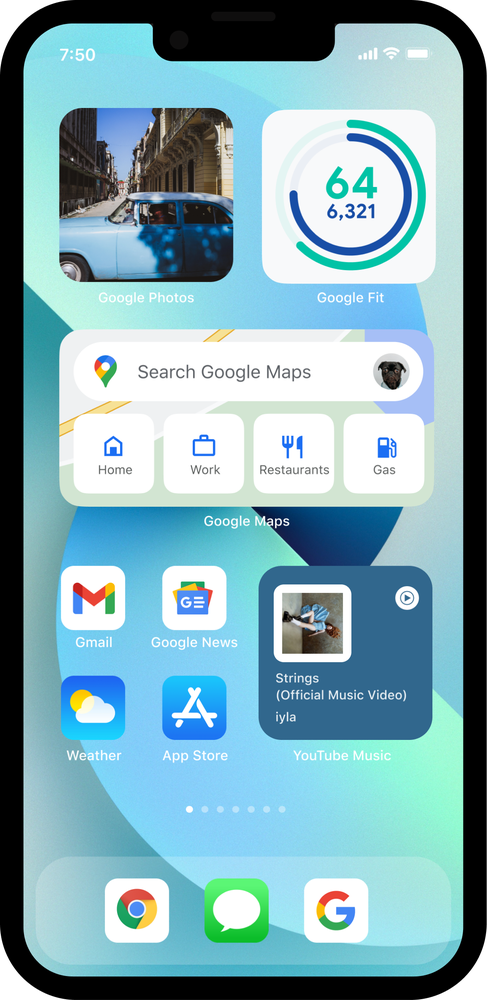
Bring the best of Google to your iPhone 13
Just got the new iPhone 13? Check out these tips to help you bring the best of Google to iOS.
Personalize your Home Screen
We know how important it is to get your Home Screen just right — and you can personalize it with our selection of widgets. With the right combination, you’ll never even have to leave your Home Screen to catch up on the latest.
For example, you can search the web, keep an eye on your commute, review your latest workout, and rock out to your favorite playlist all at once with our Google app, Google Maps, Google Fit and YouTube Music widgets.

HUAWEI student developers: crescere in una community di sviluppatori

Instagram sospende il progetto per social under 13

Get creative with Google Illustrations
A picture is worth a thousand words, as the saying goes. And that’s definitely true online, where often we choose a single picture to represent our digital identities. On Google, a single image acts as a reflection of you across a variety of products, like when you send an email, write a comment on a document or share your location with your family on Maps.
Of course, people have different preferences of how they want to be represented digitally. Some prefer a photo of themselves, others might select a pet, and there are those who choose an object that might show a hobby or causes they support. But for some people, there isn’t an option that’s a good fit for them. Access to technology, social context or privacy concerns might prevent them from using an actual photo as a profile picture.
To give everyone more safe, creative and personalized options for profile pictures, we are introducing new Google Illustrations. Google Illustrations are a collection of customizable images that anyone can use to design the image of their choice to represent them across most Google products.

How Influencers & Best Answer Content Help B2B Marketers Dominate in Search #CMWorld
Great content isn’t so great if it’s not easy to find. And findable content isn’t so effective if it’s not trusted.
Content is the reason search engines began and yet many B2B content marketers are not taking full advantage of opportunities to attract customers that are actively looking. Instead, the content marketing function at many B2B companies is more about creating content and not so much about promoting it.
Where Has the Marketing in Content Marketing Gone?
The problem with content marketing that focuses mostly on content creation is that the marketing is missing. Sure, B2B brands can throw advertising at their new content to attract visitors – but do B2B buyers love clicking on ads?
Fewer than 1 in 5 US adults trust social media ads. eMarketer
Compare the experience of clicking on an ad vs. seeing relevant information that answers the question behind the search effort? There’s an argument to be made that clicking on an organic search result and seeing content that credibly and effectively provides answers to the questions a buyer has, is a much better search experience than ads driving visitors to a landing page.
Of course there’s nothing wrong with running ads in on social networks or on search engines . If done well, it can be highly effective. But B2B marketers that limit the discovery of their content to advertising are missing the opportunity to create are more meaningful and trusted experience for buyers.
By optimizing the search experience for both findability and credibility, B2B content marketers can help their brands be the best answer for the questions that drive customers to use search engines. And not only search, but any source of information discovery.
A better search experience is not limited to simply ranking for popular keywords. Connecting interested buyers with the information they need, wherever they are in their journey, means an intentional effort to create findable, credible content that buyers can trust and benefit from.
So how can B2B marketers optimize for search and customer experience with their content?
Say hello to E.A.T. Expertise, Authoritativeness and Trustworthiness
Here’s a deeper explanation of E.A.T., but basically it represents important characteristics of content that Google is looking for when deciding the most relevant and helpful content to show searchers. In other words, what content is the best answer for your customers?
Experts on E.A.T. and SEO like Lily Ray have produced substantial content on what to do and what not to do when it comes to E.A.T and search engine optimization. Within the array of tactics marketers can take to demonstrate expertise, authoritativeness and trustworthiness, there is a distinct opportunity for B2B marketers to consider how key opinion leaders, industry experts and influencers can play a role in their content.
When it comes to content and B2B influencers, we’ve covered that story from A to Z over the past 9 years or so. B2B marketers know that partnering with influencers creates a number of advantages:
- Industry experts can add credibility to brand content
- Influencers can help lesser known B2B brands build their exposure and credibility in the marketplace more quickly
- Trusted influencers can help B2B brands c0-create more authentic content that resonates with buyers
- Influencer partners can help B2B brands create more content than they could on their own
- Key opinion leaders can drive conversations about topics important to brands and their customers through content
- Influencers can help create and promote brand content to new audiences that ignore traditional tactics like ads
- B2B brands that develop relationships with the experts in the industry that customers listen to can realize important marketing objectives like increased advocacy for the brand and its solutions
Those are just some of the reasons B2B brands engage with influencers. But what about the SEO value of the expertise, authority and trust that influencers can bring to content marketing?
That’s exactly what I’ll be presenting on this week at Content Marketing World 2021.

Here’s my session info and a link to a detailed description on the Content Marketing World conference website.
Thursday, September 30th – 2:45pm – 3:15pm (Eastern) Room 26:
How B2B Content Marketers Can Dominate in Search: Be the Best Answer
Are you a B2B marketer that has worked with influencers?

Join other B2B marketers sharing their experience and insights for the 2021 State of B2B Influencer Marketing Report. This survey provides B2B marketers with all sizes and levels of experience working with influencers the opportunity to help elevate the practice of influencer marketing in B2B. Take the Survey today and get early access to the Report plus some great incentives.
The post How Influencers & Best Answer Content Help B2B Marketers Dominate in Search #CMWorld appeared first on B2B Marketing Blog – TopRank®.

The future of attribution is data-driven
In the face of a changing privacy landscape, marketers need new measurement approaches that meet their objectives and put users first. This is why we’ve invested in new tools to help you future-proof your measurement.
One critical tool is machine learning, which can be used to fill the gaps in observed data and unlock new insights into consumer behavior. For example, conversion modeling powered by machine learning allows you to preserve measurement even when cookies or other identifiers aren’t present. Data-driven attribution in Google Ads takes this a step further. It uses advanced machine learning to more accurately understand how each marketing touchpoint contributed to a conversion, all while respecting user privacy.
As the industry continues to evolve, last-click attribution will increasingly fall short of advertisers’ needs. The most successful marketers will switch to a data-driven approach. While Google Ads offers data-driven attribution, some advertisers haven’t been able to use it due to minimum data requirements or unsupported conversion types. To help all advertisers take advantage of better attribution and improve their performance, we’re removing the data requirements and adding support for additional types of conversions. With these improvements, we’re also making data-driven attribution the default attribution model for all new conversion actions in Google Ads.
Better performance with better attribution
Unlike other models, data-driven attribution gives you more accurate results by analyzing all of the relevant data about the marketing moments that led up to a conversion. Data-driven attribution in Google Ads takes multiple signals into account, including the ad format and the time between an ad interaction and the conversion. We also use results from holdback experiments to make our models more accurate and calibrate them to better reflect the true incremental value of your ads. And like all of our measurement solutions, we respect people’s decisions about how their data should be used and have strict policies against covert techniques, like fingerprinting, that can compromise user privacy.
Advertisers around the world have seen better results by switching to data-driven attribution. When combined with automated bidding strategies, data-driven attribution can drive additional conversions at the same cost-per-acquisition. This is because our systems can better predict the incremental impact a specific ad will have on driving a conversion, and adjust bids accordingly to maximize your ROI.
Data-driven attribution allows us to assign the right credit to every touchpoint. With automated bidding and data-driven attribution, we’ve seen an 18% reduction in cost of sales over last-click.
Since we moved our search and display campaigns in Google Ads to data-driven attribution, we’ve seen an 8% increase in overall incremental conversions with an 8% lower cost per lead.
More campaigns, more advertisers
Today, data-driven attribution supports Search, Shopping, Display and YouTube ads. But we know that data-driven attribution can improve advertiser performance, regardless of campaign or conversion type. That’s why we’re adding support for more conversion types, including in-app and offline conversions. We’re also removing the data requirements for campaigns so that you can use data-driven attribution for every conversion action.
We’ll roll out data-driven attribution as the default model starting in October and plan to have it in all Google Ads accounts by early next year. You’ll still have the option to manually switch to one of the five rule-based attribution models. With these upgrades, data-driven attribution can help every advertiser clearly understand the full value of their Google Ads campaigns.
This is one example of our commitment to helping you make every marketing dollar count, even as the industry continues to shift. We’ll continue to work to use advances like machine learning to bring you measurement tools that deliver performance while also respecting user privacy.

7 giorni di Samsung: una settimana di offerte da non perdere
Google Store, sconti fino al 23% per i 23 anni di Google

2 mesi di NOW Sport gratis con la NOW Smart Stick in offerta

La Cina punta a una base lunare permanente nel 2030
Gli smartphone di OPPO in sconto su Amazon fino al 30%

Netflix, serie TV e film in uscita tra il 27 settembre e il 3 ottobre

Google Foto, presto le Cartelle bloccate. Novità per Android Auto
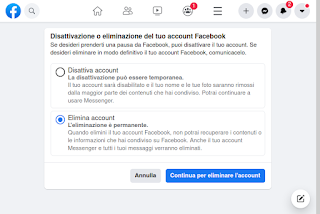
“Facebook è un’azienda marcia”: Cory Doctorow spiega perché. Documentando i danni
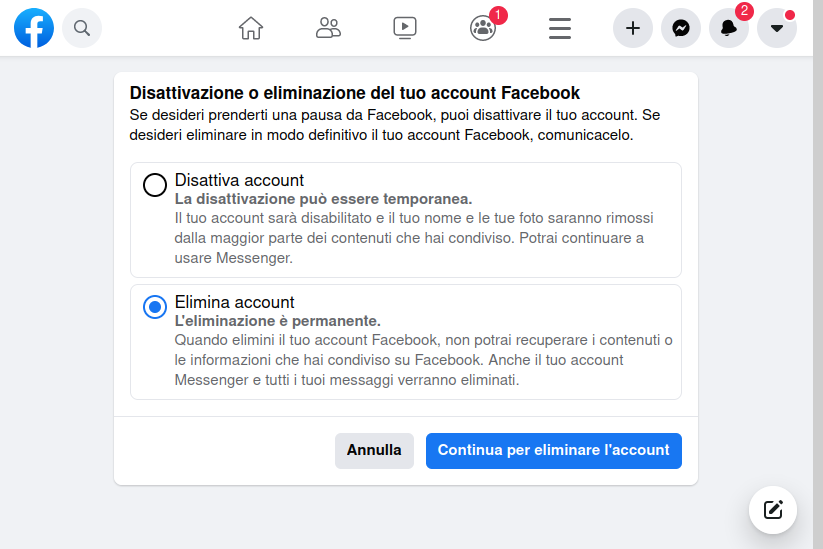
Traduco qui un magistrale, implacabile thread Twitter di Cory Doctorow, che si può leggere integralmente in originale anche qui su Pluralistic.net. Mi sono permesso di aggiungere alcuni link e alcune note di chiarimento. Eventuali errori e refusi sono solo colpa mia.
Facebook è un’azienda marcia; marcia a partire dalla testa. Il suo fondatore, il suo consiglio d’amministrazione e i suoi massimi dirigenti sono delle persone sociopatiche e dei mostri che commettono crimini contro l’umanità (detto senza iperboli e senza prenderci in giro). Mentono, barano, rubano. Sono fra i più grandi criminali della storia.
Dato che Facebook è un’azienda orribile gestita da persone orribili, periodicamente esplode generando uno scandalo atroce. A volte i whistleblowers (lanciatori d’allerta) o i giornalisti rivelano crimini storici, compreso l’aiuto intenzionale a fomentare il genocidio (senza però limitarsi a questo).
A volte questi scandali sono attuali: Facebook annuncia allegramente che farà qualcosa di orribile, oppure veniamo a sapere di qualcosa di orribile in corso, grazie alle fughe di notizie o alle indagini.
Grazie a un passato di fusioni anticoncorrenziali (WhatsApp, Instagram, Onavo e altre) basato su promesse fraudolente agli enti di sorveglianza antitrust, Facebook è cresciuta fino ad avere quasi tre miliardi di utenti. Solo che Facebook in realtà non ha utenti: ha ostaggi.
Come dimostrato dai documenti interni di Facebook stessa, l’azienda non solo compera i concorrenti in modo che gli utenti non abbiano un altro luogo dove fuggire, ma introduce intenzionalmente dei “costi di migrazione” (switching costs) elevati in modo che lasciare il sistema sia più doloroso.
https://www.eff.org/deeplinks/2021/08/facebooks-secret-war-switching-costs
Per esempio, i documenti interni di Facebook mostrano che il suo responsabile per i prodotti fotografici decise di sedurre gli utenti in modo che affidassero a Facebook le proprie foto di famiglia, perché in questo modo lasciare Facebook avrebbe comportato perdere i ricordi dei figli, dei nonni scomparsi, eccetera.
Tutti odiano Facebook, specialmente i suoi utenti. Lo scopo dei costi di migrazione elevati, dopotutto, è aumentare la sofferenza per chi migra, in modo che Facebook possa infliggere ulteriori abusi ai propri utenti senza temere che se ne vadano e lascino perdere tutto.
La missione di Facebook è aumentare le dimensioni del panino farcito di merda (shit sandwich) che ti può forzare a mangiare prima che tu decida di andartene. Ma l’azienda non è una semplice sadica: i panini farciti di merda hanno un modello commerciale. Più ostaggi riesce a prendere, più può spillare agli inserzionisti. Che sono i veri clienti di Facebook.
Il termine educato per quello che ha Facebook è “mercato a due facce” (two-sided market): vendere gli inserzionisti agli utenti e gli utenti agli inserzionisti. Il termine tecnico è “monopolio e monopsonio” (un monopsonio è un mercato che ha un singolo acquirente).
Il termine colloquiale è “racket”. Truffa. Piaga. Bezzle.
[bezzle è un termine coniato dall’economista John Kenneth Galbraith negli anni Cinquanta del secolo scorso per indicare un’appropriazione indebita (embezzlement) non ancora scoperta; è in sostanza l’intervallo di tempo fra quando il truffatore ottiene il proprio guadagno illecito e il momento in cui il truffato percepisce di essere stato truffato]Facebook spenna gli inserzionisti sulle rate card [tariffari delle inserzioni], poi mente a proposito del reach [portata] delle proprie pubblicità (come quando mentì sulla popolarità dei video, mostrando una “svolta ai video” [pivot to video] in tutti i mezzi di comunicazione che portò alla bancarotta decine di siti di notizie e di intrattenimento).
Facebook non partì con l’intento di distruggere il giornalismo manipolando i prezzi delle inserzioni, mentendo agli inserzionisti e ai produttori di media. Partì con l’intento di acquisire un monopolio e di estrarre pigioni da monopolio dagli inserzionisti e dagli editori, con un’indifferenza patologica ai danni che queste frodi avrebbero causato agli altri.
Avendo dimostrato di essere disposta a distruggere i giornalisti e i produttori di media pur di estrarre qualche miliardo in più per i propri azionisti, Facebook si è fatta parecchi nemici nei media.
Se sei un whistleblower che ha una storia da raccontare, c’è un giornalista il cui direttore allocherà le risorse necessarie a scrivere in dettaglio la tua storia. La combinazione di un’azienda marcia e di un gran numero di giornalisti incazzati produce molta stampa negativa per l’azienda.
Ma resta il fatto che Facebook ha un vasto bacino di ostaggi, a miliardi, e decide cosa vedono e quando e come lo vedono. Un tempo dicevo, scherzando con i miei amici attivisti per i diritti umani, che l’uso migliore di Facebook è mostrare alla gente come e perché abbandonare Facebook.
La risposta di Facebook è stata prevedibile. Come scrivono Ryan Mac e Sheera Frenkel sul New York Times, il Project Amplify di Facebook è un’iniziativa, diretta da Zuckerberg, per promuovere sistematicamente la copertura positiva di Facebook e del suo fondatore, compresi articoli generati da Facebook stessa.
https://www.nytimes.com/2021/09/21/technology/zuckerberg-facebook-project-amplify.html
In altre parole, alcuni dipendenti di Facebook hanno l’incarico di scrivere soffietti, ossia articoli che esaltano quanto è grande l’azienda, e l’algoritmo di Facebook pompa questi articoli rispetto a quelli dei veri giornalisti che presentano resoconti dettagliati, documentati e con fonti multiple della condotta fraudolenta e depravata dell’azienda.
Il Project Amplify è una svolta rispetto alla politica di Facebook, durata a lungo, di pubblicare scuse non sincere per i propri scandali. Fonti dell’azienda hanno detto ai giornalisti che tutti hanno capito che queste scuse non convincono più nessuno, per cui l’azienda è passata a spingere rosee ciarlatanerie.
Uno dei dirigenti di questo progetto è Alex Schultz, “un veterano in azienda da 14 anni che è stato nominato chief marketing officer l’anno scorso,” ma l’impulso principale proviene da Zuckerberg stesso, uno degli uomini più odiati del pianeta.
Amplify è semplicemente una delle strategie di Facebook per distorcere il dibattito riguardante l’azienda. A luglio ha castrato Crowdtangle, uno strumento di analytics ampiamente utilizzato, che dimostrava che i post più popolari di Facebook erano la disinformazione demenziale di estrema destra e le cospirazioni.
https://pluralistic.net/2021/07/15/three-wise-zucks-in-a-trenchcoat/#inconvenient-truth
Inoltre Facebook ha dichiarato guerra legale senza quartiere (accompagnata da una campagna di disinformazione) per far fuori Adobserver, un progetto della New York University che traccia la disinformazione politica pagata sulla piattaforma.
https://pluralistic.net/2021/08/05/comprehensive-sex-ed/#quis-custodiet-ipsos-zuck
Facendo chiudere Crowdtangle e Adobserver, Facebook spera di controllare le scoperte fatte dal mondo accademico sul ruolo dell’azienda nella disinformazione, nell’odio e nelle molestie. L’azienda gestisce un proprio portale di ricerca, nel quale si pretende che i ricercatori accademici accedano a dati riguardanti la piattaforma.
Ma così come ha fatto con i giornalisti che pubblicano articoli a proposito di Facebook, l’azienda ha sommerso di offese i ricercatori accademici che hanno svolto ricerche su di essa.
I dati del suo portale erano difettosi e quindi esponevano le tesi di dottorato e di master al rischio di dover essere ritirate. A metà tesi, i ricercatori si sono ritrovati al punto di partenza.
Col senno di poi, la decisione di Facebook di sfruttare il proprio algoritmo per promuovere ciarlatanerie favorevoli all’azienda sembra inevitabile. Non solo nessuno crede più alle scuse dell’azienda (ammesso che ci abbia mai creduto), ma Facebook sembra incapace di assoldare degli spin doctor competenti.
Considerate la bomba giornalistica del Wall Street Journal, i Facebook Files: una serie di resoconti che documentano dettagliatamente quanto l’azienda sia disposta a danneggiare i bambini, commettere frodi e a consentire a milioni di persone favorite e potenti di violare impunemente le sue regole.
https://www.bloomberg.com/news/newsletters/2021-09-16/facebook-s-promised-to-gain-the-public-s-trust
La risposta di Facebook è stata sinceramente patetica: in un blando post, il suo principale agente pubblicitario, il diffusamente disprezzato politico britannico Nick Clegg, pagato milioni per rappresentare Facebook sulla scena mondiale, ha denigrato il giornalismo del WSJ senza presentare alcuna smentita dei fatti.
https://about.fb.com/news/2021/09/what-the-wall-street-journal-got-wrong/
È il genere di difesa maldestra per la quale Facebook è famosa (o malfamata). Chi può dimenticare il disastro assoluto del suo programma Internet Basics in India, dove ha corrotto le compagnie telefoniche per esentare dai limiti sui dati cellulari se stessa e i servizi che sceglieva?
https://www.theguardian.com/technology/2016/may/12/facebook-free-basics-india-zuckerberg
Questa manovra per assassinare la neutralità della Rete, spacciata per un modo di portare Internet ai poveri (cosa che non fa assolutamente), è stata oggetto di una consultazione da parte degli organi di controllo delle società telefoniche indiane.
Facebook inviò degli allarmi ingannevoli a milioni dei propri utenti indiani, ingannandoli affinché mandassero un fiume di lettere precompilate agli organi di controllo, supplicandoli di lasciare intatto il programma Internet Basics.
Ma chiunque scrisse la lettera precompilata non si prese la briga di controllare se era pertinente alle questioni affrontare dagli organi di controllo, e così questi milioni di lettere furono ignorati.
Facebook perse! È quasi come se la gente capace di combattere le battaglie politiche non se la senta di lavorare per Facebook e le uniche risorse umane che l’azienda riesce ad attirare sono i coglioni opportunisti che nessuno prende seriamente e che tutti detestano.
Strana, questa cosa.
Testo originale inglese pubblicato sotto licenza CC-BY-4.0. Questa traduzione è pubblicata con la medesima licenza e vi arriva gratuitamente e senza pubblicità grazie alle donazioni dei lettori. Se vi è piaciuta, potete incoraggiarmi a pubblicarne ancora facendo una donazione anche voi, tramite Paypal (paypal.me/disinformatico) o altri metodi.

UFFICI PUBBLICI, COVID ALIBI PER NON FARE NULLA
Uffici pubblici durante il covid. Pubblichiamo, con una punta di disappunto e molta capacità di sopportazione dei soprusi, ormai collaudata da anni di pazienza, questo articolo che ci è giunto…
L’articolo UFFICI PUBBLICI, COVID ALIBI PER NON FARE NULLA scritto da REDAZIONE TRENDIEST proviene da Assodigitale.