Podcast del Disinformatico RSI 2021/07/02: Rapporto UFO e testimonianze, attacco ai dischi rigidi, stranezze di Google Translate

È disponibile il podcast di oggi de Il Disinformatico della Rete Tre della Radiotelevisione Svizzera, condotto da me insieme a Tiki. Dalla settimana prossima il programma avrà una veste differente ed estiva: ci sarò io a raccontare in dettaglio una grande storia dell’informatica o della disinformazione. Questi sono gli argomenti trattati nella puntata di oggi, con i link ai rispettivi articoli di approfondimento:
- Il famoso rapporto militare sugli UFO che tutti aspettavano è stato pubblicato. Gli ufologi piangeranno, come previsto
- Perché non ci si può fidare delle testimonianze ufologiche prive di reperti a supporto? Un caso personale
- Qualcuno sta cancellando i dati dai dischi My Book Live di Western Digital connessi a Internet. Scollegateli
- Ehi Google, come si dice in inglese “salsicce e friarielli”?
Il podcast di oggi, insieme a quelli delle puntate precedenti, è a vostra disposizione presso www.rsi.ch/ildisinformatico (link diretto) ed è ascoltabile anche tramite feed RSS, iTunes, Google Podcasts e Spotify.
Buon ascolto!

Diritti d’Autore, cosa cambia con la sentenza su YouTube?

How competing unlocked this intern’s coding passion
Welcome to the latest edition of “My Path to Google,” where we talk to Googlers, interns and alumni about how they got to Google, what their roles are like and even some tips on how to prepare for interviews.
Today we spoke with Livia Seibert, a software engineer intern working virtually in Pennsylvania. Find out how a fun coding competition with her dad led her to becoming an intern at Google.
What do you do at Google?
I’m a software engineering intern. I’m working on a command line tool that automates the creation of experiments to make it safer, easier and faster for engineers to try out new changes. I like my project because I’m able to have a positive impact on other engineers by helping to speed up their workflow.
What made you decide to apply to Google?
At the beginning of my sophomore year of college, I decided to apply to software engineering internships for the first time. I had taken classes the summer before, but I did not have any internship experience at that point. Many internships I saw listed at other companies only took junior-year interns or were unlikely to consider applicants without experience, so I was really excited when Google talked about the STEP internship during a recruiting visit on campus, and I decided to apply for it.
How would you describe your path to Google?
I was first introduced to computer science when I was 13 because my dad had seen a YouTube video about the importance of coding and the lack of computer science education in schools across the U.S. I was pretty resistant to learning how to code at the time, since I went to a small all-girls school where coding wasn’t a super popular course of study. My dad ended up challenging me to see which of us could finish an online Python class fastest, and after a week he had given up on it and I ended up being super interested in the material. I taught myself how to code using online resources throughout middle school, and when I got to high school I was able to take CS classes. Since then, I’ve always known that I want to go into software engineering.
How did the application and interview process go for you?
I applied to Google directly. I was very nervous about the technical interview process because it was completely new to me, but it ended up being a much less stressful experience than I had anticipated. The engineers who conducted my interviews were incredibly kind and supportive, and each interview felt more like a conversation than the interrogation I was expecting.
What’s one thing you wish you could go back and tell yourself before applying?
One thing I wish I could go back and tell myself before applying is to have more confidence. I think that it’s easy to get intimidated by the large number of very talented people that apply to Google every year, and to experience imposter syndrome even once you’ve gotten the job. Instead, it’s important to focus on your own accomplishments and avoid comparing yourself to others.
Complete the following: “I [choose one: code/create/design/build] for…”
Inclusivity. As a woman in tech, I value making sure that underrepresented groups are able to have their voices heard in order to create tech that works for everyone.

25 anni di Quake, rivoluzione 3D nei videogiochi

Sono già passati 25 anni dal debutto di uno dei videogiochi più importanti di sempre. Per i pignoli, la data esatta era il 22 giugno 1996. Quel giorno la iD software presentò Quake, uno sparatutto in soggettiva cupo e labirintico che fu il primo a offrire grafica interamente tridimensionale, personaggi compresi, su un normale PC dell’epoca (che quando andava bene era un Pentium a 75 MHz, come racconta in dettaglio Howtogeek).
Prima di Quake, i giochi per PC offrivano al massimo spostamenti su un piano bidimensionale. Quake, invece, consentiva al giocatore di saltare e di guardarsi intorno facilmente grazie al mouselook (l’uso del mouse, joystick o simile per cambiare l’orientamento del protagonista). Questa maggiore libertà di movimento fu rivoluzionaria e completamente immersiva, perlomeno per gli standard dell’epoca, che prevedevano risoluzioni oggi imbarazzanti (320 x 200, per esempio, roba che nel 2021 neppure il più misero dei telefonini oserebbe proporre).
Quake fu il terzo successo tecnicamente rivoluzionario della iD software, dopo Wolfenstein 3D (1992) e Doom (1993). Come bonus offriva inoltre una colonna sonorafirmata da Trent Reznor dei Nine Inch Nails. Bonus nel bonus: Reznor è anche la voce del personaggio principale, il Ranger.
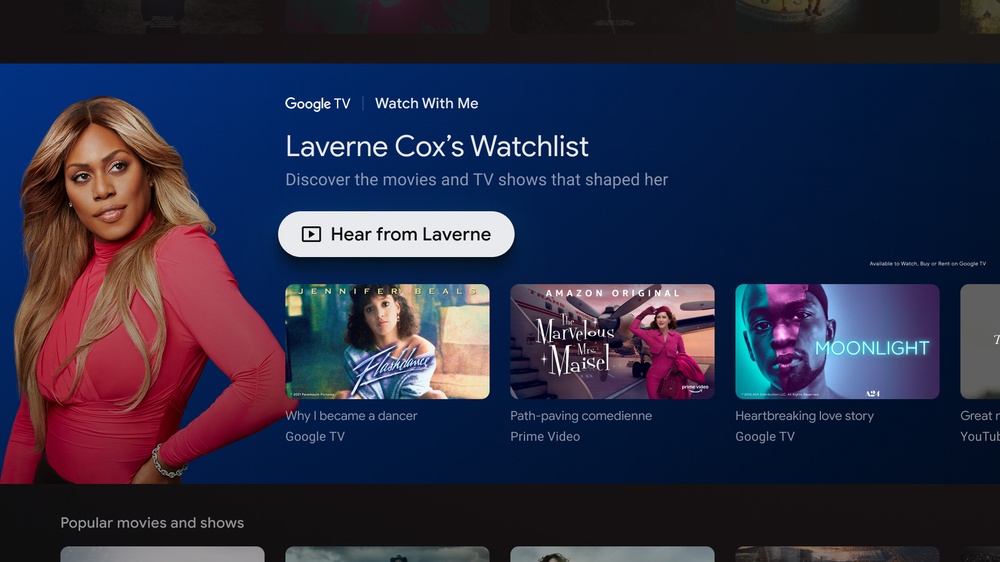
Watch With Me on Google TV: Laverne Cox’s watchlist
Movies and TV can make us laugh, cry and even shape who we are. Our watchlists can be surprisingly revealing. We’re teaming up with entertainers, artists and cultural icons on a new Watch With Me series on Google TV to share their top picks and give you a behind-the-scenes look at the TV and movies that inspired them.
Laverne Cox is an Emmy-nominated actress and LGBTQ+ advocate. Despite spending plenty of time on camera, she’s also a fan of being in the audience. “I love movies, I love television,” she says. “I still watch television and film as a way to learn, to escape, to be moved, to laugh, to cry.”
We recently had a chance to sit down with Laverne to learn more about what she likes to watch — and what her own Google TV watchlist looks like. “My watchlist is all of who I am and everything that has shaped me or helped me understand myself better,” she says. “Understand humanity better. Understand the craft of acting and filmmaking better. And, it makes me smile.”
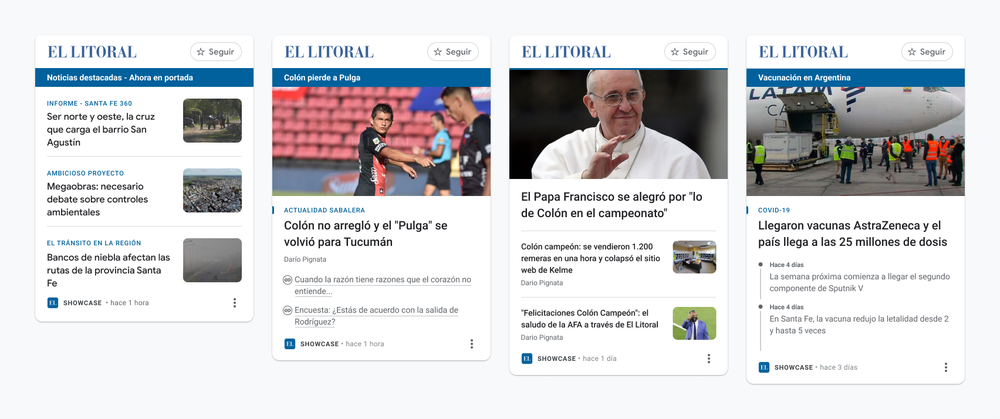
How local news in Argentina is using News Showcase
Editor’s note: This is the first in a series we’re doing featuring local publishers using Google News Showcase. Thanks to the three Argentinian publishers who shared their thoughts and insight on the impact that News Showcase is providing for their coverage. In the coming months we’ll have more from local News Showcase news partners around the globe.
ADIRA, The Asociación de Diarios del Interior de la República Argentina, is a regional press association that brings together newspaper publishers throughout Argentina. Many of our partner publications have worked with Google over the years, through Google News Initiative, trainings and now nearly 50 of them are a part of Google News Showcase. Google’s efforts have been important in helping our journalism reach and develop stronger relationships with readers and diversify our revenue.
The transition from print to digital for newspapers outside the metropolitan area of Buenos Aires is slow and difficult, where smaller papers can’t generally afford to hire the necessary tech professionals to make digital changes needed to reach readers. But it has been easy for smaller publications to use News Showcase, helping them reach new audiences.
News Showcase, alongside Google’s other product efforts and programming from the Google News Initiative, has great potential to grow and deepen reader relationships for newsrooms in Argentina through new ways to highlight stories, greater control over showcasing our brand and additional tools for paywalled content.
Here is how three local ADIRA publications — El Litoral, La Opinión de Rafaela and La Gaceta — are using News Showcase to expand their digital strategies and build relationships with readers.
El Litoral
Magalí Suarez, Content Coordinator at El Litoral, Santa Fe, Argentina
Founded in 1918, El Litoral is a regional newspaper in Santa Fe, Argentina, producing several supplements, specialized magazines, a second provincial newspaper, a TV channel and more.
News Showcase came at a critical time for all media, especially for those of us who are strongly betting on digital growth. Even in the middle of an unprecedented health and economic crisis, we’ve continued to produce quality content for our readers. News Showcase allows us to “package” our journalists’ content, provide context to the information and offer readers more tools so they can inform themselves around stories responsibly.
Overall News Showcase has allowed us to improve engagement by including related news, create panels that better position our stories/content for our target audience, highlight the journalism that distinguishes us from other news organizations and give our readers a way to get information and context in an easy, organized way.
We think News Showcase has helped us to solve complex challenges such as how to better engage with readers in a crowded news environment. This is a very good start in laying the foundations for sustainability in the future.
Mentorship inspires Deyrel Diaz and future researchers
During his undergrad, Deyrel Diaz attended a VR hackathon where he tried out an aircraft training demo. While Deyrel, a computer science (CS) student, had experience with 3D modeling and coding, seeing the results in action was all new. “This was the first time I’d seen the two mediums interact on such an immersive level,” he says. “Seeing how this simulation was used for real world training and research…I wanted to be a part of that.” Today, Deyrel is a PhD student studying Human-Centered Computing at Clemson University with a focus on mixed reality (AR/VR) research. He’s also a graduate of the most recent class of the CS Research Mentorship Program (CSRMP), one initiative by Google Research to support students from historically marginalized groups (HMGs) in computing research pathways.
Recognizing that the work CS Researchers are doing has broad implications for billions of people across the globe, CSRMP aims to ensure that the community of researchers represents the experiences, perspectives, concerns and creative enthusiasm of all the people of the world, by supporting the pursuit of computing research for undergraduate and graduate students from HMGs through mentorship, peer networking and career exploration.
In June, CSRMP graduated a class of 281 students from 110 universities across the United States and Canada. We spoke with Deyrel to learn more about his experience and plans for his journey in computing research. Here’s what he had to say:
What motivated you to participate in CSRMP?
Through programs and conferences, I learned just how important it is to have representation in the development and design of technology. When I read about CSRMP, I saw the opportunity to not only help expand that community by connecting with other professionals in the field, but to also learn alongside some of the best and brightest students from around the world.
How has CSRMP influenced your research journey?
The pod meetings influenced my journey the most. I was able to build relationships with other phenomenal student researchers and my CSRMP mentor. We discussed the challenges we face while conducting computing research, and we shared lots of helpful tools and resources. These meetings were also a place to find inspiration and motivation, and helped me learn about other career fields, which I might incorporate into my future research.
What are you proudest of?
I’m proudest of winning two national fellowships that will fully fund my PhD studies. The support system my mentors created for me really helped guide me in the right direction, so it’s thanks to this strong mentorship I was able to accomplish this. Plus, having these fellowships gave me the time to take part in programs where I can mentor other up-and-coming underrepresented students and expose them to not only computing research, but graduate school in general.
What advice do you have for students like you who are curious about starting their journeys as researchers in computing?
The field of computer science touches anything and everything, and if there’s something it hasn’t, you could be the person who makes it happen. That said, there’s no reason for you to pursue something you don’t love, so seek out professors, hack-a-thons, demos or certificate programs to learn more about different fields and how you can use them in personal projects. Don’t wait for someone to tell you what to do, just start tinkering and create something you’d have fun using.
Congratulations to all of the students who graduated from the CS Research Mentorship Program in the first half of 2021! We look forward to supporting future students who are taking computing research by storm like Deyrel Diaz. Applications are now open for the September 2021 mentorship cycle – apply by July 28, 2021.
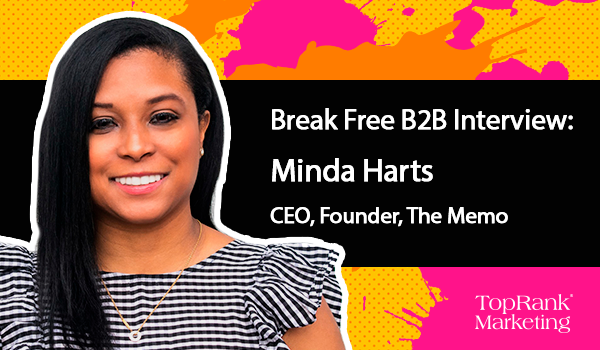
Break Free B2B Marketing: Minda Harts of The Memo on Having Courageous Conversations
When it comes to B2B influencer marketing, it’s only natural to wonder just what an industry influencer actually looks like?
For our third season of Break Free B2B Marketing video interviews, we’re featuring conversations with leading B2B influencers, and examining the issues that each subject matter expert is influential about in their specialized industry.
For over a decade our team at TopRank Marketing has nurtured a strong community of leading influencers, developing close relationships with SMEs in many industries, and we’re delighted to share our latest episode of Break Free B2B Marketing.
2020 put a lot of things into laser focus that weren’t getting the attention they historically deserved. One of those things has been the necessity of greater diversity in the modern workplace. There’s no denying the fact that approximately 68 percent of C-level executives are white men and only some four percent are women of color. That’s no longer acceptable, and many businesses are actively seeking the advice of experts who can help them break free from outdated norms so they can move into a brighter, more creative, more diverse future.
One of the leading experts on how that can be accomplished is Minda Harts. Minda is a sought after speaker and thought leader who focuses on the topic of advancing women of color in the workplace and building diverse teams. She founded The Memo LLC, a career development company for women of color, and has published a similarly named book that gives actionable advice on this same topic. The Memo: What Women of Color Need to Know to Secure a Seat at the Table can be found at your favorite bookseller or online right now.
Minda is the sort of voice to listen to for any B2B marketer who wants to learn how to better speak to the needs and wants of a diverse population. That’s why we asked her to join us for the latest episode of our Break Free B2B Marketing Interview series.
Break Free B2B Interview with Minda Harts
If you’re interested in checking out a particular portion of our discussion, you can find a quick general outline below, as well as a few excerpts that stood out to us.
- :21 – Introduction to Minda Harts
- 2:16 – Micro and macro aggressions in the modern workplace
- 3:18 – “Can you give us an example, maybe of a courageous conversation you’ve had or guided someone to have, and what happened?”
- 8:00 – Office politics and the benefits of building a squad
- 9:50 – What can business leaders be doing now to help build a more inclusive future?
- 12:53 – “What’s been surprising or interesting about working with and counseling companies on these initiatives?”
- 15:33 – Not silencing yourself
- 17:59 – “In terms of helping women of color secure their seat, what should be burned or eliminated?”
- 19:15 – Movement forward and areas of progress
- 21:55 – “What do you hope for in the next few years? What does the workforce look like? How is it different? Better?”
- 23:00 – Companies or leaders who are making positive steps toward equity
- 26:35 – “What does it take to be a thought leader, subject matter expert, or influencer?”
- 31:38 – How to find Minda Harts online
Sue: How do you counsel and guide women of color to deal with having courageous conversations and other issues?
Minda: Even in the moment when I’ve dealt with some of those micro or macro aggressions, depending on how you see it, I wasn’t sure how to respond to it, because it takes you off guard, right, you’re not prepared. And sometimes when it’s happening — your colleagues — especially if you’re the only woman, or the only black woman, might think that it’s a joke, or that so and so doesn’t mean any harm. But those things, again — intentional or unintentional — they still land on certain communities where it is harmful. And so what I would say is, one thing that I didn’t do, which is part of why I wrote the book, is to center yourself as a woman in the workplace. If something is harmful, have those courageous conversations to let people know that this is not okay. Right. And you can do that in a way that doesn’t have to be in front of everyone, but I wish that I would have been more courageous in bringing those kinds of tough conversations to the forefront.
[bctt tweet=”“If something is harmful, have those courageous conversations to let people know that this is not okay.” — Minda Harts @MindaHarts #BreakFreeB2B ” username=”toprank”]Minda: And that’s okay — I mean, we have to start somewhere. And that’s where I want leaders to realize this isn’t a problem that you’re going to solve in three Zoom meetings, right? This is going to take some time. But we have to start somewhere.
Sue: Right, exactly. Okay, so I love this. You say, don’t take shit from anyone. And as a woman, you know, typically working in tech companies and running my own agency, I know that being strong, and having opinions and a clear direction, and not settling, stating a vision with passion that can be perceived as maybe being kind of a bitch. And so this gets tough because sometimes I find myself feeling beat down and ashamed for being strong. And I can only imagine that this would even be harder for women of color. Can you talk about that a little bit?
Minda: They’re both true. And I think you made a really good point — that oftentimes, people will say, “Well, I’ve had it hard too,” right? And two things can be true at the same time, right? You could experience the same things, and then I can experience it, but it might be that your proximity to power is a little bit better than mine. Right? But we are experiencing these situations. And I think that the reason why I say don’t take anything from anybody else, is because for so long as women, we’ve had to silence ourselves, right? We’ve had to silence ourselves at the expense of our own well being. You’re even seeing it, regardless of what political party, in this idea of being too ambitious — what does that even mean? Because somebody wants more, or in their lives they want to do a good job — they’re trying to figure out what good looks like for them. I think because that has been a narrative that we didn’t create, that’s why it’s important that we have to dismantle these systems, because these systems would say that any woman that has a perspective or has ideas, that she needs to sit down and know her place.
Minda: But that is part of the system that never saw us at the table. Right? Those are those systems. So I think we have to call it out when we see it, and I think we have to unlearn that thinking too. Because being in these environments, we would then question ourselves, “Well, maybe I shouldn’t speak up,” or those sorts of things. I think with women of color in particular, it’s a fine line, right? Don’t be too aggressive. Don’t say too much. You know, don’t be angry — so it’s that office politics — trying to find that right angle. I think it goes back to having a squad, because if you have relationships inside the workplace, somebody can say, “You know what, that’s not the Susan I know, actually,” and I think that when we know each other better, we can stand up for each other in those moments and really dismantle a culture that would say that about women.
[bctt tweet=”“We have to dismantle these systems, because these systems would say that any woman that has a perspective has ideas, and that she needs to sit down and know her place.” — Minda Harts @MindaHarts #BreakFreeB2B ” username=”toprank”]Keep your eye on the TopRank Marketing Blog and subscribe to our YouTube channel for more Break Free B2B interviews. Also check out episodes from season 1 and season 2.
Take your B2B marketing to new heights by checking out out previous season 3 episodes of Break Free B2B Marketing:
- Episode 1: Kevin L. Jackson, GC GlobalNet — The Future of Cloud Computing
- Episode 2: Tim Crawford, AVOA — The New Normal
- Episode 3: Oliver Christie, PertexaHealthTech — The Future of Artificial Intelligence
- Episode 4: Liam McIvor Martin, Time Doctor — Trends in Remote Work
- Episode 5: Sarah Barnes-Humphrey, SHIPZ — The Future of Supply Chain
- Episode 6: Eric Vanberburg, TCDI — The Changing Cybersecurity Landscape
- Episode 7: Nicole Brady, SAHM Reviews — The Importance of Empathy
- Episode 8: Tamara McCleary, Thulium — Visions of the Future
- Episode 9: Dez Blanchfield, Sociaall Inc. — Joining the Conversation
- Episode 10: Keith Townsend, The CTO Advisor — Bringing Value Through Friction
The post Break Free B2B Marketing: Minda Harts of The Memo on Having Courageous Conversations appeared first on B2B Marketing Blog – TopRank®.

WhatsApp testa video e foto che scompaiono dopo la visualizzazione

Samsung lancia TV Plus e Samsung O su smartphone e tablet

Al via oggi il Green Pass digitale dell’UE
Vodafone lancia l’iniziativa Happy Cashback. Come funziona?

Instagram lavora alla sua versione dei Super Follows di Twitter

Immagini strepitose e audio impeccabile con le soluzioni di Logitech per il business