
Auto elettriche: bonus per chi ha Isee inferiore a 30mila euro
Il Ministero dello Sviluppo Economico ha chiuso il provvedimento che prevede degli incentivi per gli acquisti di auto elettriche, come stabilito dall’ultima legge di bilancio. Il testo ora passa al Ministero dell’Economia per l’approvazione finale. A quel punto l’agevolazione sarà accessibile a tutti i contribuenti il cui reddito Isee non superi il tetto massimo di 30mila euro.

DooG Reporter. La realtà raccontata. Intervista ai suoi creatori
– – di Greta V. Galimberti – Trendiest News – – – Gabriele Orlini e Lisa Zillio sono due reporter molto particolari. Lui è un fotoreporter appassionato e impenitente viaggiatore, lei una videomaker forte e talentuosa alla quale piace raccontare il mondo. Entrambi hanno una forte etica della narrazione, acquisita quando si sono accorti che l’informazione e il reportage troppo spesso stavano alle regole della società invece che a quelle della realtà, e data la…
L’articolo DooG Reporter. La realtà raccontata. Intervista ai suoi creatori scritto da REDAZIONE TRENDIEST proviene da Assodigitale.

YouTube testa un sistema per nascondere i dislike
YouTube annuncia l’inizio di una serie di test su un nuovo sistema finalizzato a occultare il numero dei dislike (ma non l’omonimo pulsante) fatti registrare da un video pubblicato sulla piattaforma. Una misura che secondo l’azienda americana si è resa necessaria a causa del proliferare del fenomeno dei “non mi piace” selvaggi, ovverosia quegli abusi del tasto dislike fatto da alcuni utenti magari per attaccare gli autori o i protagonisti di un video, piuttosto che per esprimere un giudizio sullo stesso.

Iliad, prorogato a tempo indeterminato Flash 100 5G
Iliad ha deciso di prorogare la sua offerta Flash 100 5G, la sua tariffa che offre 100GB in 4G/4G+ e 5G, minuti illimitati e SMS illimitati.

A new audio guide for our Augmented Reality Galleries
Since we launched our first Pocket Gallery in 2018, people all over the world have used the augmented reality (AR) feature to explore virtual art galleries ranging from Vermeer to Indian miniatures. With many of us missing the opportunities to explore, we have now collaborated with cultural institutions including the Jean Pigozzi Collection and J. Paul Getty Museum to create three new Pocket Galleries – one of which includes a brand new audio guide feature. Just open the camera tab in the Google Arts & Culture app to get started.
The virtual exhibition space of Jean Pigozzi’s Pocket Gallery invites you to discover highlights from its African and Japanese collections featuring 40 of its most important artworks ranging from renowned painter Chéri Samba to emerging new talent. These treasures are frequently lent to museums across the globe, but until now have never had a dedicated building of their own, making this Pocket Gallery a truly unique space.
Continue your journey with a Pocket Gallery presented by the J. Paul Getty Museum, bringing together celebrated works across 200 years of art history. Here you’ll meet cheerful crowds welcoming you to join, whether you’re craving music and merriment, dinner gatherings, or a city stroll. Dive in and experience the joys of dancing with Henri Rousseau, stolen kisses with Jean-Antoine Watteau, and concerts with Gerrit van Honthorst, all from the iconic LA-based collection.
A new way to experience a virtual exhibition space is by using sound and narration – a feature we are testing first with the guided “Brushes with the World” Pocket Gallery. Here, in each room a narrator will give a short introduction as you follow along on a tour of larger-than-life artworks. Gaze upon immersive landscapes – from Georgia O’Keeffe’s dreamy depiction of Machu Picchu to Hokusai’s majestic vision of Mount Fuji – and take in the city views of Zaha Hadid’s London or Habeeb Andu’s Lagos. As you approach each masterpiece, you will hear a bespoke soundscape inspired by the locations and objects in the paintings. Some paintings are even accompanied by additional commentary to help you learn more along your voyage. Featuring artworks from 27 cultural partner institutions that depict scenes across 24 countries. This gallery is available now on Android and coming soon on iOS.
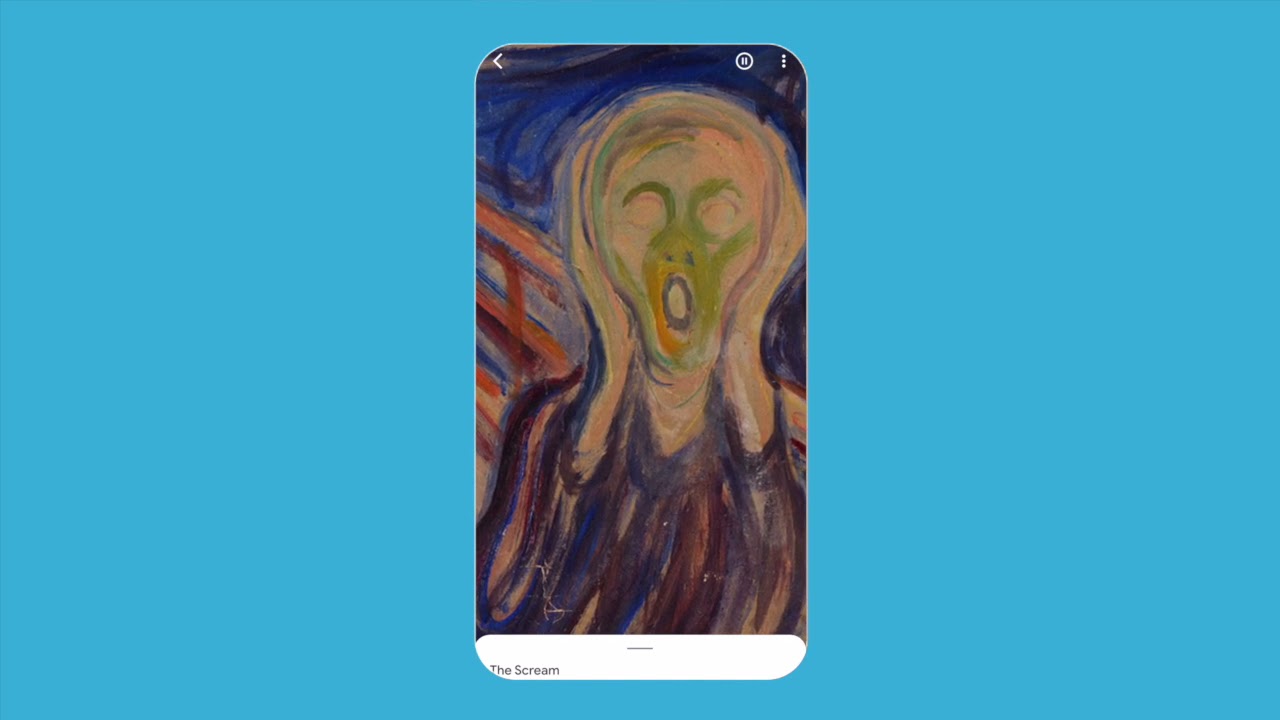
Together, with our partners, we are always experimenting to find new ways to bring people closer to art and culture and we hope these new Pocket Galleries will help you – not just to explore a diverse set of artworks, but also to feel connected to destinations around the world.
Find the galleries in the Camera Tab of the free Google Arts & Culture app for Android and iOS and jump inside to explore each one from there.

Xiaomi entra nel mercato delle auto elettriche
Non solo smartphone e elettronica di consumo in generale nel futuro di Xiaomi. Il colosso cinese ha infatti annunciato il suo ingresso nel settore della produzione delle auto elettriche la cui direzione è stata affidata a Lei Jun, fondatore e amministratore delegato dell’azienda. L’investimento iniziale del gruppo sarà di 1,5 miliardi di dollari, con la previsione di dedicarne circa altri dieci nei prossimi 10 anni.

Benvenuta, Fiat 500 Family Hey Google
 |
| Il badge Hey Google fa il suo debutto automobilistico sui modelli 500, 500X e 500L, accanto agli elementi grafici ispirati ai colori di Google sulle porte e negli interni. |


Google Maps più funzionale grazie all’intelligenza artificiale
Google Maps sempre più intelligente e per questo funzionale e preciso. E’ quanto si propone di realizzare presto Google grazie a un miglioramento dell’intelligenza artificiale del servizio. In quest’ottica l’azienda americana ha presentato alcuni nuovi strumenti che serviranno a rendere più efficace l’app e ad aiutare gli utenti a raggiungere più facilmente la loro destinazione.

Android, attenti al falso update di sistema che nasconde un virus
Nuovo allarme virus per gli utenti Android. Il malware è stato individuato dai ricercatori di sicurezza dei Zimperium zLabs in un’app chiamata “System Update”, che fortunatamente non è presente sul Play Store di Google, ma è scaricabile solo da siti di terze parti, pertanto può essere installato solo attraverso l’azione dell’utente.
Google’s €25 million contribution to media literacy
While navigating the uncertainty and challenges of the last year, it has proven more important than ever for people to access accurate information, and sort facts from fiction. That’s why Google is contributing €25 million to help launch the European Media and Information Fund to strengthen media literacy skills, fight misinformation and support fact checking. Our goal is to ensure that you and your family get the information you want, the answers you need and the accuracy you deserve.
Our five-year commitment will support the work of the European University Institute, the European Digital Media Observatory and the Calouste Gulbenkian Foundation to fund organizations seeking to address key challenges:
- Help adults and young people strengthen their media literacy skills
- Support and scale the critical work of fact-checkers
- Strengthen the expertise, research and resources to help fight misinformation
As the first to contribute to the European Media and Information Fund, we welcome and encourage other organizations to follow our lead and support this important work. It is clear there is an unmet demand for funding and research, with fewer than one in 10 Europeans having participated in any form of online media literacy training, according to a recent report.
In the coming weeks, the Fund will open for proposals from academics, nonprofits and publishers based in the European Union, Iceland, Liechtenstein, Norway, Switzerland and the United Kingdom. Independent committees made up of industry experts will select the winning ideas and Google won’t be involved in any decision making related to the Fund.
Our commitment today builds on our previous grants to fact checkers and nonprofits, including those related to the COVID-19 pandemic and vaccines, and our work to tackle misinformation in the run up to other major events, such as elections. Since 2015, we’ve provided funding and technical support to organizations focused on misinformation, including innovative new models like CrossCheck in France, and provided digital verification training to 90,000 European journalists, receiving over 400,000 visits to our training website.
And we’re of course continuing our other efforts to support media literacy for young people, with Be Internet Legends and Be Internet Citizens providing digital skills to help schoolchildren and teenagers verify and fact-check. Through our philanthropic arm, Google.org, we’ve provided €3.2 million in funding since 2018 to programs like Newswise, The Student View and Weitklick, and through the Google News Initiative additional funding to support Students for President and Zeit für Lehrer.
If you represent an organization with an idea, you can learn more about the Fund and find out when applications open by registering on this website.

TAG Bulletin: Q1 2021
This bulletin includes coordinated influence operation campaigns terminated on our platforms in Q1 2021. It was last updated on March 30, 2021.
January
-
We terminated 4 YouTube channels and 1 advertising account as part of our ongoing investigation into coordinated influence operations linked to Ukraine. This campaign uploaded content in Russian pertaining to current events in Kazakhstan and critical of European Union policies toward Moldova.
-
We terminated 5 blogs as part of our investigation into coordinated influence operations linked to Morocco. This campaign uploaded content in Arabic that was critical of the Algerian government. This campaign was consistent with similar findings reported by Facebook.
-
We terminated 5 YouTube channels as part of our investigation into coordinated influence operations linked to Brazil. This campaign was linked to a PR firm named AP Exata Intelligence and uploaded content in Portuguese expressing support for several mayoral candidates in Brazil. This campaign was consistent with similar findings reported by Facebook.
-
We terminated 6 YouTube channels as part of our investigation into coordinated influence operations linked to Kyrgyzstan. The campaign uploaded content in Kyrgyz critical of the former President Almazbek Atambayev and the opposition leader Adakhan Madumarov. This campaign was consistent with similar findings reported by Facebook.
-
We terminated 3 advertising accounts as part of our investigation into coordinated influence operations linked to Egypt. This campaign was linked to a PR firm named Mubashier and uploaded content in Arabic supportive of the Russian government across several countries in the Middle East.
-
We terminated 1 YouTube channel as part of our ongoing investigation into coordinated influence operations linked to Russia. This campaign uploaded content in Russian on current events in Ukraine.
-
We terminated 1 YouTube channel, 2 advertising accounts and 1 mobile developer account as part of our ongoing investigation into coordinated influence operations linked to Russia. This campaign uploaded content in Russian on such topics as the U.S. election and the poisoning of Alexei Navalny.
-
We terminated 5 YouTube channels as part of our ongoing investigation into coordinated influence operations linked to Russia. This campaign uploaded content in Russian on such topics as the annexation of Crimea and the Syrian civil war.
-
We terminated 2 YouTube channels and 1 advertising account as part of our ongoing investigation into coordinated influence operations linked to Russia. This campaign uploaded content in Russian on historical events in Afghanistan, Armenia and Ukraine.
-
We terminated 2 YouTube channels as part of our ongoing investigation into coordinated influence operations linked to Russia. This campaign uploaded content in Russian on such topics as the U.S. current events and Alexei Navalny political rallies.
-
We terminated 3 YouTube channels as part of our ongoing investigation into coordinated influence operations linked to Iran. This campaign uploaded content in English and was amplifying narratives on regional topics such as Israel, the Nagorno Karabakh conflict, and the war in Yemen. We received leads from FireEye that supported us in this investigation.
- We terminated 2,946 YouTube channels as part of our ongoing investigation into coordinated influence operations linked to China. These channels mostly uploaded spammy content in Chinese about music, entertainment, and lifestyle. A very small subset uploaded content in Chinese and English about the U.S. response to COVID-19 and growing U.S. political divisions. We received leads from Graphika that supported us in this investigation. These findings are consistent with our previous reports in the Q3 and Q4 TAG bulletins.
February
- We terminated 5 YouTube channels as part of our ongoing investigation into coordinated influence operations linked to Iran. This campaign uploaded content in English, Farsi, and Bahasa Indonesian on several topics including criticism of Israel and the U.S. election. This campaign was consistent with similar findings reported by Twitter.
- We terminated 5 YouTube channels as part of our ongoing investigation into coordinated influence operations linked to Russia. This campaign uploaded content in Russian specific to narratives around the Russian military. This campaign was consistent with similar findings reported by Twitter.
- We terminated 938 YouTube channels as part of our ongoing investigation into coordinated influence operations linked to China. These channels mostly uploaded spammy content in Chinese about music, entertainment, and lifestyle. A very small subset uploaded content in Chinese and English about the U.S. COVID-19 vaccine rollout and current events. We received leads from FireEye and Graphika that supported us in this investigation. These findings are consistent with our previous reports in the Q3 and Q4 TAG bulletins.

Privacy, sustainability and the importance of “and”
When other browsers started blocking third-party cookies by default, we were excited about the direction, but worried about the immediate impact. Excited because we absolutely need a more private web, and we know third-party cookies aren’t the long-term answer. Worried because today many publishers rely on cookie-based advertising to support their content efforts, and we had seen that cookie blocking was already spawning privacy-invasive workarounds (such as fingerprinting) that were even worse for user privacy. Overall, we felt that blocking third-party cookies outright without viable alternatives for the ecosystem was irresponsible, and even harmful, to the free and open web we all enjoy.
Since 2019, we’ve been working on a collaborative open-source effort — the Privacy Sandbox — to develop a set of new privacy-preserving technologies that make third-party cookies obsolete and enable publishers to keep growing their businesses and keep the web sustainable, with universal access to content. It’s a polarity to balance, but one we think is critical to keep the web open, accessible and thriving for everyone.
Today, a new piece of web technology — Federated Learning of Cohorts (FLoC) — will start to roll out as a developer origin trial in Chrome. Keeping in mind the importance of “and,” FLoC is a new approach to interest-based advertising that both improves privacy and gives publishers a tool they need for viable advertising business models. FLoC is still in development and we expect it to evolve based on input from the web community and learnings from this initial trial.
Here’s a bit more information on how FLoC currently protects your privacy:
- You’re part of a crowd.FLoC allows you to remain anonymous as you browse across websites and also improves privacy by allowing publishers to present relevant ads to large groups (called cohorts). Cohorts are defined by similarities in browsing history, but they’re not based on who you are individually. In fact, which cohort you are in frequently changes as your browsing history changes. Of course, when you want an individual experience, you can still sign into websites and share the personal information you choose.
- FLoC doesn’t share your browsing history with Google or anyone. With FLoC, your browser determines which cohort corresponds most closely to your recent web browsing history, grouping you with thousands of other people who have similar browsing histories. The identification number of the cohort is the only thing provided when requested by a site. This is different from third-party cookies, which allow companies to follow you individually across different sites. FLoC works on your device without your browsing history being shared. Importantly, everyone in the ads ecosystem, including Google’s own advertising products, will have the same access to FLoC.
- Chrome browser won’t create groups that it deems sensitive. Before a cohort becomes eligible, Chrome analyzes it to see if the cohort is visiting pages with sensitive topics, such as medical websites or websites with political or religious content, at a high rate. If so, Chrome ensures that the cohort isn’t used, without learning which sensitive topics users were interested in. We have created a detailed technical paper on how this works. And of course, sites can also opt out of FLoC, meaning the browser will not include visits to that site when determining a cohort.
The initial testing of FLoC is taking place with a small percentage of users in Australia, Brazil, Canada, India, Indonesia, Japan, Mexico, New Zealand, Philippines and the U.S. We’ll expand to other regions as the trial expands globally. If you’ve chosen to block third-party cookies with the current version of Chrome, you won’t be included in these origin trials. In April, we’ll introduce a control in Chrome Settings that you can use to opt out of inclusion in FLoC and other Privacy Sandbox proposals.
To help support this important milestone we’re also launching a new site, privacysandbox.com, dedicated to our Privacy Sandbox proposals where you can find an overview of this effort, FAQs on FLoC and links to additional resources, with more content to come over time. We’ll continue to share updates as we collaborate with the broader web ecosystem. And we welcome Privacy Sandbox contributions from publishers, ad tech companies, advertisers and developers.

La ricerca di Excellence Consulting/ I giovani vogliono risparmiare e investire, ma chiedono più app e fintech alle banche
I giovani esprimono una forte propensione al risparmio, ma vorrebbero essere più assecondati dalle banche attraverso strumenti come carte di credito e app dedicate all’investimento. La maggioranza predilige pagamenti digitali con punte dell’80% al Nord e la metà risparmia almeno il 30% del proprio reddito. Il 40% ha ad oggi già investito e oltre il 70% rappresenta un bacino potenziale di clienti per proposte di investimento nei prossimi due anni. Buona la propensione al rischio:…
L’articolo La ricerca di Excellence Consulting/ I giovani vogliono risparmiare e investire, ma chiedono più app e fintech alle banche scritto da YOUR_DIGITAL_VOICE! proviene da Assodigitale.

Blockchain : il Ticino collabora con Zurigo e la Crypto Valley
Ticino Blockchain Technologies Association e Trust Square stabiliscono una partnership di collaborazione per promuovere il mondo della blockchain a nord e a sud delle alpi Con questa partnership strategica, le due organizzazioni attraversano le Alpi per collegare il mondo della blockchain ticinese con la comunità zurighese di Trust Square. L’obiettivo è quello di attivare nuove collaborazioni e accelerare l’innovazione in Ticino e nella Crypto Valley. Nell’ambito di questa collaborazione TBTA e Trust Square offriranno iniziative…
L’articolo Blockchain : il Ticino collabora con Zurigo e la Crypto Valley scritto da YOUR_DIGITAL_VOICE! proviene da Assodigitale.